
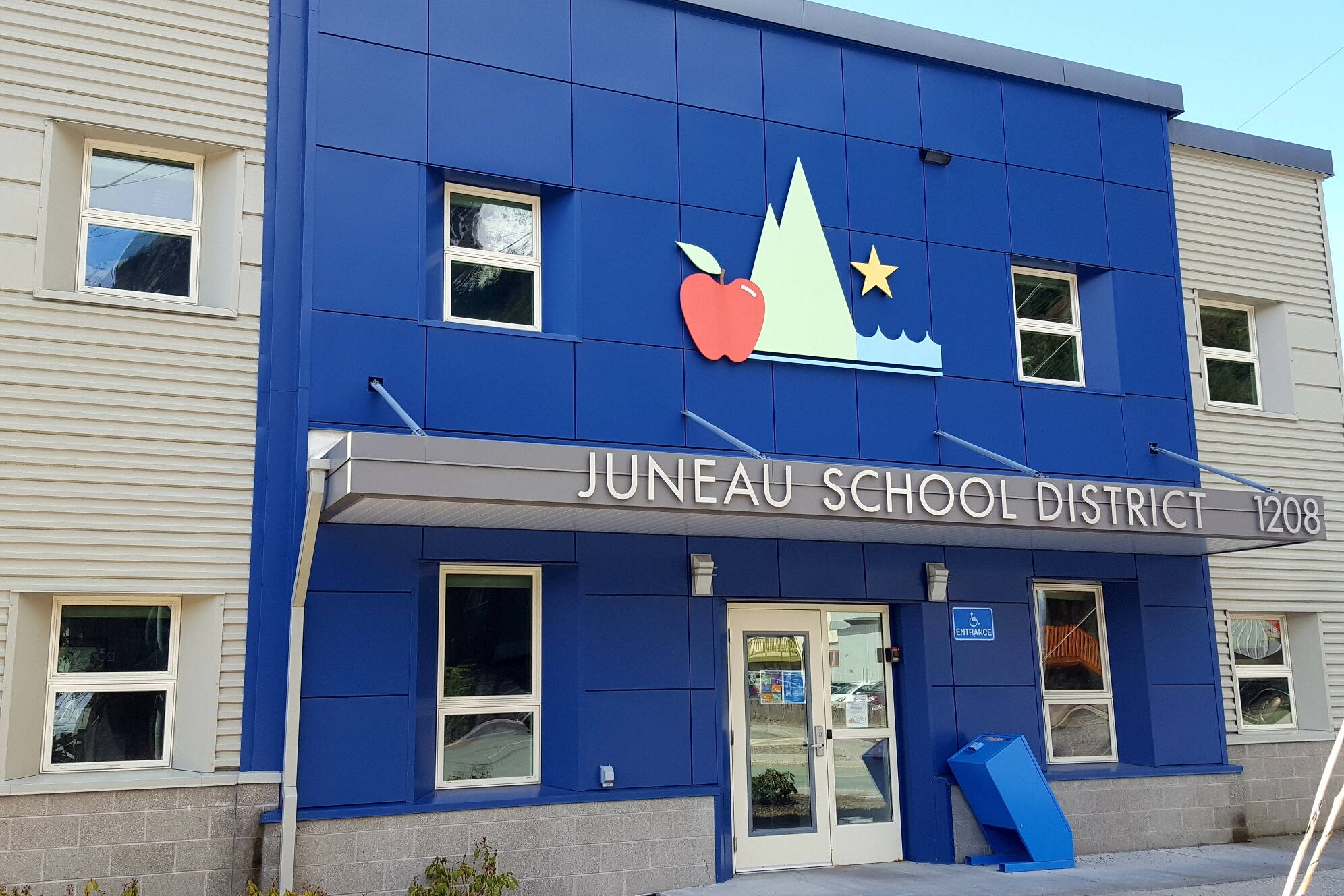
On Tuesday I zoomed in to the Juneau School Board work session about our local school district’s recently announced $10 million budget shortfall. The explanation was sobering and complicated and left little doubt about what’s coming next: endless meetings, cuts, and consolidations.
Mayor Beth Weldon has called for “creativity” but first, a reality check.
There’s never just one reason for a budget shortfall. While inflation, COVID-19, and chronic underfunding have wreaked havoc on school district budgets across the state, the primary reason for this debacle is our loss of students, the direct cause of which is Juneau’s population decline. State funding of education is directly linked to enrollment counts.
The alarm bells have been ringing for years and it was never just a School Board problem.
A front-page story in the Sept. 6, 2023, Juneau Empire reported that Juneau’s school enrollment was in freefall.
“In 1999, it was reported that there were about 5,701 students in Juneau’s schools — nearly 1,500 more students than there are today. Even today, recent enrollment forecasts looking toward enrollment in 2032 reveal an even more dire future.
According to data shared by census figures in a 2022 report, the mid-range forecast for Juneau’s district enrolled in 2032 is expected to be about 3,036 — about a 1,200-student drop from where enrollment is today.”
This means that by 2032, Juneau will have lost nearly 2,700 students – almost half of total enrollment since 1999. Then, we had two fewer school buildings than we pay to operate and maintain now.
The Juneau Economic Development Council (JEDC) recently published its 2023 Juneau & Southeast Alaska Economic Indicators and Outlook Report. The upshot of the report (page 36) is that Juneau’s population is “continuing the overall trend of slow decline.”
Our current School Board and Assembly were not in power when foundational economic development ideas for Juneau — two Navy ships, a re-opened AJ mine, or a road — were being considered and dismissed. Any of those three unrealized initiatives could have significantly diversified and stabilized Juneau’s economy and helped stem the population slide.
Saying “no” to growth has consequences. And that’s on us.
Juneau bet the farm on government jobs, grants and one-time appropriations. We blew off demographic reality and wasted untold sums of money chasing less serious things while simultaneously building schools for 2,700 phantom students.
Our present leaders’ unenviable task is to manage the current situation and Juneau’s “overall trend of slow decline” and not make matters worse for students and taxpayers.
The Juneau School Board is forced to make the first move. Hopefully, programmatic changes and school consolidation will not compromise educational delivery.
Two items offer some reassurance for Juneau taxpayers and students:
First, because our Assembly has over-collected both sales and property taxes, our city is sitting on nearly $40 million in reserves. CBJ also has substantial sums of money squirreled away for construction of new public buildings, two of which voters have rejected. Might those funds be “creatively” re-directed to facilitate sensible school consolidations and re-purposing of existing facilities?
Second, our current school board president, Deedie Sorensen, is ideally suited to lead our school district and community through the days ahead. Extremely competent and passionate about public education, Sorensen brings actual classroom experience (in the critical primary grades) to her leadership role. For over 40 years, she has taught hundreds of Juneau children, including mine, to read and succeed. I, for one, am willing to entrust my grandchildren’s education to her vision.
Not to be overlooked in the consolidation process is the need to preserve the integrity of our elementary school neighborhoods. If Juneau ever starts saying “yes” to foundational economic development, those school buildings could be needed in the future.
Hopefully, the Juneau Assembly will stay in its lane and do everything possible to reduce Juneau’s cost of living so more people will stay and more will want to come.
Meanwhile, we’d all be wise to keep emotional arguments, ivory tower theory, and political expediency from infecting the facility consolidation conversation.
Keep the focus on educational research, demographic and budgetary reality, and basic common sense.
Our public schools educate our electorate and our jury pool. We cannot afford to screw this up.
• Paulette Simpson is a Douglas resident.
