OPINION: $85 billion and no answers
Published 5:25 am Monday, February 2, 2026
A budget tells a story. It reveals priorities, exposes intentions, and signals how power will be used. The newly expanded budget for Immigration and Customs Enforcement tells a story that should alarm anyone who values fiscal integrity, constitutional limits, and democratic accountability.
In fiscal year 2024, ICE operated on a budget of roughly 10 billion dollars. Under the 2025 “Big Beautiful Bill,” the agency retained that base while receiving an additional 75 billion dollars in multiyear enforcement funding, available over approximately four years. Even if those supplemental funds are spread evenly, ICE now commands effective spending power of about 29 billion dollars annually. This is not an incremental increase. It is a structural transformation. An agency once described as a targeted enforcement body now wields resources approaching those of a national security institution, with little explanation and even less oversight.
The administration insists this surge in funding is about deportation. The observable outcomes suggest otherwise.
According to the Department of Homeland Security, a forced deportation costs approximately 18,000 dollars per person. By contrast, self deportation through the CBP Home app, including airfare, processing, and a cash stipend, costs about 5,100 dollars.
Using limited and unaudited publicly available data, ICE appears to have conducted roughly 300,000 to 330,000 formal forced removals over the past twelve months. In the final Biden administration fiscal year, ICE conducted approximately 271,000 forced removals. Even using the highest current estimate of 330,000, the increase amounts to about 59,000 removals, or roughly 22 percent.
Given the intensity of MAGA rhetoric and the extraordinary budgetary expansion directed at illegal immigration, one would expect a far greater increase in deportations during the first year of Trump’s return to office. That has not occurred.
This disparity raises a fundamental question. Are taxpayers funding effective immigration enforcement, or underwriting a vastly expanded apparatus whose mission now extends far beyond its original purpose? When spending multiplies while outcomes stagnate, and budgets swell while transparency shrinks, skepticism is not partisan. It is prudent.
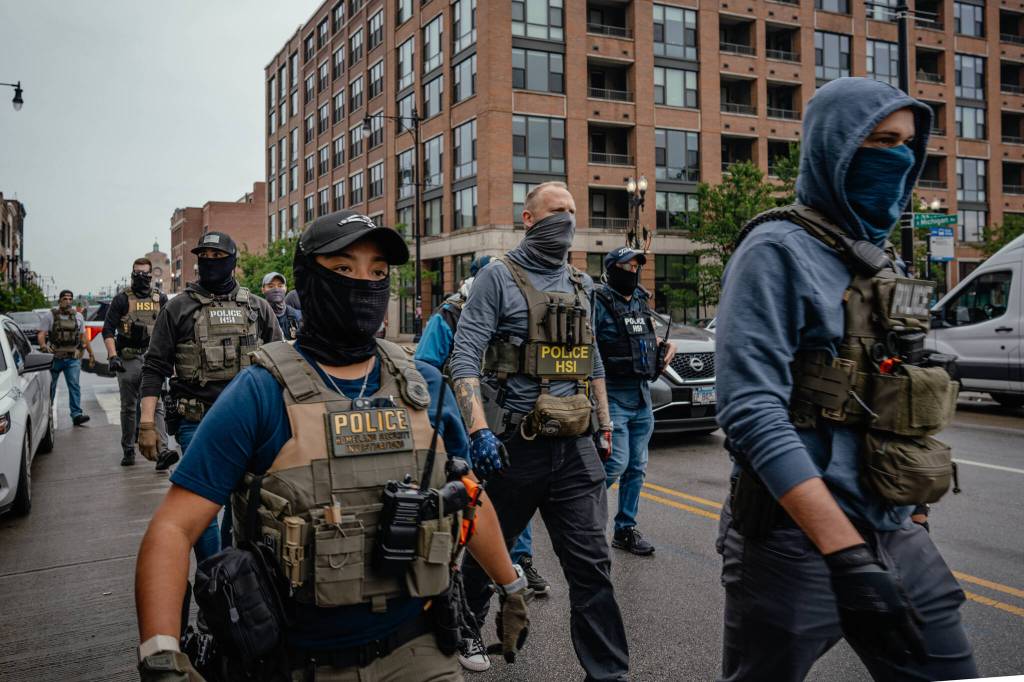
What makes this moment especially troubling is how ICE now operates inside American cities. In Minneapolis and other urban centers, the agency has effectively occupied neighborhoods through sustained deployments, visible patrols, coordinated raids, and multiple deadly shootings. These actions resemble federal policing campaigns more than immigration enforcement. Streets are saturated with armed agents. Communities report a constant presence. The message is unmistakable. This is not about processing cases. It is about asserting control.
Alongside this urban expansion has come a collapse of constitutional safeguards. Masked agents conduct operations without visible identification. Homes are entered without warrants. Traffic stops occur without clear cause or authority. United States citizens are detained and required to prove their citizenship. Detainees report harsh and degrading treatment. To date, there is no public record of ICE officers being meaningfully disciplined for these actions. Authority expands. Accountability disappears. Due process erodes.
These are not isolated incidents. They reflect an institutional posture increasingly untethered from the rule of law. When agents conceal their identities, bypass judicial oversight, and face no consequences, the result is not enforcement but intimidation. The Constitution does not yield to expediency. Rights do not evaporate because an agency is well funded.
The human cost is substantial. Raids executed with overwhelming force to apprehend nonviolent individuals traumatize families and destabilize neighborhoods. Faulty intelligence leads to mistaken targets, emotional harm, and property damage that is rarely reimbursed. Children watch parents taken away. Citizens discover that documentation offers no protection when an unaccountable force decides otherwise. Fear becomes routine. Trust becomes impossible.
The budget surge demands a more candid interpretation. A force that is lavishly funded, lightly supervised, and aggressively deployed within cities begins to resemble a national police force rather than an immigration service. It arrests without warrants, detains without explanation, and occupies neighborhoods without consent. It answers upward to executive authority, not outward to the public.
Three questions deserve direct answers. What problem justified a nearly threefold increase in annual spending power? Why do expenditures so dramatically exceed measurable outcomes? Who benefits from an enforcement body that grows more powerful as it grows less accountable?
Democracies rarely fail all at once. They erode through normalized excess, tolerated abuse, and unchecked authority. When budgets explode, rights contract, and accountability vanishes, the warning signs are unmistakable. Eighty five billion dollars and no answers is not merely a budgeting problem. It is a governance crisis.
Van Abbott is a long-time resident of Alaska and California. He has held financial management positions in government and private organizations, and is now a full-time opinion writer. He served in the late nineteen-sixties in the Peace Corps as a teacher.