
By Mary Catharine Martin
The Salmon State
Alaska is about to get thousands of miles of new salmon habitat — and how we manage that habitat will have long-term implications for the salmon that find it. By the year 2100, melting glaciers will open up new watersheds containing thousands of miles of salmon habitat across Alaska and the Pacific Northwest, according to an aptly titled scientific paper, “Glacier retreat creating new Pacific salmon habitat in western North America,” out recently in the journal Nature Communications.
The study predicts that by the year 2100, glacial retreat will create more than 3,800 additional miles of streams accessible to Pacific salmon in western North America, plus or minus about 1,000 miles. Of those stream miles, about 1,200 miles, plus or minus about 350 miles, could be used for salmon spawning and juvenile rearing.
While those changes are far from a solution to the threats facing Alaska’s wild salmon populations, they do mean potential future “hot spots” of salmon production.
“It’s really important to understand where the new habitat is going to be, so that we can plan for it,” said study co-author Eran Hood, Professor of Environmental Science at the University of Alaska Southeast. “We not only have new streams, but we have new land that can be prospected for mineral development, or other uses, as well…. All these areas that are coming out, we have to think about what we want to use them for. Whether it’s recreation, cultural and subsistence uses, or resource development uses.”
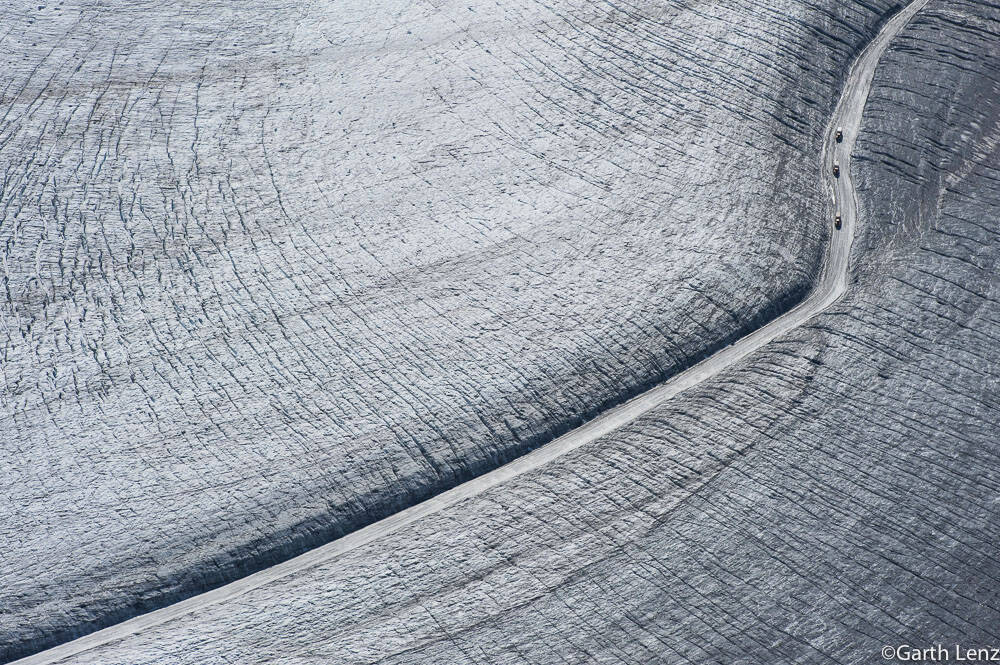
This 7-mile glacial highway up the middle of Knipple Glacier, for the Brucejack mine in the Unuk-Nass watershed. (Courtesy Photo / Garth Lenz)
A changing landscape
These changes, said coauthor Jonathan Moore, a professor at Simon Fraser University in British Columbia, are “massive ecosystem transformations.”
Throughout the study area of the Pacific northwest mountain ranges, 46,000 glaciers currently cover a little more than 50,000 square miles, and 80% of those glaciers are within the range of salmon. Assuming salmon can migrate up a 10% stream gradient, there are 315 glaciers retreating at the headwaters of present-day streams that will create salmon-accessible streams; assuming salmon can migrate up a 15% stream gradient, that number is 603 glaciers.
Between 2006 and 2016, according to the study, glaciers in western Canada lost 1% of their ice mass each year, on average. They are projected to lose up to 80% of their ice by 2100 in some places.
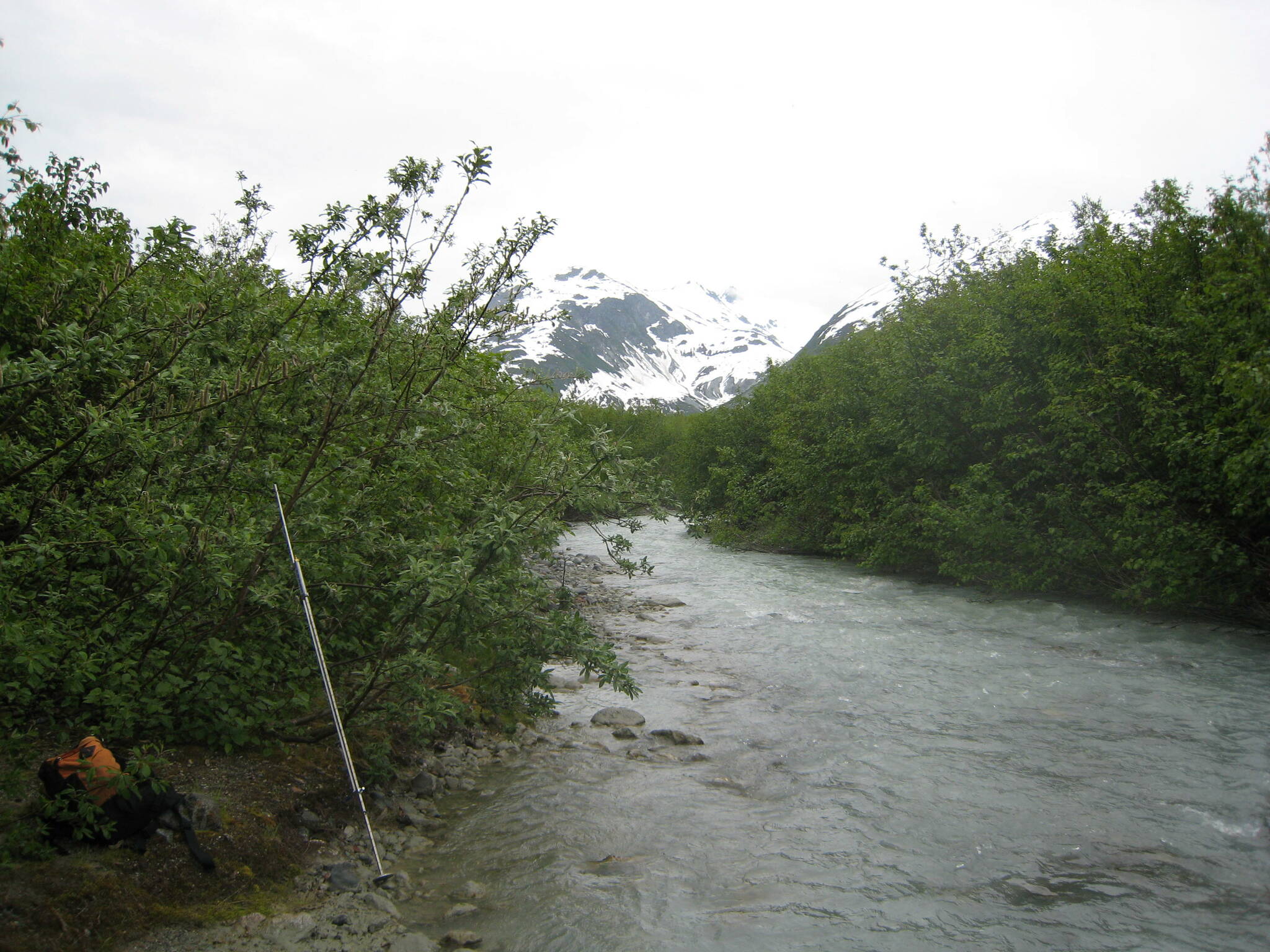
Stonefly Creek, in Glacier Bay, came out from under glacier ice in the last century and now has thousands of pink salmon spawning in it. (Courtesy Photo / Sonia Nagorski)
Areas farther south, where glaciers have already retreated into the mountains, won’t have any increase in salmon habitat. Some regions in the study, however, will see a lot: one region, from Yakutat toward the Copper River, will see an additional 1,630 miles (plus or minus 475 miles) miles of salmon-accessible streams, for a total 27% increase in salmon streams. The Copper River region will gain a projected 661 miles (plus or minus about 214 miles) of salmon accessible streams, though the Copper River watershed is so big that the additions would equate to only a 2% increase in salmon habitat.
“From the transboundary watersheds, up through Southeast Alaska and into Southcentral Alaska, where there are some of these real low-lying glaciers that fill river valleys — those are the places that are going to be real hot spots for habitat creation,” Moore said. “Places where as the ice retreats, the rivers will lengthen, and salmon will find those habitats.”
Salmon moving in
While the speed of glacial retreat may be new, the fact that salmon enter newly created ecosystems has long been known. After all, almost all of salmon-rich Southeast Alaska was once covered in ice. In the Kenai area, sockeye established themselves in the last century after glacial retreat. In the Glacier Bay area, more than 5,000 adult, spawning pink salmon were using a recently created stream and lake about 15 years after habitat becoming available. Hood, who lives in Juneau, points to a place many in Southeast Alaska will recognize — Steep Creek, in the Mendenhall Glacier Recreation Area, where tourists and locals alike can walk an elevated pathway, watching black bears chasing salmon, from spring through fall.
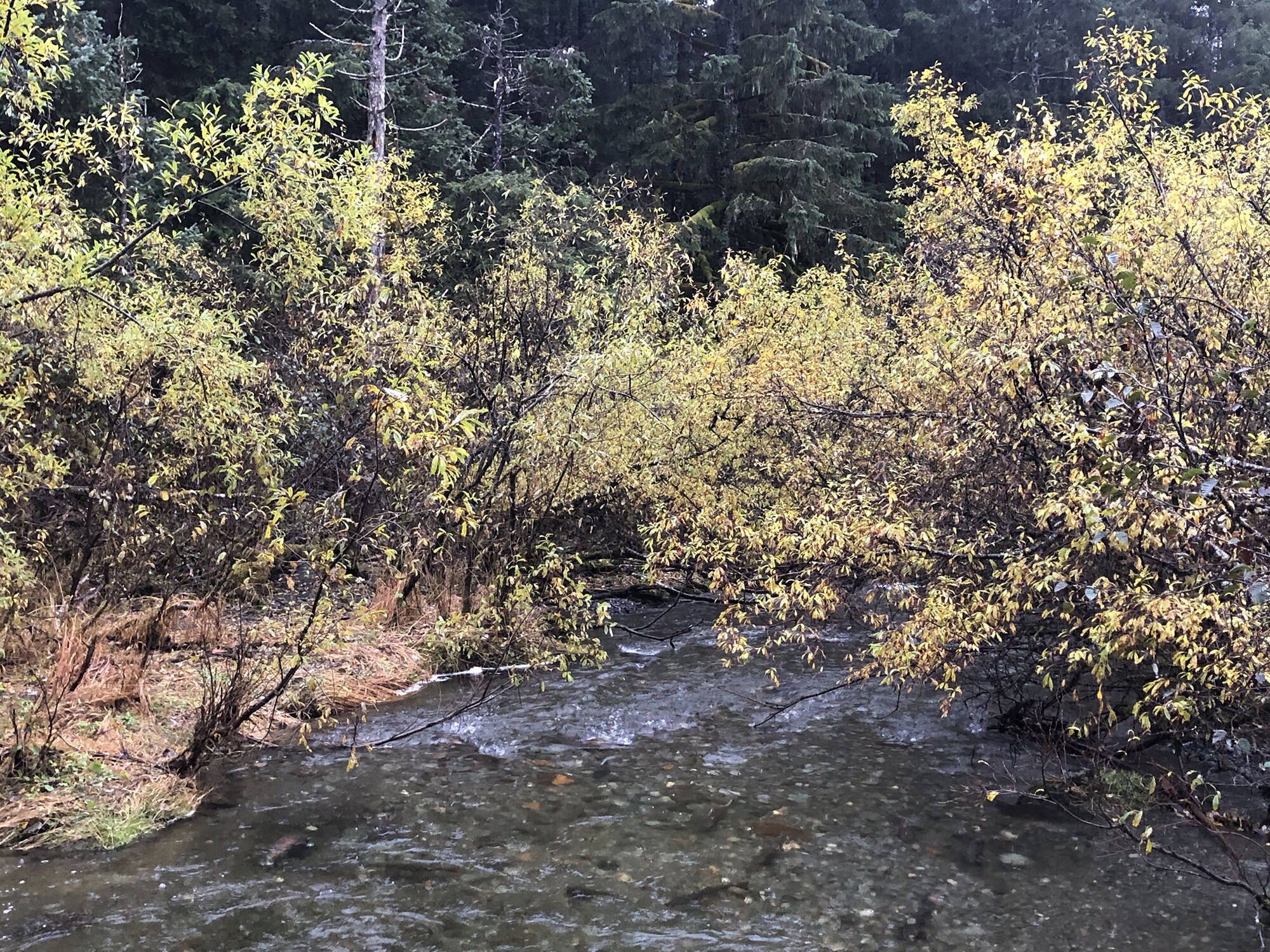
Steep Creek, by the Mendenhall Glacier, was created since the retreat of glacial ice in the last 100 years. It is now a spawning location for multiple species of wild salmon and is some of the most heavily viewed wild salmon habitat in Alaska. Here, coho salmon spawn in mid-October, 2021.(Mary Catharine Martin / SalmonState)
“There are salmon streams, there’s recreation, there’s all these different uses now (at the Mendenhall Glacier.) None of those uses existed 80 years ago,” Hood said. “A hundred years ago there was no lake. Eighty years ago, the visitors center area was still under ice.”
“One of the things that really strikes me, is you go to one of these systems that’s brand new, and there’s not much there,” Moore added. “There’s just rocks and water. But very quickly alder takes hold, and the salmon find it. They are these nascent, newborn ecosystems. And I think the data we’re bringing to bear really showcases their potential as future salmon habitat. But it is a decision that needs to be made. With these newborn habitats — what is their future going to be?”
Glacial retreat has other impacts on salmon systems, as well, some of which will be negative. For example, farther south, where glaciers will disappear entirely, river systems will warm, negatively impacting salmon.
Take home message — and questions
In the end, the study, Hood said, is a message of hope — but not of a panacea.
“This is not a silver bullet,” he said. “Yes, there will be some new opportunities, but there are still a whole list of challenges that are ongoing for salmon.”
The ecological changes in store, Moore said, raise “serious questions” about how prepared human natural resource management is to keep up with, or get ahead of, the changes happening now and coming soon.
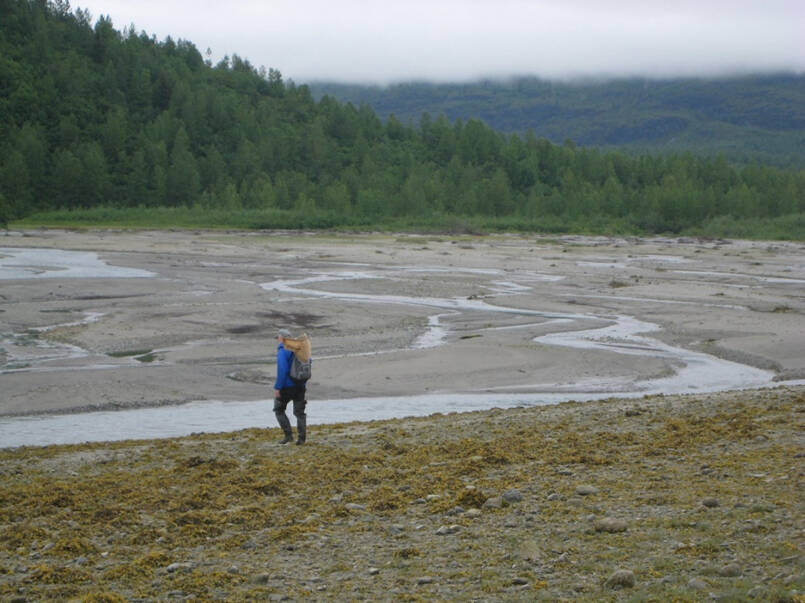
Vivid Stream, in Glacier Bay, came out from under glacier ice in the last century and now has thousands of pink salmon spawning in it. (Courtesy Photo / Sonia Nagorski)
“I don’t think we’re prepared to think about how these ecosystems are changing this fast. We need to be asking hard questions, now. Questions like: ‘Should we let more fish past fisheries so they can colonize these new habitats? Should we designate protected areas to protect the future habitat? What happens with subsistence fishing communities when fish stocks move?’ Especially in these hot spots of change,” Moore said. “There’s an urgent need and opportunity to look to the future, and think about proactive protection of these habitats. I’m hopeful that this project can inform the forward-looking stewardship of these ecosystems.”
• Mary Catharine Martin is the communications director of SalmonState, an organization that works to keep Alaska a place wild salmon and the people who depend on them thrive.
