Alaska’s ferry system could run out of funding this summer due to ‘federal chaos problem’
Published 7:02 am Tuesday, February 3, 2026
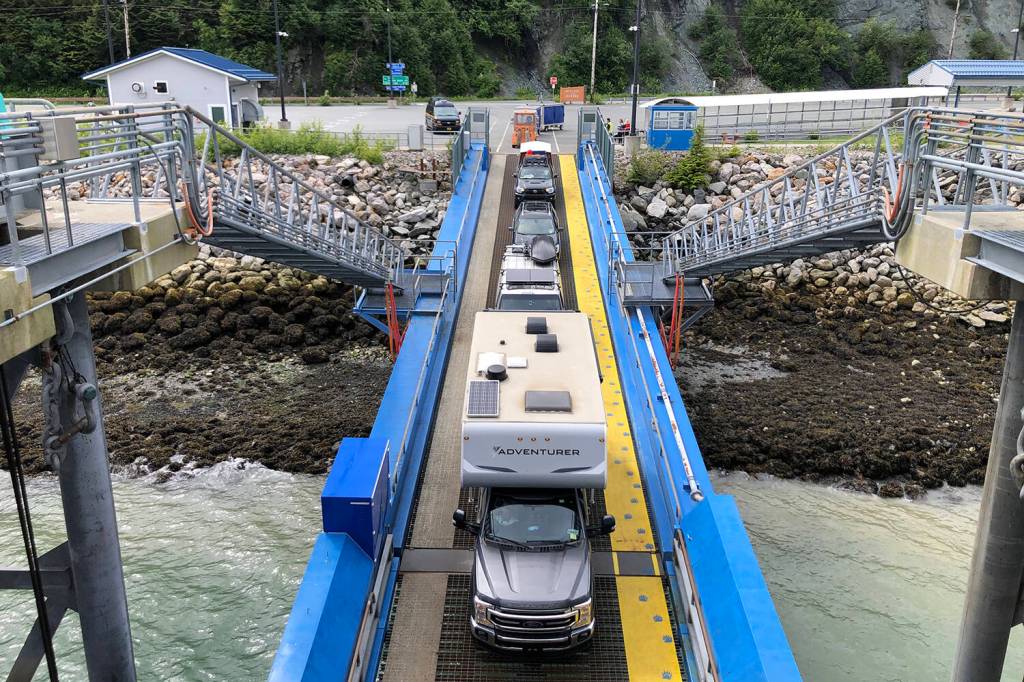
Alaska’s state ferry system is at risk of a partial or total shutdown this summer due to the failure of the federal government to issue a key annual grant.
“Currently right now, we have a shortfall in our budget,” said Dom Pannone, director of program administration and management for the Alaska Department of Transportation and Public Facilities, to members of the Senate Finance Committee during a Monday morning hearing.
Money from the Federal Transit Administration’s rural ferry program pays for almost half of the Alaska Marine Highway System’s operating expenses, but the administration failed to open its annual grant process in fiscal year 2025, which ended Sept. 30.
The ferry system’s budget runs according to the calendar year. Last spring, the Alaska Legislature and Gov. Mike Dunleavy budgeted $171 million for the 2026 ferry budget. Of that, almost $78 million was supposed to come from the rural ferry program.
Without that money, the system could be forced to tie up its ships in midsummer, at the peak of the state’s annual tourist season.
“Right now, we have a federal chaos problem,” said Sen. Jesse Kiehl, D-Juneau and a member of the Senate Finance Committee.
Ryan Anderson, commissioner of the state DOT, said his agency is “looking at several options” to prevent a shutdown of the ferry system.
If a federal grant isn’t delivered, DOT would make significant changes to the summer ferry schedule, which is slated for release in May.
Anderson said the state could “dispose of the Matanuska,” the state’s oldest active ferry, which has been tied up dockside as a “hotel ship” because of maintenance costs.
The ferry Kennicott, coming out of drydock, or the Columbia, another old mainline ferry, could be tied up as a hotel ship instead of the Matanuska, he said.
On Monday, neither DOT officials nor state legislators could say why the Federal Transit Administration has failed to make grants available.
“What is going on in Washington, D.C.? That’s always a tough thing to work with,” Anderson said.
U.S. Sen. Lisa Murkowski, R-Alaska, secured almost $1 billion in the 2021 Infrastructure Investment and Jobs Act bill for the rural ferry program, which was written in a way to steer much of the money to Alaska.
By text after Monday’s hearing, Murkowski spokesman Joe Plesha said the Federal Transit Administration told her office it will release the FY26 ferry grants this spring, but did not give a timeline. “We are directly engaged with the FTA and working to advance the release of this grant funding as soon as possible,” Plesha said.
When Murkowski got the ferry language signed into law, it was the first time the federal government had significantly funded operational expenses for Alaska’s ferry system.
“In this particular case, it can actually pay for the operations of those (ferry) vessels,” Anderson said, noting that includes operating costs like crew and fuel. That billion dollars was to be spread across five years, and the program disbursed more than $252 million nationwide in FY22, $170 million in FY23 and $194 million in FY24.
Alaska received more than five-sixths of the total distribution in that time, something that allowed Gov. Mike Dunleavy to divert state dollars to other parts of Alaska’s annual budget.
Alaska DOT estimates that about $410 million remains available for the federal government to disburse.
In each of the three prior grant years, it took between 152 and 199 days from the time the grant application period opened to the time the grant was awarded.
That timeline means that even if federal transit officials were to open the grant process tomorrow, a decision might not be made before the arrival of the summer ferry schedule in May.
Dunleavy and the Legislature could extend the timeline by changing the ferry system’s budget calendar so that it starts July 1 along with all other state agencies, but if there’s still no federal money, that would just extend operations until January 2027, and then the system would face a $150 million cliff instead of a $78 million one.
Sen. Bert Stedman, R-Sitka, said that finding “backfill” money will be difficult in either case.
“Our budgets are getting tighter and taking away the flexibility the (finance) committee has to backfill some of these holes, and this particular hole could be significant, pushing $80 million,” he said.
The ferry funding issue could persist even if the federal transit authority resumes paying grants, because its ferry operations program is set to expire this year.
“What happens when that grant money is gone?” asked Sen. Mike Cronk, R-Tok.
“This year, the surface transportation reauthorization is up for renewal,” Anderson said. “This, we understand, is part of that discussion: Will the rural ferry program continue over the next subsequent four years?”
Anderson said that even if Congress renews the program, the current Alaska-favorable rules might be rewritten.
“Other states are very interested in this program as well because they have a lot of similar challenges,” he said. “Nationwide, there’s support for a program such as this. The questions that are out: How will the rules be rewritten, and how competitive will the program be? That will be the challenge.”
This article originally appeared online at alaskabeacon.com. Alaska Beacon, an affiliate of States Newsroom, is an independent, nonpartisan news organization focused on connecting Alaskans to their state government.
James Brooks is a longtime Alaska reporter, having previously worked at the Anchorage Daily News, Juneau Empire, Kodiak Mirror and Fairbanks Daily News-Miner. A graduate of Virginia Tech, he is married and has a daughter, owns a house in Juneau and has a small sled dog named Barley.