Alaska Outdoors

In this May 24, 2019, photo, teachers and students from Northwest Montessori School in Seattle examine the carcass of a gray whale after it washed up on the coast of Washington's Olympic Peninsula, just north of Kalaloch Campground in Olympic National Park. U.S. researchers say the number of gray whales off western North America has continued to fall over the last two years, a decline that resembles previous population swings over the past several decades. According to an assessment by NOAA Fisheries released Friday, Oct. 7, 2022, the most recent count put the population at 16,650 whales — down 38% from its peak in 2015-16. (AP Photo / Gene Johnson)

Gray whale population off western U.S. continues to decline

The most recent count put the population at 16,650 whales — down 38% from its peak in 2015-16.

In this May 24, 2019, photo, teachers and students from Northwest Montessori School in Seattle examine the carcass of a gray whale after it washed up on the coast of Washington's Olympic Peninsula, just north of Kalaloch Campground in Olympic National Park. U.S. researchers say the number of gray whales off western North America has continued to fall over the last two years, a decline that resembles previous population swings over the past several decades. According to an assessment by NOAA Fisheries released Friday, Oct. 7, 2022, the most recent count put the population at 16,650 whales — down 38% from its peak in 2015-16. (AP Photo / Gene Johnson)
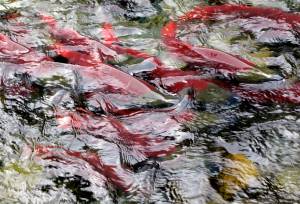
Sockeye salmon return to Steep Creek to spawn. According to data provided by the Alaska Seafood Marketing Institute in its latest update, the statewide preliminary harvest is estimated to be more than 153 million salmon — across all species — caught during the 14 weeks spanning mid-June to mid-September that the data was analyzed. (Ben Hohenstatt / Juneau Empire)
A developing willow rose shows brilliant red on a background of still-mostly-green willow leaves. (Mary F. Willson / For the Juneau Empire)

On the Trails: Local color in late September

Golden cottonwoods, yellow willow leaves, and the red/pink/yellow leaves of highbush cranberry.

A developing willow rose shows brilliant red on a background of still-mostly-green willow leaves. (Mary F. Willson / For the Juneau Empire)
“Hurricane Hal” Needham smiles on a benign day on a Galveston, Texas, beach. The extreme weather and disaster scientist for CNC Catastrophe & National Claims recently drove to a parking garage in southwest Florida to document Hurricane Ian. (Courtesy Photo / Hal Needham)

Alaska Science Forum: Alaska megastorms vs. East Coast hurricanes

Unlike the giant storm that hit Alaska in mid-September, hurricanes and typhoons both have eyes.

“Hurricane Hal” Needham smiles on a benign day on a Galveston, Texas, beach. The extreme weather and disaster scientist for CNC Catastrophe & National Claims recently drove to a parking garage in southwest Florida to document Hurricane Ian. (Courtesy Photo / Hal Needham)
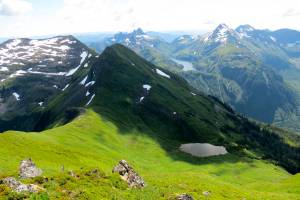
The author grew up near this mountain, but never hiked it until he moved home in 2013 and started hunting. (Jeff Lund / For the Juneau Empire)

I Went to the Woods: A look in the archives

Reading old writing is an experience.

The author grew up near this mountain, but never hiked it until he moved home in 2013 and started hunting. (Jeff Lund / For the Juneau Empire)
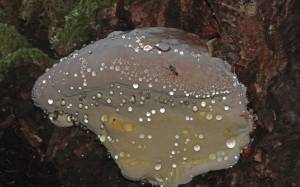
A bracket fungus exudes guttation drops and a small fly appears to sip one of them.( Courtesy Photo / Bob Armstrong)

On the Trails: Water drops on plants

Guttation drops contain not only water but also sugars, proteins, and probably minerals.

A bracket fungus exudes guttation drops and a small fly appears to sip one of them.( Courtesy Photo / Bob Armstrong)
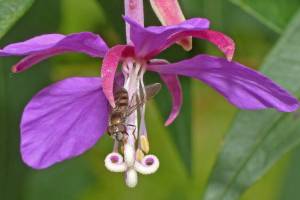
The hoverfly can perceive electrical fields around the edges of the petals, the big white stigma, and the stamens. (Courtesy Photo / Bob Armstrong)

On the Trails: Electric flowers and platform plants

You cannot see it, it’s electric.

The hoverfly can perceive electrical fields around the edges of the petals, the big white stigma, and the stamens. (Courtesy Photo / Bob Armstrong)
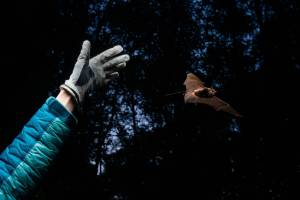
On Joint Base Elmendorf-Richardson in 2018, biologist Jesika Reimer releases a little brown bat with a radio transmitter on its back. (Courtesy Photo / James Evans, University of Alaska Anchorage)

Alaska Science Forum: Where do Alaska bats spend the winter?

I think bats do hibernate in interior Alaska…”

On Joint Base Elmendorf-Richardson in 2018, biologist Jesika Reimer releases a little brown bat with a radio transmitter on its back. (Courtesy Photo / James Evans, University of Alaska Anchorage)
There are many ways to document a hunt, but the one that simply gets the most views, might not be the best for hunting. (Courtesy Photo / Jeff Lund)

I Went to the Woods: Hunting in the ‘like’ era

Loud and outrageous have become the recipe for sports commentary.

There are many ways to document a hunt, but the one that simply gets the most views, might not be the best for hunting. (Courtesy Photo / Jeff Lund)
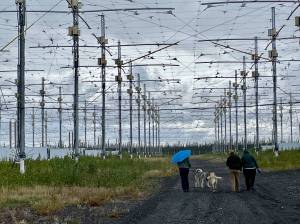
During a recent open house, visitors walk their dogs beneath an antenna field used to heat the upper atmosphere during space physics experiments at a facility known as HAARP between Glennallen and Tok. (Courtesy Photo / Ned Rozell)

Alaska Science Forum: An attempt to demystify the mysterious

A topic worth HAARP-ing on.

During a recent open house, visitors walk their dogs beneath an antenna field used to heat the upper atmosphere during space physics experiments at a facility known as HAARP between Glennallen and Tok. (Courtesy Photo / Ned Rozell)
A beaver pauses on top of its dam.(Courtesy Photo / Chuck Caldwell)

On the Trails: All about beavers

Leave it to ‘em.

A beaver pauses on top of its dam.(Courtesy Photo / Chuck Caldwell)
This photo shows a view of Manhattan from the window seat of a New York to Seattle flight. (Courtesy Photo / Ned Rozell)
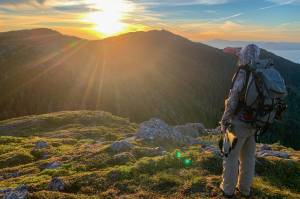
The author looks over a mountain near Ketchikan in the late evening sun on an alpine deer hunt. (Courtesy Photo / Abby Lund)

I Went to the Woods: Turning the corner

The corner from summer to fall is a casual turn.

The author looks over a mountain near Ketchikan in the late evening sun on an alpine deer hunt. (Courtesy Photo / Abby Lund)
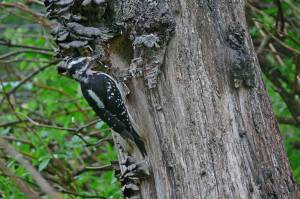
A female hairy woodpecker brings insect prey to chicks in an excavated nest cavity. (Courtesy Photo / Bob Armstrong)

On the Trails: Cavity-nesting birds

Hole sweet home.

A female hairy woodpecker brings insect prey to chicks in an excavated nest cavity. (Courtesy Photo / Bob Armstrong)
Courtesy Photo /Chris Arp 
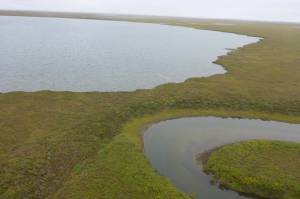
Harry Potter Lake, at the top of this photo, as it looked four years ago, perched 10 feet above and 30 feet away from the creek that in 2022 received most of its water.
Video

Alaska Science Forum: If a lake drains in northern Alaska…

Rarely do people get to see it.

Courtesy Photo /Chris Arp 
Harry Potter Lake, at the top of this photo, as it looked four years ago, perched 10 feet above and 30 feet away from the creek that in 2022 received most of its water.
Video
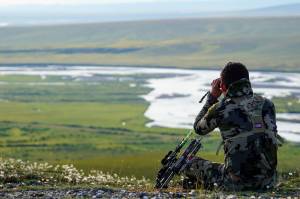
Ryan John glasses the edge of the Sag River as it meets the unforgiving, flat tundra on its way to the Arctic Ocean. (Courtesy Photo / Jeff Lund)

I Went to the Woods: North slope caribou

I had stopped hopping from tussock to tussock attempting to keep my feet dry. Frequent missteps and sneaky depths had put water over my gaiters… Continue reading

Ryan John glasses the edge of the Sag River as it meets the unforgiving, flat tundra on its way to the Arctic Ocean. (Courtesy Photo / Jeff Lund)
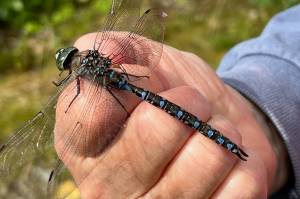
A blue darner dragonfly perched on hands, shoulders, and heads. (Courtesy Photo / Ralf Gerking)

On the Trails: Sights and sounds from the trails in late summer

Winged wonders abound.

A blue darner dragonfly perched on hands, shoulders, and heads. (Courtesy Photo / Ralf Gerking)
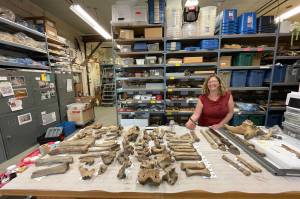
Elizabeth Hall, assistant paleontologist for the Yukon government in Whitehorse, stands in her office laboratory.  (Courtesy Photo / Ned Rozell)

Alaska Science Forum: Secrets of an ancient horse of the Yukon

The Yukon is a great place to find the preserved remains of ancient creatures.

Elizabeth Hall, assistant paleontologist for the Yukon government in Whitehorse, stands in her office laboratory.  (Courtesy Photo / Ned Rozell)
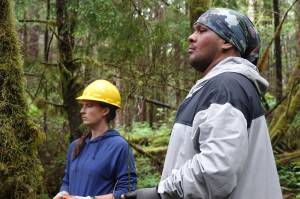
From left, Kelsey Dean, watershed scientist with the Southeast Alaska Watershed Coalition, and Kaagwaan Eesh Manuel Rose-Bell of Keex’ Kwáan watch as crew members set up tools to drag a log into place. Healthy salmon habitat requires woody debris, typically provided by falling branches and trees, which helps create deep salmon pools and varied stream structure. (Courtesy Photos / Mary Catharine Martin)
 

The SalmonState: Bringing the sockeye home

Klawock Indigenous Stewards and partners are working to a once prolific sockeye salmon run.

From left, Kelsey Dean, watershed scientist with the Southeast Alaska Watershed Coalition, and Kaagwaan Eesh Manuel Rose-Bell of Keex’ Kwáan watch as crew members set up tools to drag a log into place. Healthy salmon habitat requires woody debris, typically provided by falling branches and trees, which helps create deep salmon pools and varied stream structure. (Courtesy Photos / Mary Catharine Martin)
 
A northern oriole used dietary carotenoids to make its feathers bright orange. (Courtesy Photo / J. S. Willson)

On the Trails: The colorful world of birds

Colors are produced by cell structure, which can scatter light rays, making iridescence, and by pigments, which absorb or reflect particular wavelength of light. Pigments… Continue reading

A northern oriole used dietary carotenoids to make its feathers bright orange. (Courtesy Photo / J. S. Willson)