
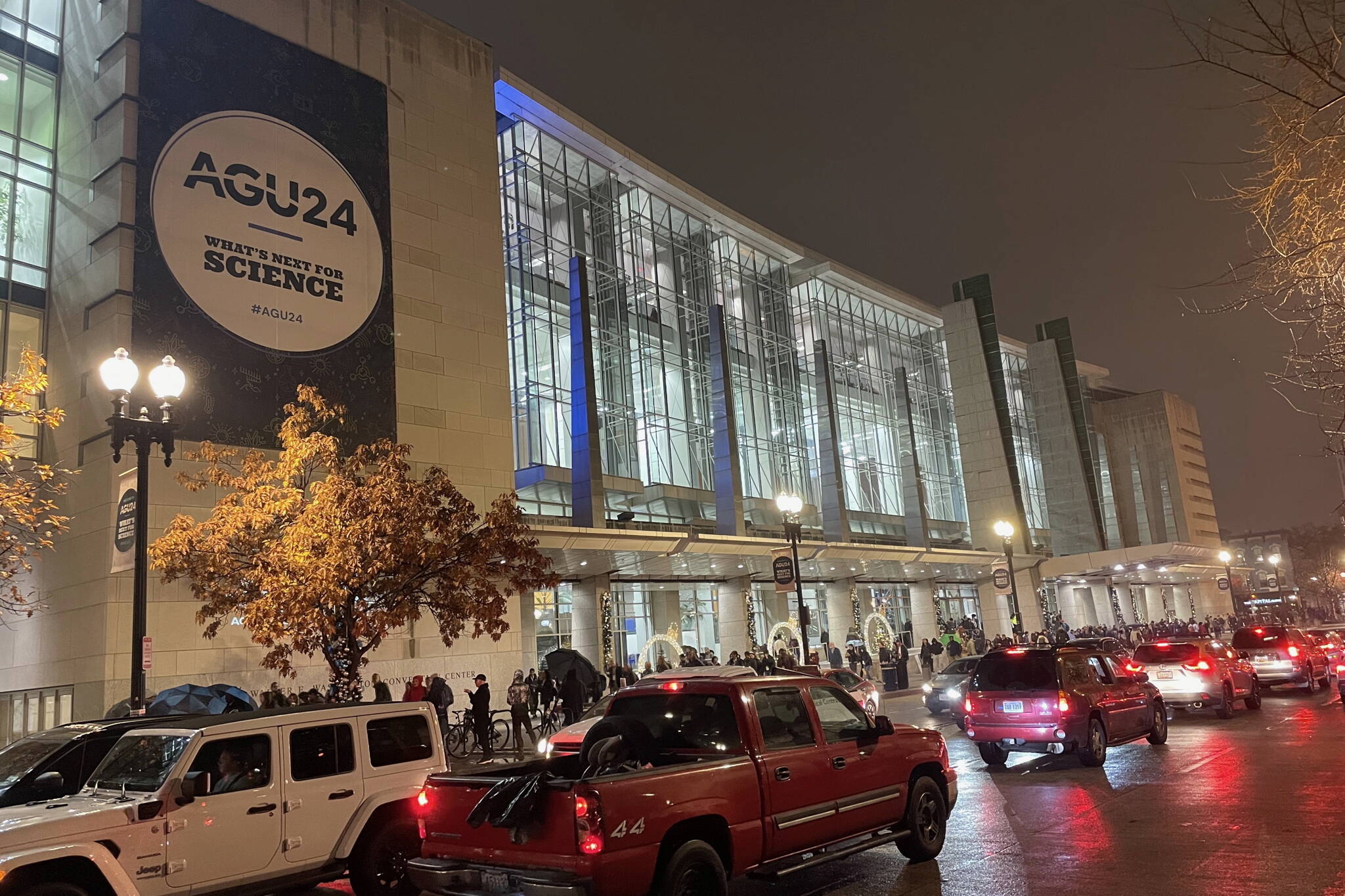
WASHINGTON, D.C. — I am once again elbow-to-elbow with thousands of scientists, at a meeting I first attended 25 years ago.
Back then, in 1999, the Fall Meeting of the American Geophysical Union was in San Francisco. Eight-thousand scientists rode the escalators within the Moscone Center during that December week.
Between Dec. 9-13, 2024, more than 25,000 scientists hung nametags around their necks here at the Walter Washington Convention Center in our nation’s capital.
The ballooning number of meeting attendees follows a trend during that quarter century: Since then, there are 2 billion more people now walking on the planet, including about 100,000 more Alaskans (though Alaska’s population has dipped by about 9,000 since its 2016 peak).
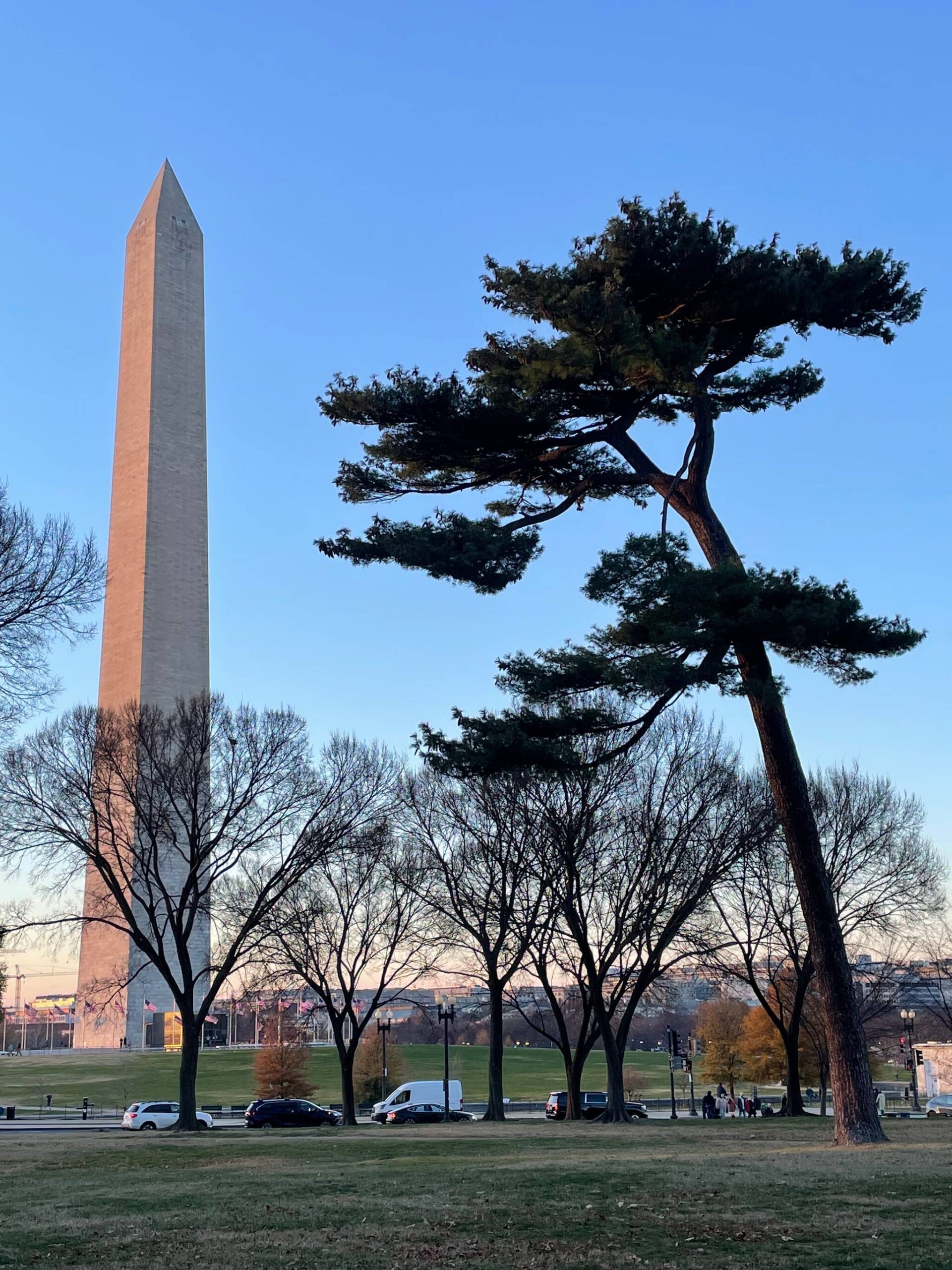
Evening sunshine strikes the Washington Monument in Washington, D.C., site of the 2024 Fall Meeting of the American Geophysical Union. (Photo by Ned Rozell)
Here’s what has not changed in those 25 years: Scientists and other humans are hard-wired to notice movement and other differences in their surroundings, whether they occur over microseconds or decades. Many of the researchers here presented talks or posters on differences they have recently noted in Alaska.
Media people in the American Geophysical Union have for the past 19 years hosted an “Arctic Report Card” press conference. During that, experts on the far North speak of these changes in front of a room full of reporters. I have sat in on most of those.
During this year’s conference, sponsored by the National Oceanic and Atmospheric Administration, a lot of the news was familiar.
Sea ice floating on the northern oceans continues to decline in extent and thickness. With few eyes on it except for scientists using satellites and people who live next to it on northern coastlines, the world’s refrigerator is losing power.
The top of the world continues to warm faster than other regions. The last nine Augusts were the nine warmest in the Arctic on average since temperature records have existed.
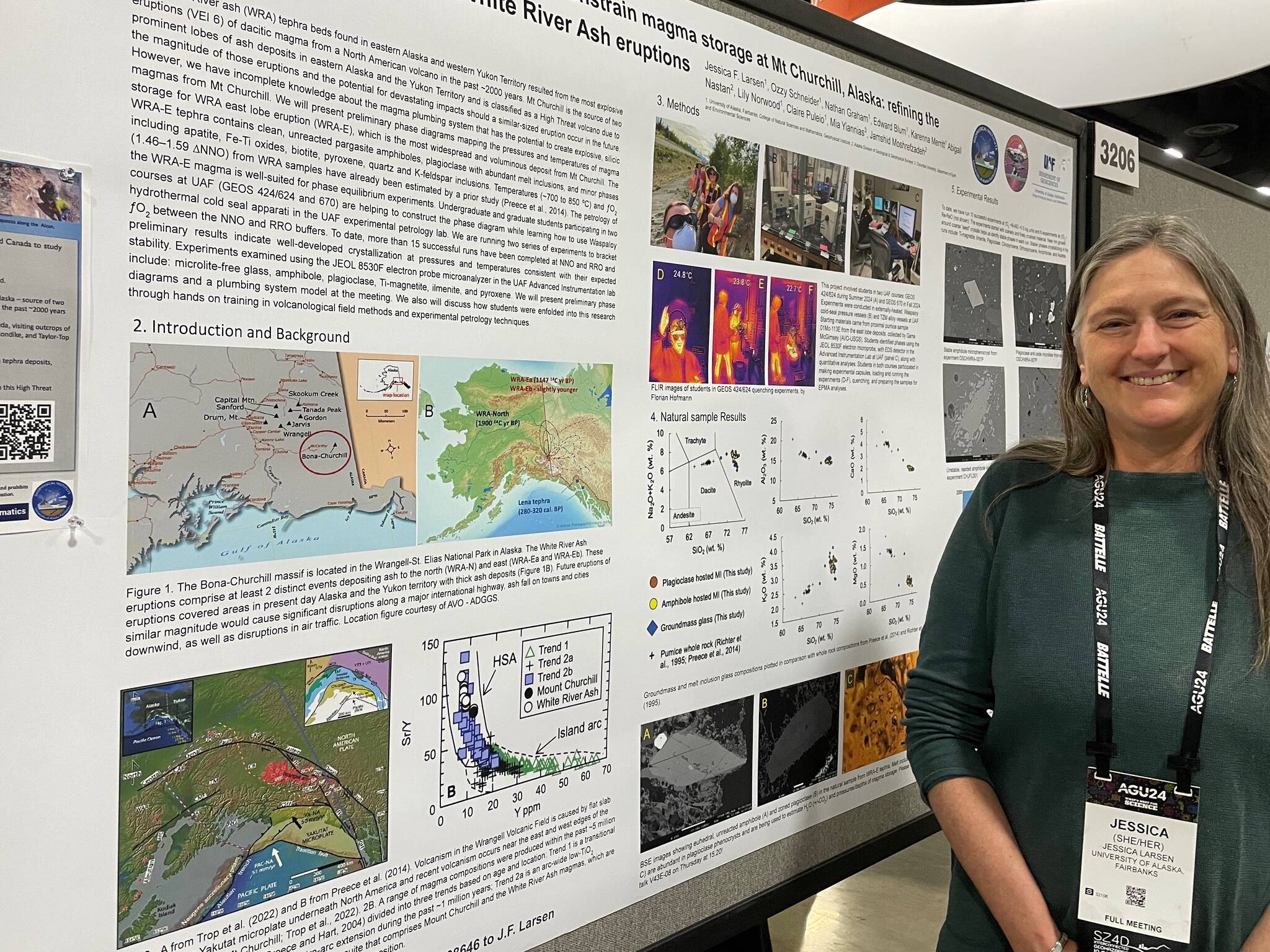
Jessica Larson of the University of Alaska Fairbanks Geophysical Institute presents her study on Alaska’s Mount Churchill at the 2024 Fall Meeting of the American Geophysical Union in Washington, D.C. (Photo by Ned Rozell)
That significant news has the disadvantage of being similar to previous years. But a scientist at the press conference came forward with some breaking news.
Brendan Rogers of the Woodwell Climate Research Center in Falmouth, Massachusetts, said that the far northern landscapes — for millennia places where frozen ground and new plants trapped more carbon than they emitted — are now a “small net source” of greenhouse gases wafted to the atmosphere.
What happened?
Warmer air temperatures have thawed ground that had been rock solid since the time of woolly mammoths, and often long before that. Microbes suspended in the deep freeze are waking up, eating ancient vegetation and other palatable stuff, and emitting their gases just as we do.
This increase of methane and carbon dioxide from microorganisms within northern lands is a big deal. Tundra and forests on top of the globe have long been a dependable storage place for planet-warming gases. Until maybe now.
“It’s of global concern,” Rogers said.
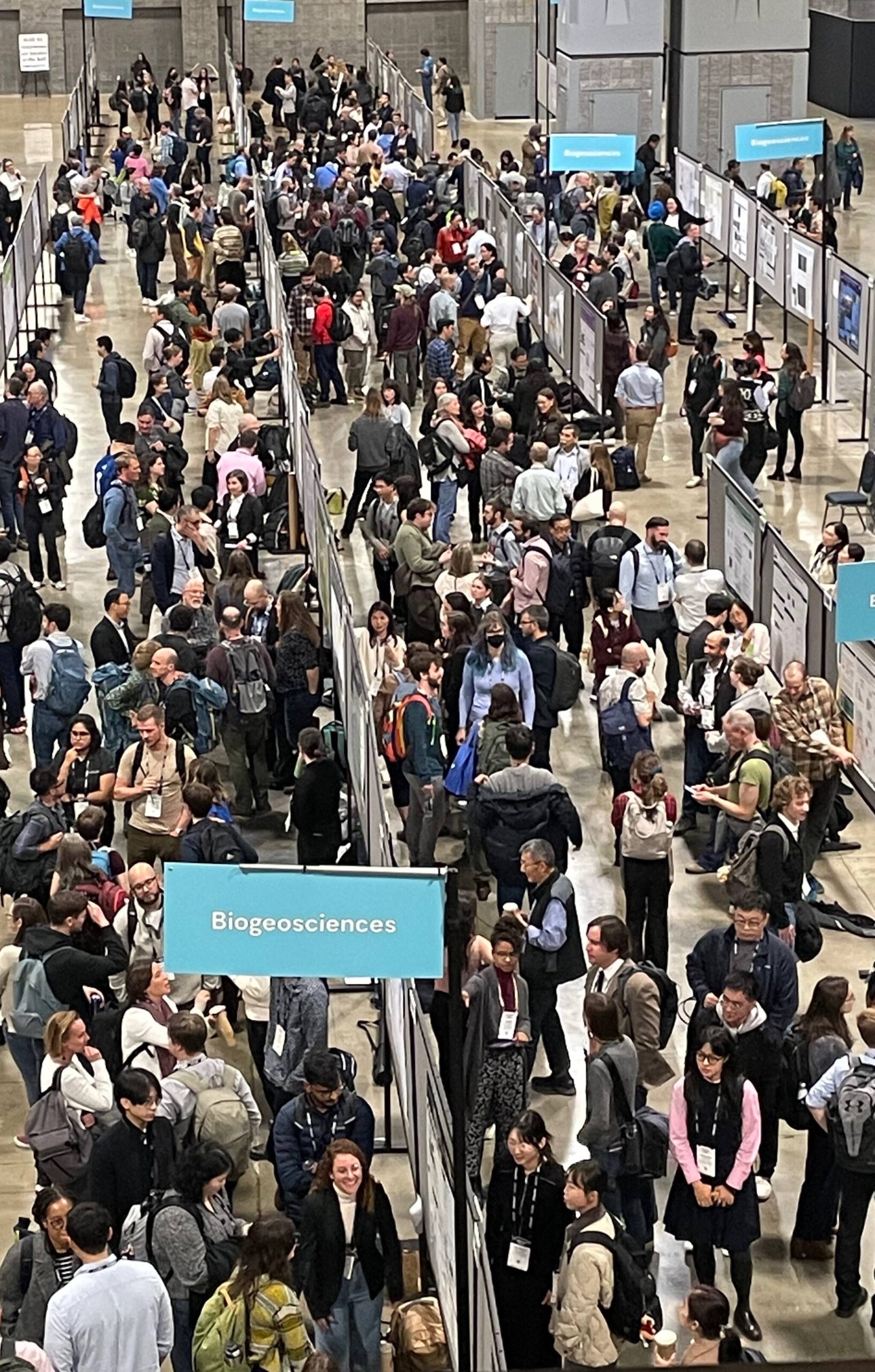
Some of the 25,000 attendees stand at a poster session during the 2024 Fall Meeting of the American Geophysical Union in Washington, D.C. (Photo by Ned Rozell)
Before I left the press conference room, I saw Jim Overland standing nearby. He is a scientist from NOAA’s Pacific Marine Environmental Laboratory whose idea initiated the first Arctic Report Card document and press conference in 2006.
In 2024, he summed up the state of the far North during the last 20 years as he remembered it.
“Twenty years ago, we saw several indicators (such as waning sea ice and increasing wildfires) but couldn’t give a (definitive) answer.
“Ten years ago, all the signals were strong enough to recommend action.”
“During the last three or four years, it’s just overwhelming.”
He gave an example of how the lack of a protective cap of sea ice makes Alaska communities more vulnerable to floods of seawater, turning what was a normal storm into an extreme event.
“That coastline had been protected for thousands of years by sea ice (during the winter). Now, when you have a regular storm on top of no sea ice, it’s throwing you into a place you haven’t been before.”
Into the frontier we go, with changes some of us won’t notice and others that will hammer us. Helping we humans and other creatures is our ability to adapt, of which there were several examples reported during the massive meeting. I will write about them in the upcoming weeks.
• Since the late 1970s, the University of Alaska Fairbanks’ Geophysical Institute has provided this column free in cooperation with the UAF research community. Ned Rozell ned.rozell@alaska.edu is a science writer for the Geophysical Institute.

Two attendees of the 2024 Fall Meeting of the American Geophysical Union in Washington, D.C. take a break from its exhausting pace and probably also some jet lag. (Photo by Ned Rozell)
