
I am responding to the Juneau Empire article (April 24, 2024): “The Juneau School District had a $9.5M projected deficit this year. It is now a $633,185 surplus. How is that possible?”
The latest revised budget projection presented to the Juneau School Board on April 16 raises a few questions.
Based on the revised calculations, what would have been a more accurate projected deficit presented in January this year? Superintendent Hauser and Financial Analyst Lisa Pearce reported then that the projected $9.5 million shortfall was due to a series of accounting errors in both revenues and expenses, which they blamed on the former administration.
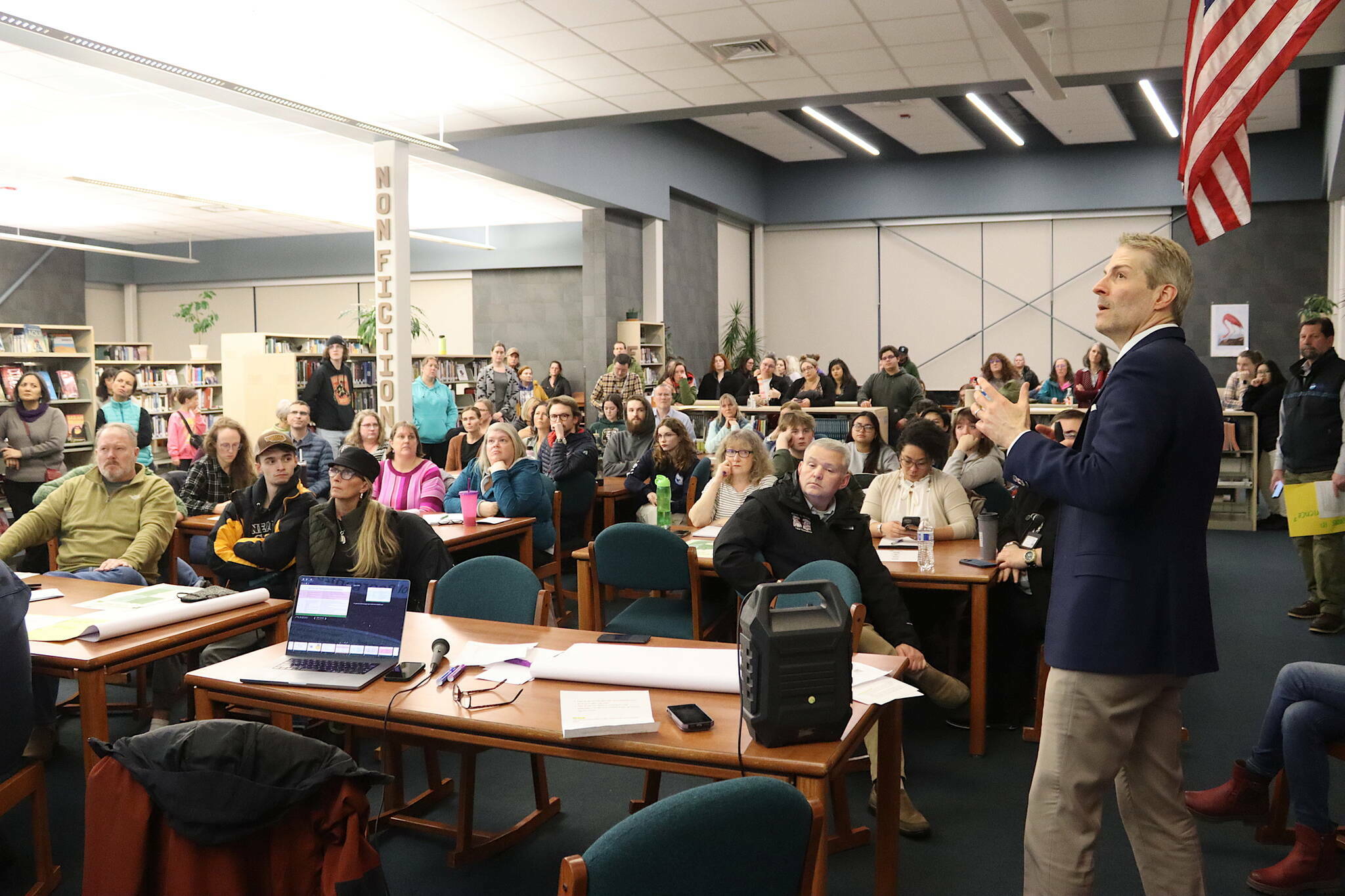
Following several public forums where budget cuts and reorganization options were discussed, the school board approved the most radical restructuring and consolidation of the Juneau School District ever.
As the Empire article stated, “However, Pearce’s figures turned out to be off by millions of dollars as well. She and other district leaders said that was due to incomplete information available when she made the initial assessment and subsequent developments that had unexpected results.” The Juneau public deserves a clear explanation of the specific reasons for this. The current administration’s overestimate of $3.55 million for employee health care, plus $838K for utilities, plus a few other estimated savings, totals about one-half the projected deficit presented in January. That is a significant change in only three months. It suggests there should be a third-party independent audit to verify the latest numbers. Based on these revisions, plus whatever an independent auditor may find, Superintendent Hauser and Ms. Pearce may owe previous administrators and the Juneau public an apology.
Another question is what is the district’s plan if the state approves a $680 increase in the Base Student Allocation for FY 25? This could result in a more than $5 million budget surplus with the current reorganization plan. These additional funds could provide for a major revision in the school consolidation plan, including keeping both major high schools open, and could help reduce the pupil-teacher ratio.
Although the Legislature failed to override the governor’s veto of the $680 BSA increase earlier this year by one vote, there is still a good chance this increase will be included in the final FY25 state budget. This is an election year and there has been growing, widespread public support statewide for at least a $680 increase.
One of the options presented to the board and public earlier this year, would keep the two major high schools open and use DzantiK’i Heeni as the sole 7th- 8th grade middle school. With the revised budget numbers, plus the shared costs agreement with the city, this is a viable option. It would be far less disruptive to the community, students and teachers than the current reorganization plan.
Replacing the 34 “unexpected resignations” of district employees also may reduce costs if new employees are hired at lower longevity steps.
Keeping more geographically disbursed schools open could reduce the need for additional busing, which is projected to increase about $400,000 next year to nearly $4M with the current plan.
Another question is: How solid are the estimated student enrollment projections? Despite demographic projections, there is speculation that some homeschool families may choose to enroll their students in public schools next year if the homeschool allotment program is changed due to the court ruling that the current program is unconstitutional. The announcement about basing a Coast Guard icebreaker in Juneau also could result in additional student enrollments in the not-too-distant future. If projections for continued declining student enrollment prove to be wrong, how soon could consolidated Juneau schools become overcrowded?
Even if, in the longer term, additional school closings become necessary, postponing a major high school closing for at least another year would give the administration and staff, school board, and families more time to carefully plan for mitigating adverse impacts.
According to Alaska Department of Education and Early Development Commissioner Deena Bishop, under state law, closed schools cannot be reopened for seven years. A lot can happen in seven years.
Juneau School Board members should be acknowledged for their diligent efforts to balance the district finances. However, with the revised numbers, I hope they will seriously reconsider their recently approved reorganization plan.
• Mark S. Johnson has lived in Juneau for 45 years. He and his wife are currently raising two elementary school-aged grandkids.
