
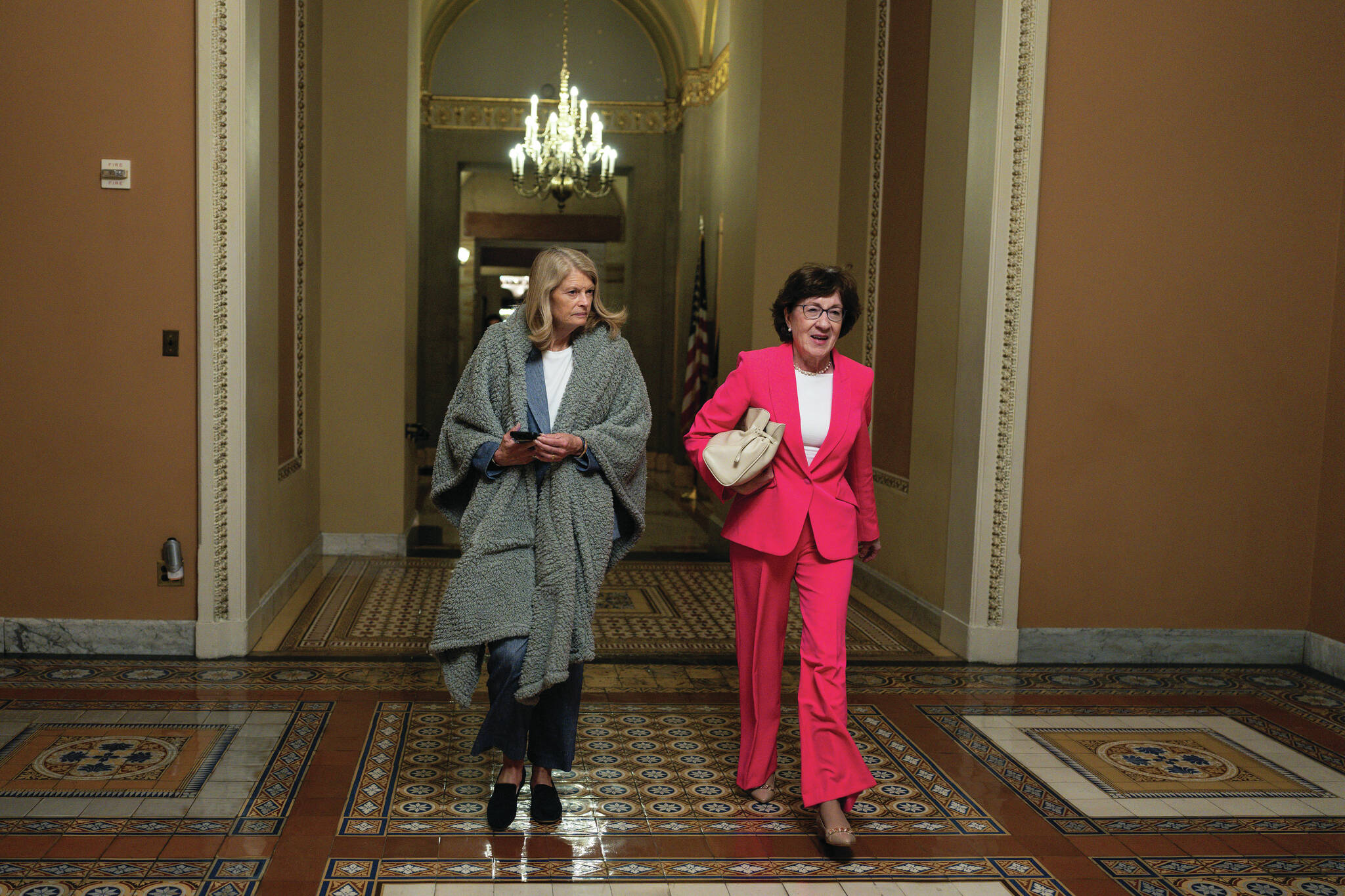
“This is not a perfect bill by any stretch of the imagination,” Sen. Lisa Murkowski said after voting for the ridiculously named One Big Beautiful Bill. “I am not happy with the process. In fact, I’m really very disappointed in the process.”
Then she should have voted against it. Instead, after telling reporters “we’ve got more work to do,” she left herself hoping the House will reject the Senate version so they can do the work to improve on it without any help from Democrats.
That can only happen if Republicans in both chambers defy the arbitrary Fourth of July deadline for passage set by President Donald Trump.
The bill’s title reveals another process flaw. It includes new tax laws. A one-time boost of $150 billion in defense spending. Funding increases for immigration enforcement. Revisions to Biden administration energy policies. Cuts to Medicaid and the Supplemental Nutrition Assistance Program. And more. Much of that could have and should have been addressed in separate pieces of legislation.
At 887 pages it isn’t as voluminous as the 2022 omnibus budget bill. But The Heritage Foundation’s criticisms of that still apply. They blasted congressional leaders for the “artificial, self-imposed” deadline and their “intent of jamming it through Congress and into law in just a few days with as little transparent and public debate as possible.” Members were left with “a false choice: either support this massive, expensive package and everything in it or suffer the political consequences of a partial government shutdown.”
The consequences for congressional Republicans this time would be Trump targeting them for defeat in their primary elections next year.
That wasn’t a concern for Murkowski. She beat the challenger he endorsed in 2022. She has no excuse for not following the model Sen. Joe Manchin, D-W.Va., set when he killed Joe Biden’s biggest initiative in 2021.
“Despite my best efforts, I cannot explain the sweeping Build Back Better Act in West Virginia and I cannot vote to move forward on this mammoth piece of legislation.” He insisted that Congress needs to “do things in a much better fashion. We have things that we can do in a bipartisan way, the way the Senate is supposed to work.”
In 2021, Murkowski worked with him to draft and pass the bipartisan Infrastructure Investment and Jobs Act. Sen. Dan Sullivan was one of the 18 other Senate Republicans who supported it. When 10 Republicans helped it pass in the House, Trump threated to primary them all.
The 2022 CHIPS and Science Act was another success story thanks to Murkowski, Sullivan and 15 other Senate Republicans.
Trump doesn’t think so. “Your CHIPS Act is a horrible, horrible thing,” he said during a recent address to a joint session of Congress in which he called for its repeal.
In his zero sum view of life, any bipartisan bill passed by Congress and signed into law by a Democrat is a loss for Republicans and therefore must be bad for the country.
He wasn’t around when one of the biggest slights to the spirit of bipartisanship occurred. Not one Republican supported the Affordable Care Act in 2009. Murkowski complained about it being “written in secret, behind the closed doors of the Majority Leader’s office.” After criticizing many of its provisions, she said it was “unfortunate that we did not pass a bill that was truly bipartisan.”
She and her party failed that test in 2017 when they passed the Tax Cuts and Jobs Act without support from a single Democrat.
In 2021, she rightly complained that the American Rescue Plan Act passed by Democrats was a “one-sided proposal” that gave “no consideration for the plan presented by their Republican colleagues.”
Here we are again.
“The system works if we use it,” she wrote in the introduction to her recently released memoir “Far From Home.” But both “parties demand conformity, and their loudest voices are also their most extreme and uncompromising.” The few senators attempting to build bipartisanship consensus “brought abuse on ourselves.”
Trump is by far the worst abuser in her party. The question now is did Murkowski cave to partisan pressure for just this bill. Or will she stand down the next time he unjustly demands that congressional Republicans submit to his will?
• Rich Moniak is a Juneau resident and retired civil engineer with more than 25 years of experience working in the public sector. Columns, My Turns and Letters to the Editor represent the view of the author, not the view of the Juneau Empire. Have something to say? Here’s how to submit a My Turn or letter.
