
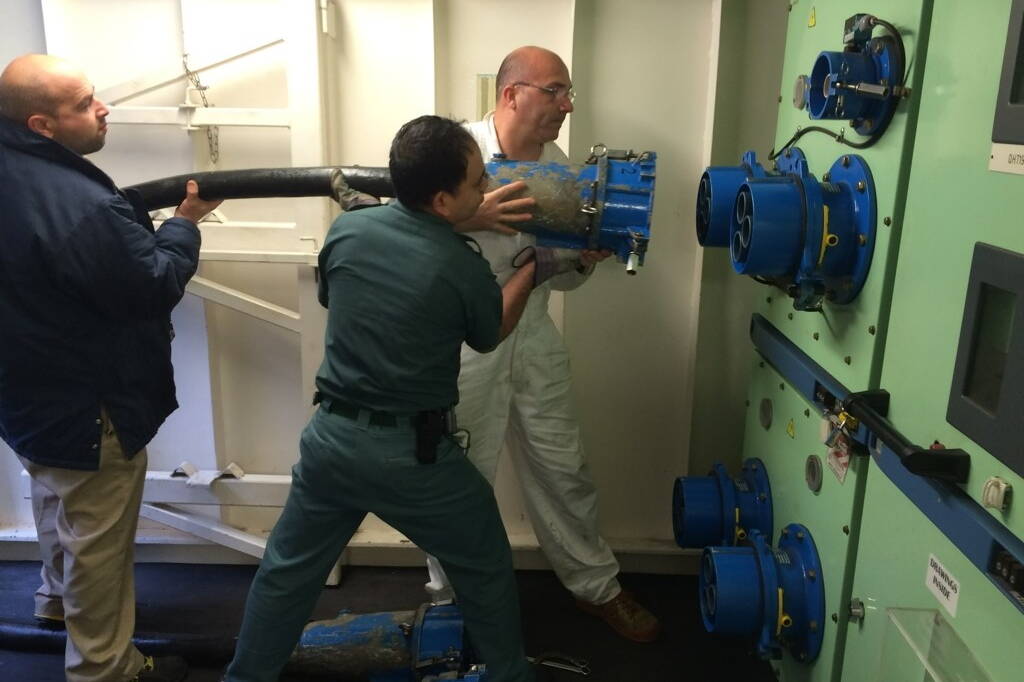
Here’s a great way to clean up the air in downtown Juneau during the busy cruise ship season. The tourism manager for the City and Borough of Juneau will soon recommend a draft list of projects to be funded by marine passenger fee (MPF) proceeds, followed by a 30-day public comment period. As a board member of Renewable Juneau (a local nonprofit that advocates for renewable energy) I strongly support using $10 million of collected fees to install shore power for CBJ’s two cruise ship docks. Shore power would allow ships to run off clean hydropower energy from AEL&P while they are in port.
The CBJ has been talking about dock electrification for more than a decade, without much recent progress. Twenty-three years ago Juneau led the world as the first port to provide clean, renewable energy to cruise ships while in port. Princess Cruises, AEL&P and the CBJ collaborated to provide shore power at the Franklin Dock which was completed in about a year’s time and has been eliminating ship emissions since.
This has not been the case with more recent efforts. In 2015, CBJ’s new 16B docks were constructed with conduit installed for future shore power. In 2016, CBJ conducted a feasibility analysis for shore power for those docks. By that time almost half of the cruise ships visiting Juneau were electrification ready.
Little progress was made from these efforts, forcing Renewable Juneau to submit a petition to the Assembly in 2019 with 900 signatures requesting that MPF be used to complete shore power design and engineering for the docks. The Assembly provided funding for engineering and design work, but instead the CBJ began yet another feasibility study. In 2023, after the CBJ learned that there was a two- to three-year backlog for critical electrical components, the Assembly appropriated $5 million in the FY24 budget. But alas, the CBJ learned that not enough engineering/design work had been done to order the needed equipment.
In 2024, most cruise ships that will visit Juneau are ready to hook up to shore power and yet the CBJ “hopes” to now develop a contract for design and engineering of the infrastructure. Sound familiar? The city manager and the Assembly need to provide strong leadership and oversight to complete dock electrification and they must require regular updates and deliverables on the pending contract. Recent history is frustrating and leaves little confidence in timely completion of the project. Each of the major steps of design, financing, obtaining specialized electric equipment and construction involve significant risks of delay, and sets Juneau further behind other West Coast ports in minimizing the impacts of the emissions-heavy cruise industry.
Our community has made progress toward reducing greenhouse gases and saving residents money through multiple fronts, including developing a climate action plan and renewable energy strategy, building out electric vehicle charging infrastructure, and providing resources and incentives for homeowners to replace aging fossil fuel heating systems with efficient, electric air source heat pumps. Dock electrification is an integral part of our community vision of a clean energy future that will improve public health, provide economic benefits, and enhance environmental quality.
As an extension of this proposal, the Assembly should adopt a formal “Clean Port” initiative, as proposed last year by the Juneau Commission on Sustainability. This would provide a focal point for implementing the recommendations of the Visitor Industry Task Force, and it would help reduce climate and other types of pollution by the CBJ, the cruise industry and local tourism businesses, and strengthen Juneau’s case for federal funding for shore power and related activities.
• John Neary is a 40-year resident of Juneau who retired from a career with the U.S. Forest Service, most recently as the director of the Mendenhall Glacier Visitor Center. He is now a board member of Renewable Juneau.
