
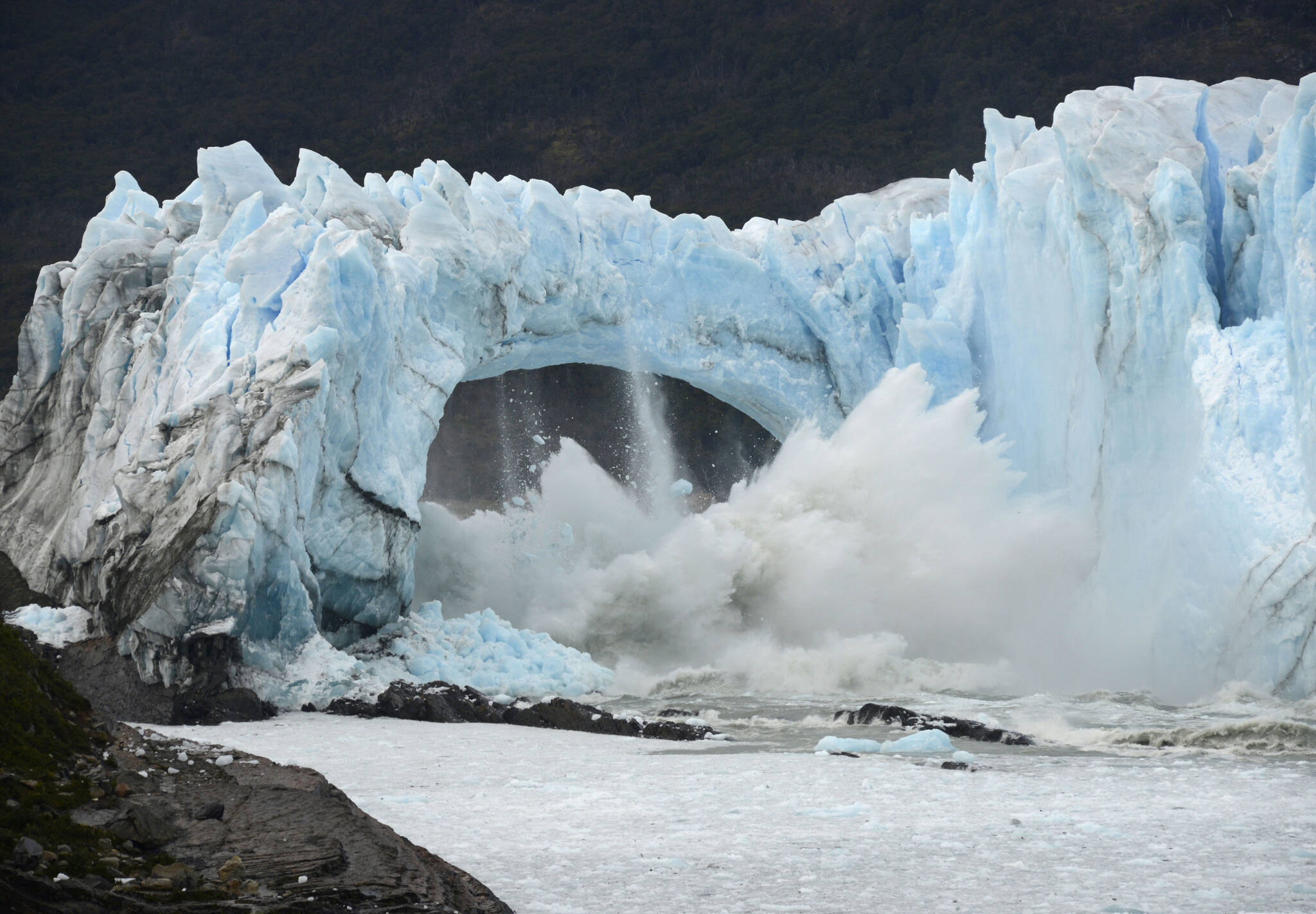
As glaciers melt and pour massive amounts of water into nearby lakes, 15 million people across the globe live under the threat of a sudden and deadly outburst flood, a new study finds.
More than half of those living in the shadow of the disaster called glacial lake outburst floods are in just four countries: India, Pakistan, Peru and China, according to a study in Tuesday’s Nature Communications. A second study, awaiting publication in a peer-reviewed journal, catalogs more than 150 glacial flood outbursts in history and recent times.
It’s a threat Americans and Europeans rarely think about, but 1 million people live within just 6 miles (10 kilometers) of potentially unstable glacial-fed lakes, the study calculated.
[Two-thirds of glaciers on track to disappear by 2100]
One of the more devastating floods was in Peru in 1941 and it killed between 1,800 and 6,000 people. A 2020 glacial lake outburst flood in British Columbia, Canada, caused a tsunami of water about 330 feet high, but no one was hurt. A 2017 glacial outburst flood in Nepal, triggered by a landslide, was captured on video by German climbers. Alaska’s Mendenhall glacier has had annual small glacial outburst floods in what the National Weather Service calls “suicide basin,” since 2011, according to study lead author Caroline Taylor, a researcher at Newcastle University in the United Kingdom.
Heavy rains and a glacial lake outburst flood combined in 2013 in India to kill thousands of people. A 2021 deadly flood in India that was initially attributed to a glacial lake outburst wasn’t caused by one, studies later found.
Scientists say so far it doesn’t seem like climate change has made those floods more frequent, but as glaciers shrink with warming, the amount of water in the lakes grows, making them more dangerous in those rare situations when dams burst.
“We had glacier lake outburst floods in the past that have killed many many thousands of people in a single catastrophic flooding event,” said study co-author Tom Robinson, a disaster risk scientist at the University of Canterbury in New Zealand. “And with climate change glaciers are melting so these lakes are getting bigger, potentially getting more unstable.”
Dan Shugar, a geoscientist at the University of Calgary who wasn’t part of the two studies, said much of the threat depends simply on how many people live in a glacial flood zone.
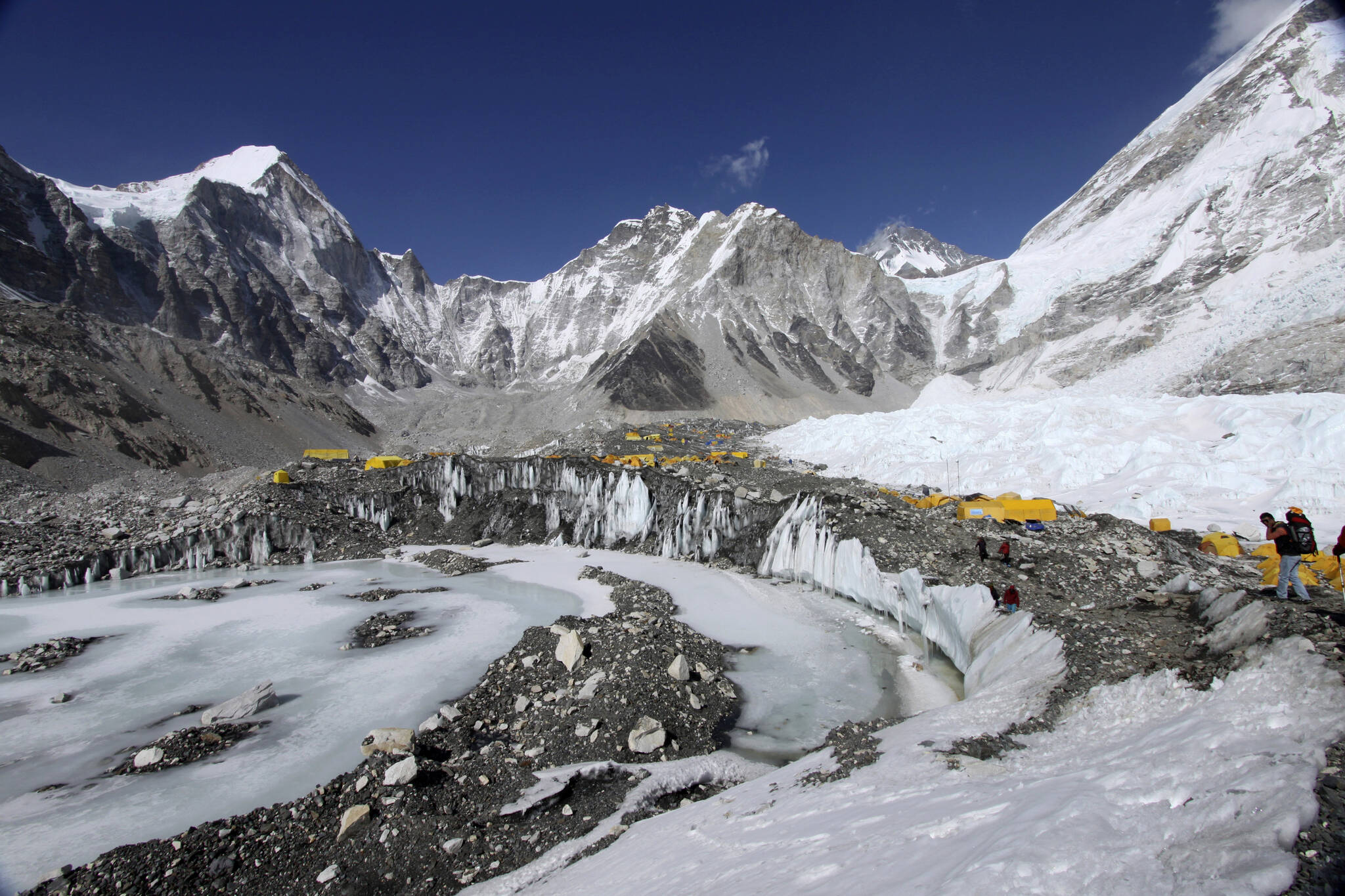
Tents are set up for climbers on the Khumbu Glacier, with Mount Khumbutse, center, and Khumbu Icefall, right, seen in background, at Everest Base Camp in Nepal on April 11, 2015. As glaciers melt and pour massive amounts of water into nearby lakes, 15 million people across the globe live under the threat of a sudden and deadly outburst flood, a new study finds. (AP Photo/Tashi Sherpa)
“In a warming world we certainly expect more and larger glacial lakes,” Shugar said in an email. “But the threat that these lakes might pose critically depends on where people are living and what their vulnerabilities might be.”
Robinson said what’s different about his study is that it’s the first to look at the climate, geography, population, vulnerability and all these factors to get “a good overview of where in the world is the most dangerous places” for all 1,089 glacial basins.
At the top of the list is Khyber Pakhtunkhwa basin in Pakistan, north of Islamabad.
“That’s particularly bad,” Robinson said. “Lots of people and they’re very, very vulnerable” because they live in a valley below the lake.
The trouble is that scientists are focusing too much attention on the Pakistan, India, China and the Himalayas, often called High Mountain Asia, and somewhat ignoring the Andes, Robinson said. The second and third highest risk basins are in Peru’s Santa basin, and Bolivia’s Beni basin, the paper said.
After the deadly Andes flood in the 1940s that region “was sort of a leader” in working on glacial flood outburst threats, but in the last decade or so, High Mountain Asia has taken over because of the high population, said University of Dayton geology professor Umesh Haritashya, who wasn’t part of the studies.
India ranks high in the threat list not so much because of the physical setup but because of “a huge number of people downstream.”
Three lake basins in the United States and Canada rank high for threats, from the Pacific Northwest to Alaska, but aren’t nearly as high as areas in Asia and the Andes with few people in the danger zone. They are in Alaska’s Kenai Peninsula — distinct from the Mendenhall glacier near Juneau — northeast Washington and west central British Columbia.
“This ranking is a good checklist for further research,” said Oliver Korup of the University of Potsdam in Germany, who co-authored the list of glacial lake outburst floods.
