
If the educated-yet-grand vision of the mariculture industry generating $200 million in business for Alaska within 20 years proves accurate, it will be the Pacific oyster that kicked it off.
That’s the side of mariculture — aquatic plants, shellfish and other related species — that is already showing signs of profitability. And with a collective $110 million in investment dollars coming to Alaska in the next few years, the future is bright.
Alaska is an appealing target for that largesse because it has all the elements needed for mariculture to thrive: fresh, clean water, aquatic acreage, and tourists by the tens of thousands, said Meta Mesdag, who started the Salty Lady Seafood Co. in 2018, a family oyster farm.
“We have everything we need in Southeast to build a major, thriving shellfish industry on a global scale,” she said. While there are challenges — this particular season hasn’t been good for Salty Lady — Mesdag thinks the next years will be excellent.
Eric Wyatt, who owns and operates the booming Blue Starr Oyster Co. in Prince of Wales with his wife, Cindy Wyatt, is also a booster for the long-term future of Alaska oysters. He first started farming 20 years ago.
“Is it possible that the Pacific oyster could one day be bigger than the salmon troll fishery in Southeast,” said Wyatt, who is a third-generation troller. He saw the writing in the seafoam with regards to diversifying food sources. “The salmon fisheries have not been really rosy in the past decade,” he said.
The mariculture business is relatively new and still microscopic compared to other Alaska industries. The state legislature authorized the issuance of permits of aquatic farms and hatcheries in 1988.
“Of the 53 farms that are either shellfish-only or combination farms, 41 have oysters listed on their operation permit,” said Michelle Morris, permit coordinator for Alaska Department of Fish and Game. Fifteen of those are oyster only, eight of which are in the Southeast.
About 1.89 million Alaska oysters were sold to the public in 2022, down slightly between 2021 and 2022, said Morris, who noted that not everyone with a permit is actively farming or selling product.
Oysters sold to other farmers, who develop the oyster through various stages, rose more dramatically year over year, from 2.6 million in 2021 to a little more than 5 million in 2022, as farmers stocked their sites with new inventory, Morris said.
The commercial value of the Pacific oysters sold to the public rose about 3% between 2021 to 2022, from $1,450,598 to $1.495,508, according to figures from the Alaska Department of Natural Resources. In 2021, 27 oyster farms reported income. In 2022, 28 farms reported income.
Sales of oysters to other farms rose much more dramatically between those years, but there was a reason for that.
The industry was still recovering from the pandemic years, when demand for the molluscs — typically consumed in restaurants — plummeted, explained Morris. “In 2021 there was a drop in getting new seed because they had so much stock on hand.”
Farmers were “able to sell again in 2021 and 2022,” and have since returned to “normal.”
It is too soon for estimates on 2023 numbers, which are carefully prepared, and won’t be released until May, Morris said.
But Wyatt predicted the numbers will be great for 2023. He called figures associated with sales and transfers “a lag event.”
“I can tell you they grew better this year,” said Wyatt. “Last year was pretty good, too.”
Wyatt also offered a reason for the improvement, which is something associated with climate change. “The water temperatures where the nursery system is was a bit higher, and I saw quite-a-bit better production of seed.”
Wyatt is a big advocate of the new state government Mariculture Incentive Grant Program, which contains $5 million in dollar-for-dollar matching funds to aid with expansion and investments into farming operations, hatcheries development, and mariculture processing.
He said that is because he was a recipient of a Fisheries Revitalization grant in 2005, which made a huge difference in the development of Blue Starr. That grant was $30,000, and there was a smaller one the following year. That got him “over the fence.”
“There was a salmon crash, and they said I could use money from my trolling business and build an oyster farm, and they matched the investment,” said Wyatt. “People put up their own dollars and you help them invest. For the most part, they’re going to do what they need to improve their businesses.”
Mesdag, who plans to apply for the matching grant that closes Dec. 8, noted other programs associated with the economic development money that are benefitting the industry. The biggest may be shoring up the state testing facilities, she said.
Oysters must be tested, a process that can be very expensive. A couple of years ago, elected officials talked about trying to pass that cost along to farmers, which would have been a death knell, she said. Upgrading the state testing facility updates systems and lowers costs, without passing it on to farmers.
That effort and other developments, including on the research side, will make Alaska more independent and self-sustaining in the future, Mesdag and Wyatt said.
One underlying catch already navigated by oyster farmers in Alaska is the reality that the shellfish doesn’t grow naturally in these parts. The clear, salty water that creates such a tasty oyster is also really cold — too cold for the oyster to reproduce. It also takes longer for them to grow.
Alaska’s oyster industry relies on oyster seed spawned outside of the state, primarily from Hawaii and Washington. Nurseries are key because they provide an environment for the tiny molluscs to grow long enough to survive, and thrive, in the frigid waters.
Right now there are two operations that have the ability to spawn oysters but have shifted effort to other areas of mariculture, Morris said. “It’s not cost effective for them to spawn oysters. It is cheaper to buy larvae or seed from out of state than it is for these guys to produce it in state.”
Five operations are permitted as nurseries, but probably only two or three are active, Morris said.
The big dollar question is whether something can be done to improve any of those stages and make farming more profitable. That’s what’s behind the wider push with investment money flowing to the region.
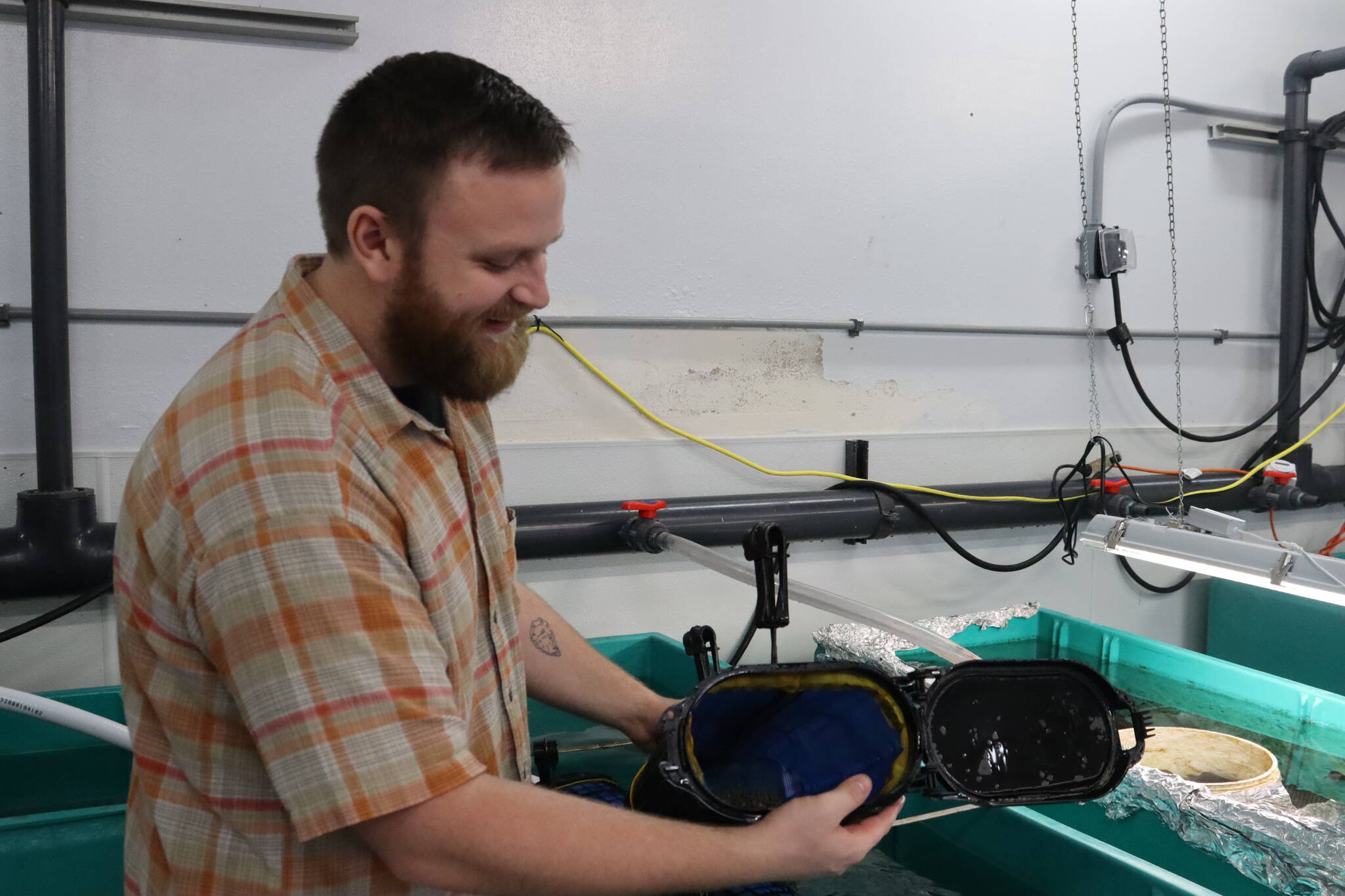
Researchers at NOAA’s Alaska Fisheries Science Center at Auke Bay are using science to overcome the natural barriers to producing larvae and seed that are optimized for growth in Alaska, and to identify cost efficiencies, said Jordan Hollarsmith, who leads the project taking shape at Ted Stevens Marine Research Institute Mariculture Wet Lab.
The group is building a small hatchery to house, condition, and spawn oyster broodstock and subsequent generations. That includes testing and growing phytoplankton, which oysters feed upon.
“It’s kind of a chicken or egg thing, where they want more oysters but they haven’t been able to figure out the early life stages in a hatchery or nursery setting,” said Henry Fleener, hatchery manager.
“We’re helping them figure that out, and the whole of the industry to grow, drive demand, and then maybe spur more hatcheries, or bigger hatcheries,” said Fleener. “And hopefully, we have a better oyster for Alaska, one bred for Alaska-specific conditions.”
Salty Lady is one of several farms participating with Fleener and others at NOAA in a research project that involves testing new gear and equipment types expected to decrease labor while increasing the quality of the oysters, Mesdag said.
Building a nursery system was a big turning point for Wyatt. “I realized some years ago I had to give up farming or try to secure a seed source,” he said.
Blue Starr is about to pay off a $350,000 floating nursery system put in place in 2019.
• Contact Meredith Jordan at meredith.jordan@juneauempire.com or (907) 615-3190.
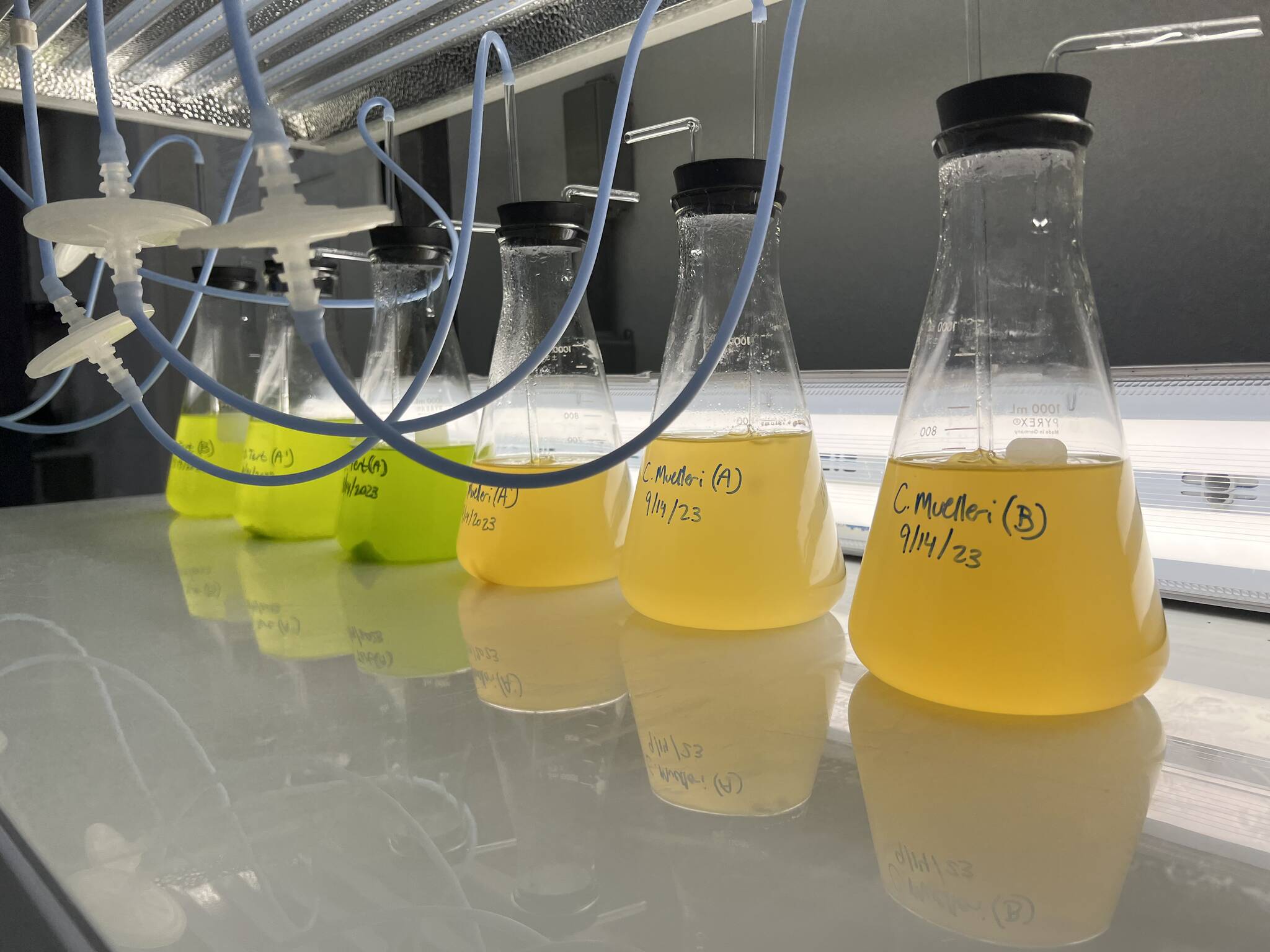
Growing and testing phytoplankton cultures to feed oysters in the lab. (Courtesy of Stori Oates/NOAA Fisheries)
