
By Bjorn Dihle
At the beginning of June of 1912, Mount Katmai, a 7000-foot volcano 40-some miles from Bristol Bay, was showing signs of coming to life. On June 6, a new volcano would come into existence — and the Aleutian Arc’s largest eruption in documented history would be underway.
The Aleutian Arc is part of the Ring of Fire, which stretches 1,900 miles from the Gulf of Alaska, west along the Alaska Peninsula and the Aleutian Islands, to the Kamchatka Peninsula in Russia. The range consists of more than 80 named volcanoes; around half of those have been active during the last 250 years. The June 6, 1912, eruption of the new volcano, dubbed “Novarupta,” was also the biggest eruption in the 20th century.
Volcanoes are an inextricable part of Bristol Bay. While there is no question a volcanic eruption changes the surrounding landscape, in Bristol Bay it may also spur biodiversity and contribute to the overall productivity of the region’s incredible fishery. Some biologists have theorized that volcanic ash could, at least in certain circumstances, help trigger plankton blooms that feed sockeye salmon.
The Yup’ik, Dena’ina and Altutiiq peoples, who have lived in Bristol Bay and the Alaska Peninsula since time immemorial, are no strangers to volcanos and earthquakes. Their oral narratives contain protocols of what to do in the event of an eruption. That ancestral wisdom saved many lives when Novarupta blew.
Mount Katmai loomed above four Native villages: Katmai, Douglas (Kaguyak), Kukak and Savonoski. Due to the draw of commercial fisheries in Bristol Bay, Chignik and Kodiak, at the time of the eruption there were fewer residents than in decades past. Katmai and Douglas (Kaguyak), where the Russian American Company had established trading posts in the 19th century and then abandoned around a decade before the eruption, were listed in the 1910 U.S. census as having a population of 62 and 45, respectively. People in those villages lived a subsistence lifestyle and also frequently worked in fisheries and trapped for a cash income.
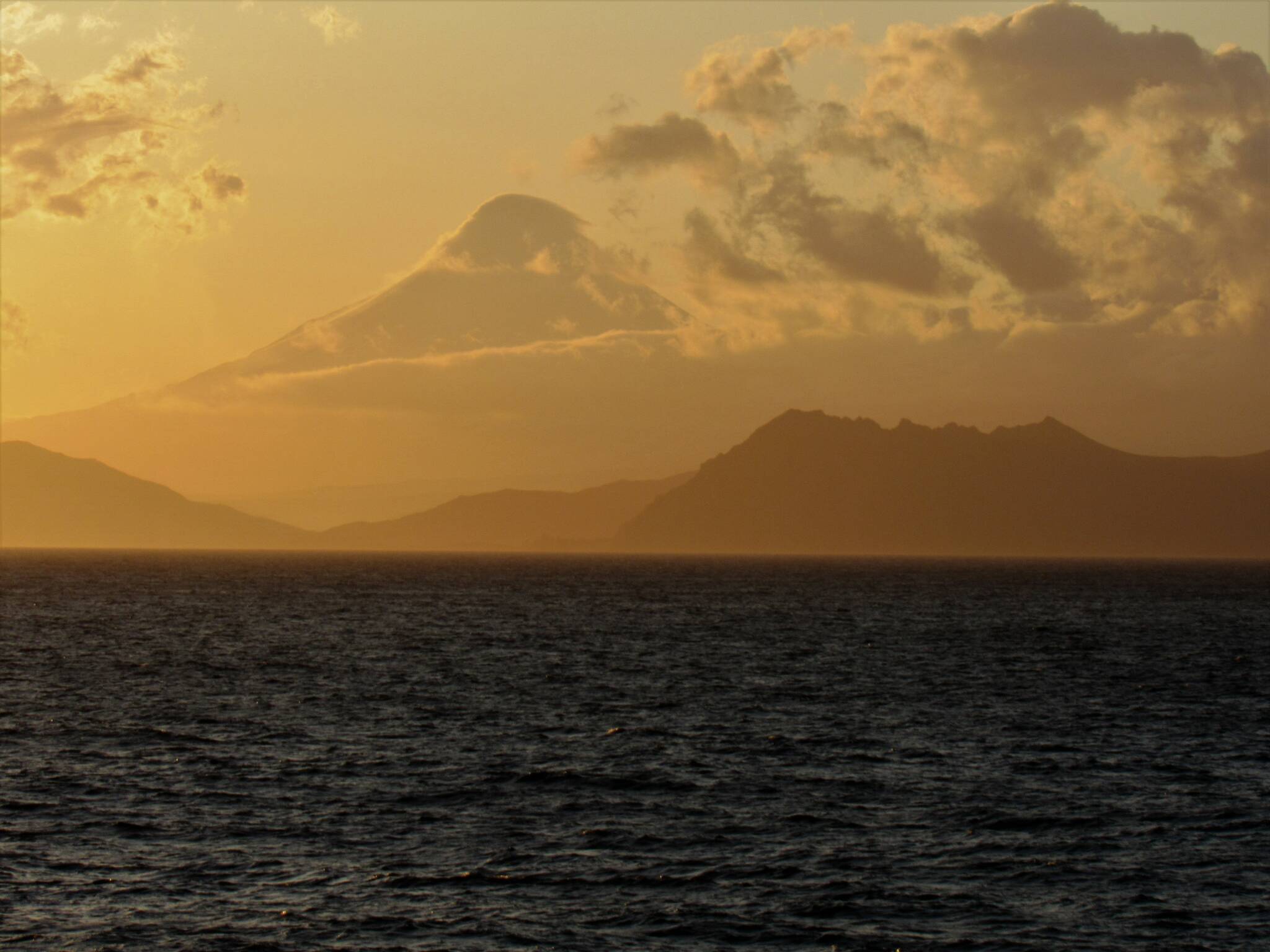
Mount Shishaldin on Unimak Island is one of numerous active volcanoes of the Aleutian Arc. (Courtesy Photo / Bjorn Dihle)
By June 2, 1912, villagers were experiencing more frequent and stronger earthquakes than normal. Most grabbed what they could and made their exodus. Many went to Bristol Bay. On June 6, all hell broke loose. Instead of blasting out of the top of Mount Katmai, magma melted an underground passage six miles west before rupturing out of the slopes of Trident Volcano. That newly formed volcano, which would be named Novarupta by botanist and explorer Robert F. Griggs a few years later, erupted for 60 hours, releasing 3.5 cubic miles of ash — so much that scientists in Algeria saw it. Supposedly, Novarupta’s eruptions were so loud that people in Juneau, 750 miles away, could hear them.
A few years after the eruption, Griggs interviewed Peter Kayagvak, a Sugpiaq man who had been living in Savonoski. Kayagvak’s family and another were some of the last people to evacuate the area. Kayagvak told Griggs, “The Katmai Mountain blew up with lots of fire, and fire came down the trail with lots of smoke. We go fast Savonoski. Everybody get in bidarka (skin boat). Helluva job. We come Naknek one day, dark, no could see. Hot ash fall. Work like hell.”
Kayagvak’s wife Palakia Melgenak told her children she thought the world was ending. The family paddled nonstop more than 40 miles to safety. Along with other people of Savonoski,
they established New Savonoski on the Naknek River—which has since been abandoned for the village of South Naknek, 5 miles away at the mouth of the Naknek River.
People from the villages of Katmai and Douglas were working at a saltery in nearby Kaflia Bay. Located on the southern coast of the Alaska Peninsula, Kaflia Bay is 32 miles east of Novarupta and directly downwind. Seeing the eruption, one Elder from Katmai ordered everyone to turn their boats over so they wouldn’t be filled with ash, and then to gather as much water as they could, as quickly as possible. As the cloud of ash descended, people took cover in their cabins and barabaras—traditional Alutiiq homes that were partly underground and covered with sod. Harry Kaiakokonok, who was 6 years old at the time, described the descending ash cloud.
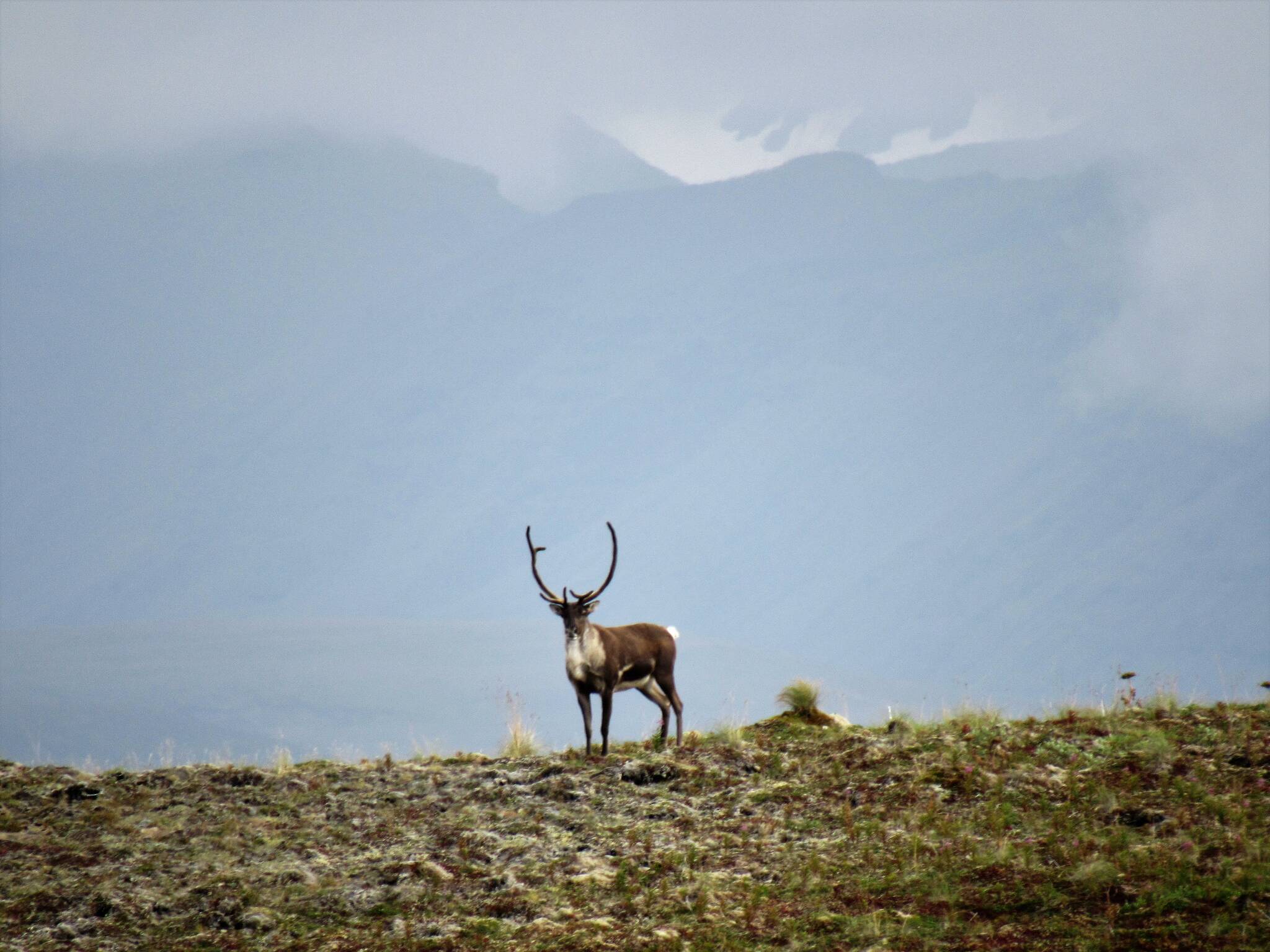
A caribou beneath the ramparts of volcano Mount Dutton on the Alaska Peninsula. (Courtesy Photo / Bjorn Dihle)
“Dark didn’t come all of a sudden, it comes gradually. Getting darker and darker and darker and darker, and pretty soon, pitch black. So black even if you put your hand two or three inches from your face outside you can’t see it ‘cause it was so dark,” Kaiakokonok said.
The people in Kaflia Bay spent three days under a black curtain of falling ash, blindly struggling in the heat and laboring to breathe. A hundred miles away, the town of Kodiak was buried in a foot of ash. Far and wide, salmon and other animals suffocated, their carcasses strewn throughout the ash-covered waters. When people in Kaflia Bay emerged, they were greeted by a blanket of ash more than three feet high.
On June 12, a relief ship captained by Second Lieutenant W. K. Thompson was sent from Kodiak to Kaflia Bay. Thompson rescued the survivors, then continued searching along the coast for others. He transported everyone he found to Afognak Island. Miraculously, not a single person died in the Novarupta eruption. But, the villages of Katmai, Douglas (Kaguyak), Kukak and Savonoski were lost. Peter Kayagvak told Griggs how much he missed his village.
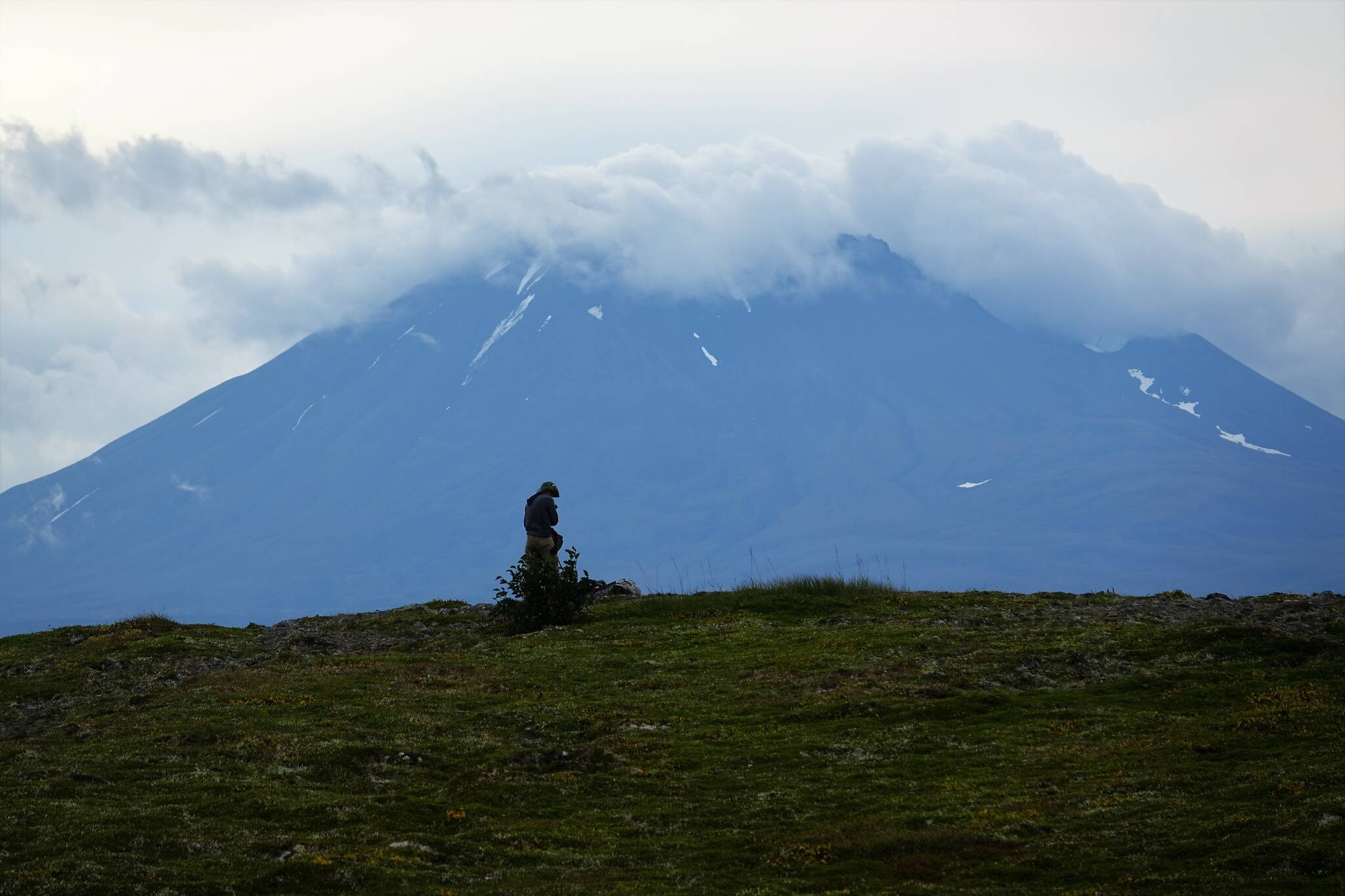
A hiker pauses beneath the volcano Mount Peulik on the Alaska Peninsula. (Courtesy Photo / Bjorn Dihle)
“Too bad. Never can go back to Savonoski to libe (sic) again. Everything ash. Good Place too, you bet. Fine trees, lots of moose, bear, and deer. Lots of Fish in front of barabara. No many mosquitoes. Fine church, fine house,” Kayagvak said.
Due in a large part to Griggs’ efforts, President Woodrow Wilson declared Katmai a National Monument in 1918, ending the possibility of people returning and rebuilding their ancestral villages.
For years after the eruption, it was reported that the Savonoski River was too hot to bathe in. To this day, it runs dark with ash — but multitudes of salmon use the river to navigate to their spawning grounds. Kaflia Bay generally has great salmon runs. And 90 years later, the Kaflia area would become one of bear man Timothy Treadwell’s favorite places to live shoulder to shoulder with dozens of bears. It would also become his death place.
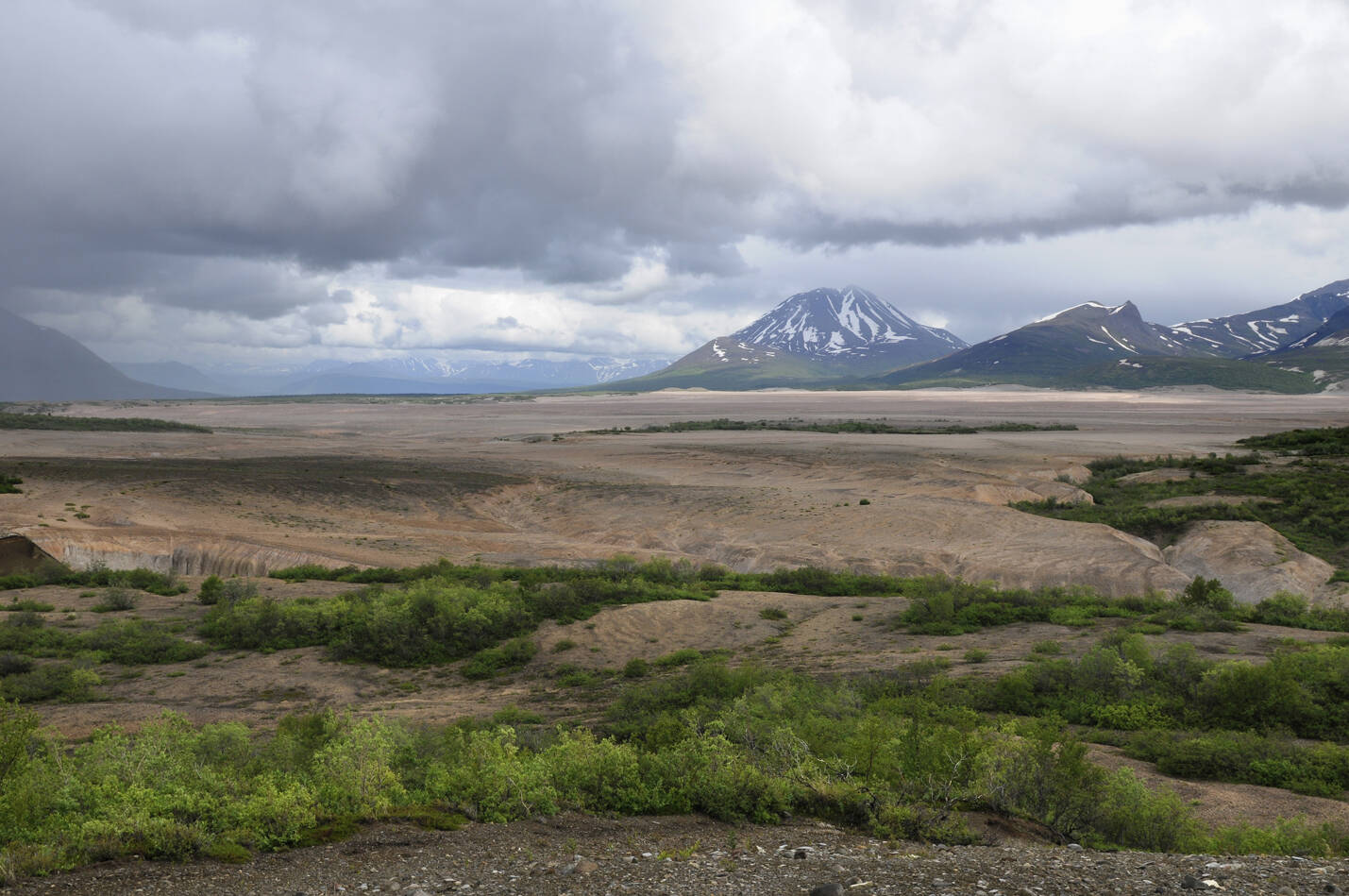
The descendants of the people of Katmai, Douglas (Kaguyak), Kukak and Savonoski now live in villages across Bristol Bay, the Alaska Peninsula and beyond. Thousands of tourists annually visit their homeland to witness brown bears, salmon and the wild landscape. They travel by floatplane, then bus, to the Valley of 10,000 Smokes to see the ash filled 40-square mile valley crowned by Mount Katmai. The volcano’s summit caved in during the 1912 eruption, but it still looms above the land and ocean as a stark reminder of how quickly the world can be destroyed — and recreated.
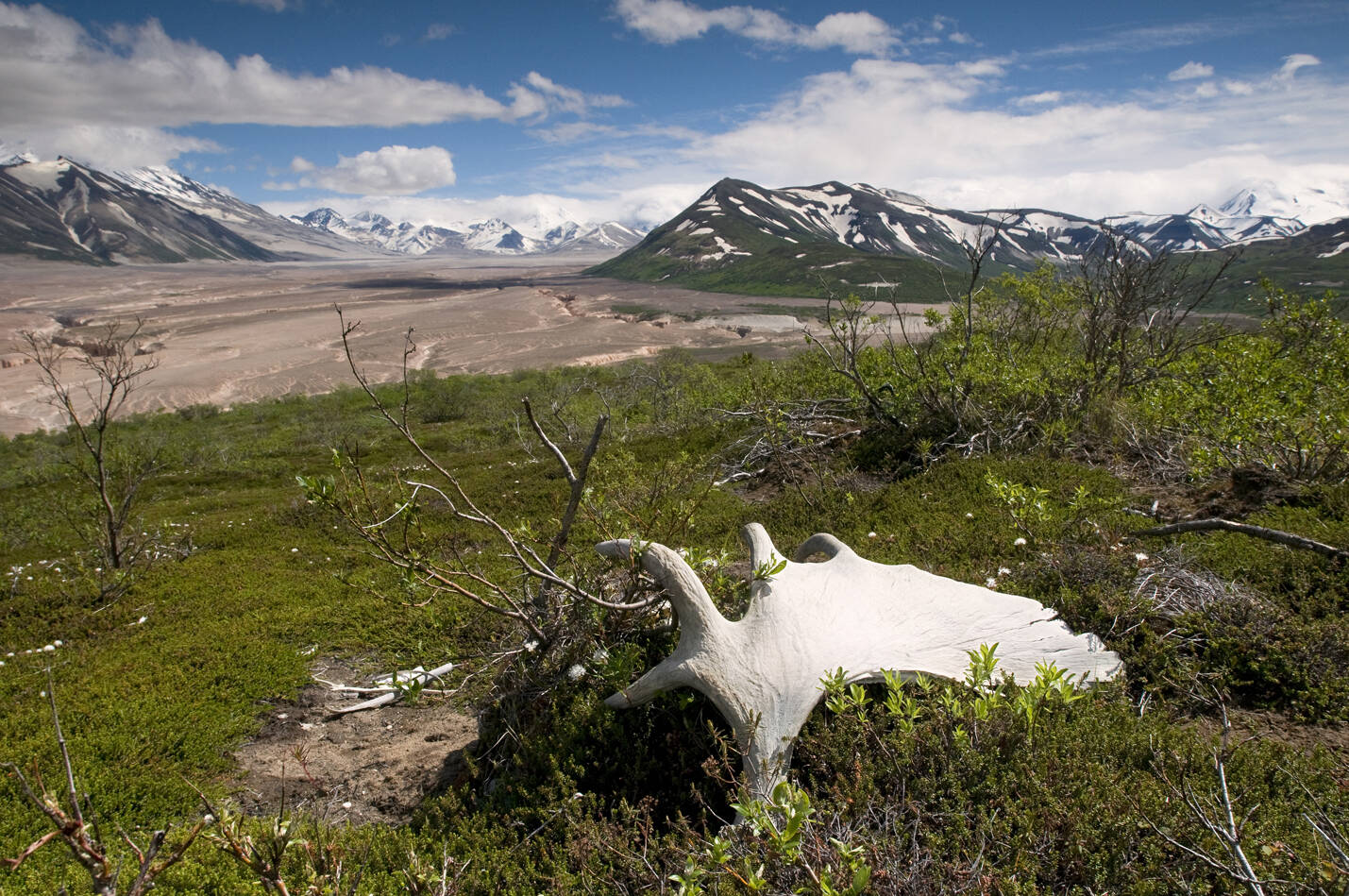
Moose antlers sit on the edge of the Valley of 10,000 Smokes, Katmai National Park, Southwest Alaska, Summer. (Courtesy Photo / Chris Miller)
• “Pride of Bristol Bay” is a free column written by Bjorn Dihle and provided by its namesake, a fisherman direct seafood marketer that specializes in delivering the highest quality of sustainably caught wild salmon from Bristol Bay to your doorstep. It appears monthly in the Juneau Empire.
