Permanent Fund Dividend still a major question mark this session
Published 12:30 pm Tuesday, April 23, 2019



Senators polished off their crystal balls Tuesday, trying to take a look at the future of the state under the governor’s budget proposal and under the Legislature’s proposal so far.
During Tuesday’s Senate Finance Committee meeting, Sen. Peter Micciche, R-Soldotna, was succinct and straightforward as he broke down the major impacts of the governor’s budget versus the one passed by the House.
While the House budget doesn’t include any new taxes for revenue, it does reduce the Permanent Fund Dividend, so it does affect household income.
While Gov. Mike Dunleavy’s budget proposal keeps the PFD high, it will result in a rise in local taxes because the budget proposal shifts many costs from the state to municipalities. Cutting state spending for school bond debt reimbursement, for example, will require cities to raise taxes in order to fund schools at a similar level as before.
“It’s not like either one is impact free,” Micciche said.
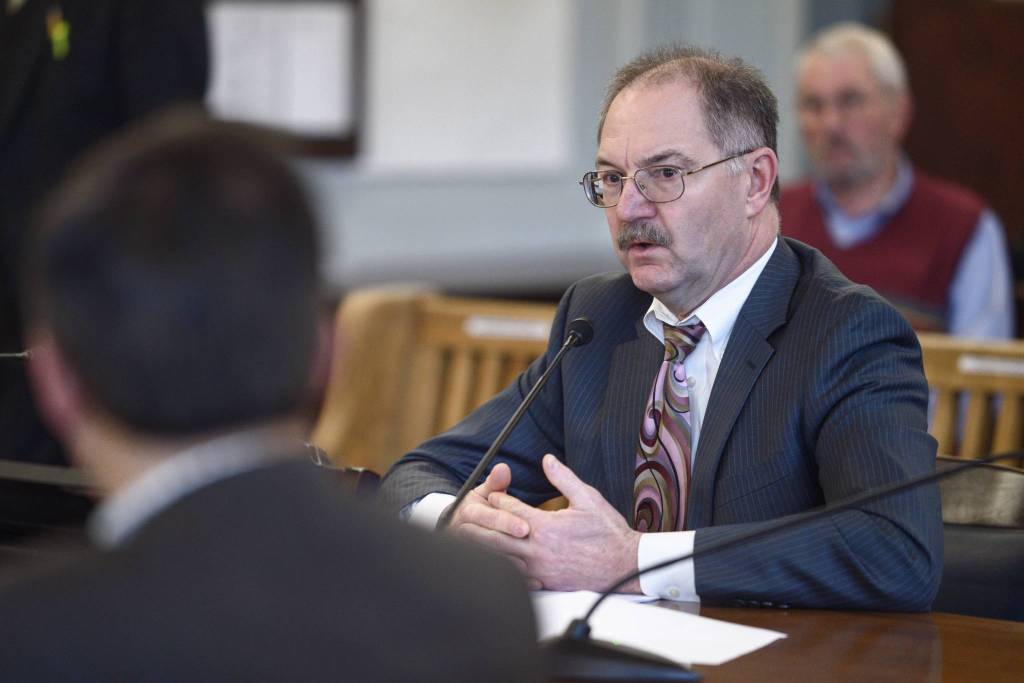
David Teal, the director of the Legislative Finance Division, concurred with Micciche’s diagnosis. Teal spent a little over an hour presenting to the committee about the House budget, which proposes about $250 million in cuts compared to the $1.6 billion worth of cuts governor’s proposal.
Teal said that based on Legislative Finance projections, the House budget actually addresses many of the governor’s stated budget goals better than the governor’s budget.
DV.load(“https://www.documentcloud.org/documents/5976167-042319-LFD-SFC-Long-Term-House-Plan.js”, {
responsive: true,
container: “#DV-viewer-5976167-042319-LFD-SFC-Long-Term-House-Plan”
});
042319 LFD SFC Long Term House Plan (PDF)
042319 LFD SFC Long Term House Plan (Text)
Two of the Dunleavy administration’s prime objectives in building the budget are not having expenditures exceeding revenue and preserving core functions. According to Legislative Finance projections for the next 10 years, the House’s plan outperforms the governor’s plan on both of these points.
“There are no deficits and the core functions are funded at a higher level under the House plan,” Teal said.
The governor’s plan will also likely result in the state pulling from the Constitutional Budget Reserve (CBR) in future years, Teal said during his presentation. The House proposal will not result in pulling from this account, Teal said.
The CBR was established by a statewide vote in 1990, and can be used under certain conditions to fund state government. As of March 31, according to the Alaska Department of Revenue’s Treasury Division, the CBR had $1.75 billion in it.
The only point where the House’s plan differs greatly from the governor’s goals is that it doesn’t leave as much money for the Permanent Fund Dividend. PFDs could dip all the way down to about $800 in the coming years before climbing to $1,500 or more in a few years, Teal projected.
Neither the House nor the governor included the PFD in their budget proposals. The governor has pledged to use the state’s traditional PFD formula to pay a PFD of about $3,000 this year, while the House budget allows for a PFD of just under $1,300, House Finance Co-chair Neal Foster said in a recent press conference.
“The governor is right when he says the House proposal is an incomplete fix,” Teal said. “You will not have a complete fix until dividends are determined.”
Ed King, the head economist for the Office of Management and Budget, responded to Teal’s presentation with a lengthy thread of tweets Tuesday. Members of the Senate Finance Committee have been talking about the PFD as if it’s another state agency competing with the rest of the departments for funding, and King said he believes it’s clear the Legislature is not prioritizing the PFD.
“If the Legislature treats a PFD reduction as the confiscation of income, they would be wise to evaluate if that is the most desirable form of taxation,” King tweeted. “If they treat it as a budget item, they would be wise to evaluate the impact of those cuts versus others.”
The primary difference between the Governor and Legislature plan's is this: The Governor believe the PFD should be paid first. The Legislature believes it should be paid last. The question is simply a matter of how far down the priortiy list you get before you run out of revenues
— Ed King (@KingEconomics) April 23, 2019
That goes back to Micciche’s point. Both the House and the governor’s plan will take money from households in their own ways, as he pointed out, and he and his cohorts on the committee will continue to evaluate which one will have a more positive impact on the state.
The PFD was $1,600 per person in 2018. For the past three years, the state has used PFD funds to help fund state government, resulting in smaller PFDs.
Starting Wednesday, the committee members will address the governor’s crime bills. Senate Bill 32, which aims to make penalties harsher for drug offenses, is on the agenda for 9 a.m. Wednesday. Senate Bill 35, which makes penalties harsher for sex offenses, is on the agenda for 9 a.m. Thursday.
• Contact reporter Alex McCarthy at amccarthy@juneauempire.com. Follow him on Twitter at @akmccarthy.