
By Mary F. Willson
For the Juneau Empire
Human animals have a simple, direct system: copulation and sperm delivery may lead to fertilization of an egg, if the timing is right. Once a sperm joins an egg, the resulting zygote gets implanted on the uterine wall and development of the embryo proceeds. No notable delays in the process. But many other mammals do it differently—the process may be interrupted by delays: delayed fertilization, delayed implantation, and delayed development.
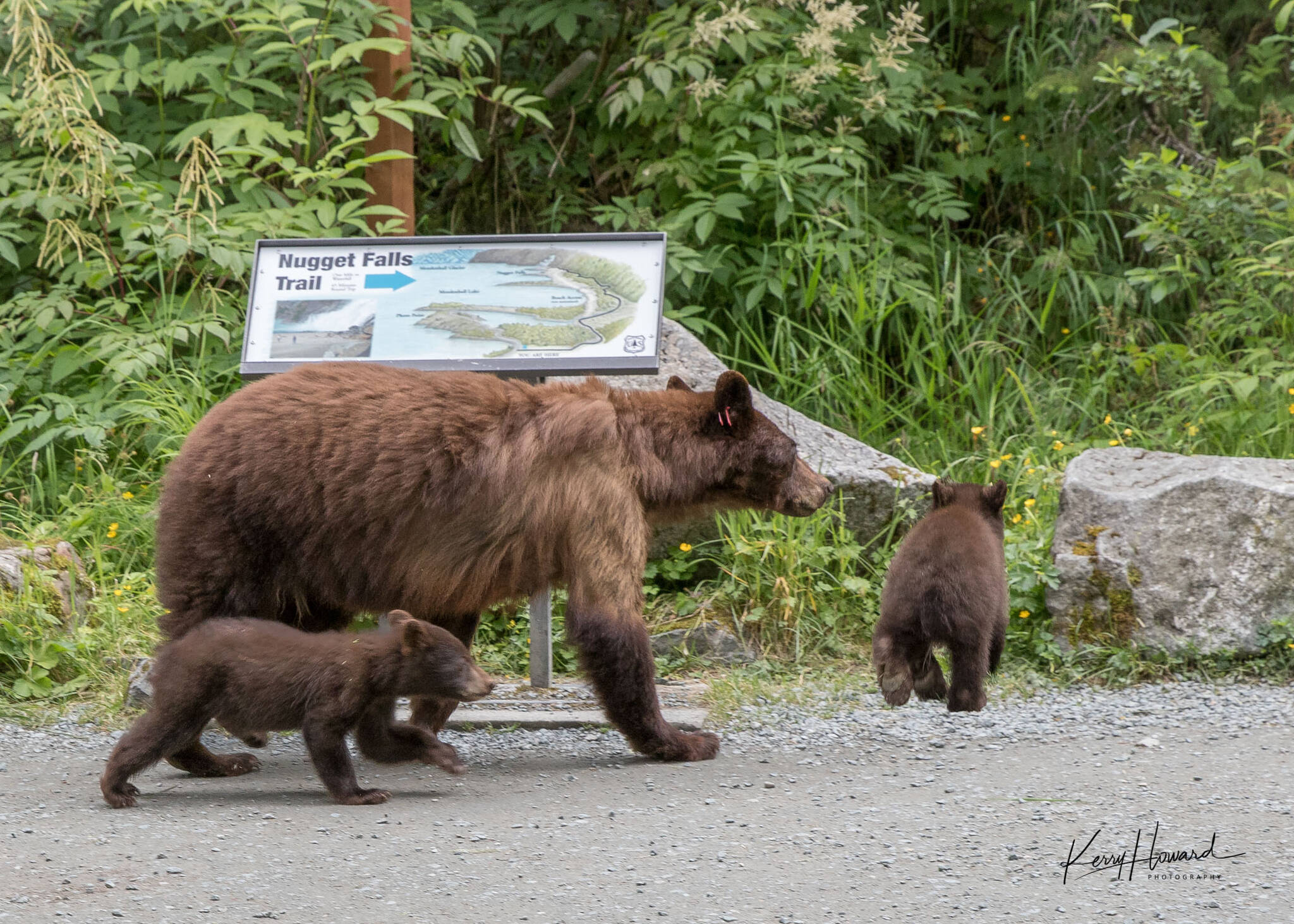
Delayed implantation is rather common. To take a familiar example: black bears mate in early summer, but the fertilized egg is not implanted until fall; then gestation takes about seven months, resulting in a tiny cub that won’t emerge from the den until early summer. Regular, scheduled delayed implantation is also recorded for various mustelids (otter, mink, wolverine, ermine), brown bears, some bats, some seals, a European deer, and others. However, sometimes delayed implantation is not regularly scheduled but occurs facultatively (e.g., in some red fox populations), in response to changes in environmental conditions or food supply; also, in some cases, if a female is lactating to feed previous offspring, the implantation of another zygote is delayed (e.g., gerbils, kangaroos).
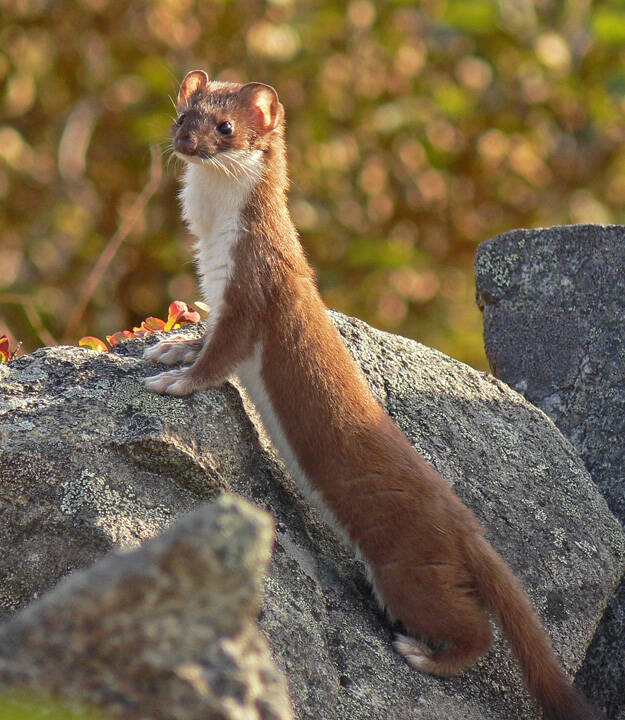
Short-tailed weasels are known as ermine in winter. Regular, scheduled delayed implantation is recorded for various mustelids (otter, mink, wolverine, ermine), brown bears, some bats, some seals, a European deer, and others. (Courtesy Photo / Bob Armstrong photo)
Other schedules of delay seem to be less common. Delayed fertilization is known in many bat species and the European hare (for example); females store sperm until the right time. Some bats have delayed development, either scheduled or facultative.
Reproductive delays of some sort are clearly widespread among mammals, occurring in more than a hundred species, in different taxonomic groups. However, delays are especially common among carnivores, bats, and marsupials. Biologists have known the existence of such delays for a long time, and puzzled over why they occur.
There is general agreement that it is usually advantageous to produce offspring during seasons of good food availability, making it easier for lactating females to get the energy and nutrition to pay the high costs of lactation and to allow offspring to learn how to feed on their own. (Note, however, that hibernating female bears actually produce their tiny newborns in late winter, relying on stored energy to feed them, and the cubs then emerge from the den when the season of good food availability is beginning.) In addition, synchronous production of offspring for any species might increase the likelihood of satiating predators and so allow more offspring to survive.
Those considerations apply to any species, however, whether or not they have reproductive delays. So the question is how to account for the existence of the delays between mating and birthing. Why is mating scheduled so far in advance of birthing—sometimes many months ahead?
There may be multiple reasons for the delays, and the advantages are likely to differ among species; lots more research is needed. But in the meantime, one suggestion is that the delays allow opportunities for post-copulatory sexual selection (including female choice and male competition), which is a sub-category of natural selection. We are familiar with the displays and songs of courting animals—the strutting and showing-off and singing of competing males while females watch, listen, and choose their mates. But those competitive and choosing activities in some form can also happen after copulation.
There are many ways that post-copulatory sexual selection might occur:
—Delays between copulation and fertilization usually involve delayed ovulation and sperm storage (although mammals have less capacity for sperm storage than many other animals). Known fertilization delays in mammals range from eleven days (in dogs) to over two hundred days (in a bat). During these delays, females that copulate with more than one male are probably capable of exerting choices among the sperm from different males. How? Perhaps by ovarian or uterine fluids affecting the swim speed of sperm, or by hormones determined by the degree of satisfaction of male’s courtship, or by incompatibility of the cell surfaces of sperm and egg, for example. In mammals, the delays offer more opportunity for extra matings and thus for more sperm competition among the males, and more sources of sperm for females to choose from. Cryptic female choice would be particularly useful if mating occurs when females are in torpor (some bats), with little chance for more direct choices, or when males and females migrate separately (other bats).
—Delays between fertilization and implantation might allow accumulation of several zygotes and thus the opportunity for female choice, perhaps detecting and rejecting zygotes with incompatible gene combinations. Implantation delays in mammals range from about eight days (European mink) to over two hundred and forty days (polar bear, marten, weasels).
—Delays between implantation and birthing are also possible, as occurs in some bats. There are fewer opportunities for cryptic female choice at this stage, compared to earlier in the process, and less seems to be known about it, but it is possible that that females may be able to exert some choice among developing embryos. It seems likely that delays at this stage are facultative rather than regularly scheduled.
For want of space, I’ll omit discussion of reproductive delays in insects, reptiles, and birds, except to say that cryptic female choice is well-documented in a variety of species.
But I can’t leave the topic without mentioning plants, which also exhibit delays between pollination and fertilization and between fertilization and seed maturity. To take just one instance: conifers often delay fertilization until long after pollination; most pines delay more than one year, but some conifers delay as much as three years. During that time there is opportunity for sperm competition and female choice, either at the level of ovules or of the whole cone. However, information on this is notably scarce.
• Mary F. Willson is a retired professor of ecology. “On the Trails” appears every Wednesday in the Juneau Empire.
