Lawmakers approve legislation, funding to test backlog of rape kits
Published 2:37 pm Thursday, May 17, 2018
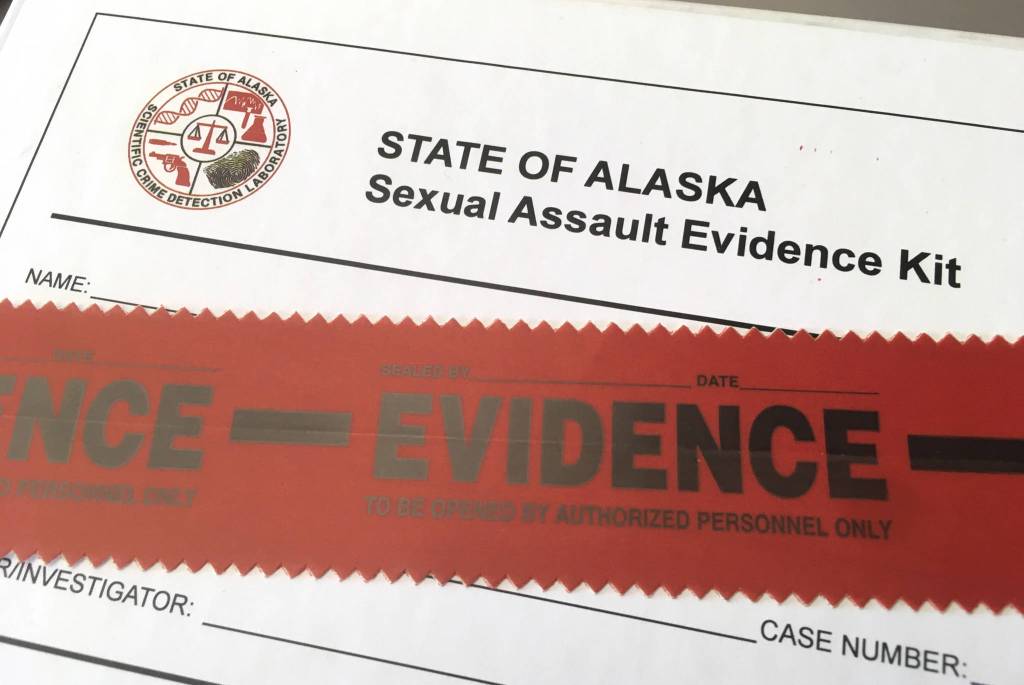
An effort to solve a backlog of untested evidence from rape cases across Alaska received a major boost from the Alaska Legislature this week, but public officials caution that the backlog will still take time to resolve.
Before legislators adjourned the 30th Legislature on Sunday, they inserted $2.75 million into the state’s capital budget to pay outside laboratories to examine untested DNA evidence from sexual assault cases over the past several decades.
They also approved House Bill 31, which requires police to be trained in how to manage sexual assault and domestic violence, and requires the state to report the number of untested sexual assault evidence kits.
“This is going to make a huge difference,” said Rep. Geran Tarr, D-Anchorage, of the Legislature’s actions.
According to a report last year by the Alaska Department of Public Safety, police departments across the state have 3,484 untested sexual assault evidence kits, commonly known as “rape kits.”
Ninety-two percent of those kits are held by the state’s seven largest police agencies: the state troopers, Anchorage Police Department, Juneau PD, Fairbanks, PD, Nome PD, Ketchikan PD and North Slope Borough PD.
These kits contain physical evidence — swabs and hair samples — taken from the bodies of sexual assault victims or alleged perpetrators.
In some cases, these kits are tested promptly and used to identify the perpetrator of a sexual assault. But in cases where the perpetrator’s identity is not questioned (consent might be the issue there), the evidence kit might remain untested, shelved away with other anonymous white boxes.
That has alarmed victim advocates, who have suggested that testing these kits could lead to links with other, unsolved cases in Alaska and nationwide.
Randi Breager is a criminal justice planner at the state crime lab and chairwoman of the board of directors for Standing Against Rape, an Anchorage-based organization.
She said by phone that the new money will be a significant help, but it will take time to make an impact.
“We’re talking about 30 years worth of an issue that has built up. It’s not something that’s going to be resolved in six months or a year,” Breager said.
“It’s going to be a multi-year project, even with that $2.75 million,” she said.
For the past two years, Breager has been part of an initiative to test the 764 unsubmitted kits held by the state troopers.
In 2016, the state received a $1.1 million federal grant to test those kits. Last year, it received another $450,000 grant to pay for a prosecutor, cold case investigator and a researcher at the University of Alaska Anchorage Justice Center.
As news of the Alaska Legislature’s funding arrived at the crime lab, Breager was looking at the first batch of test results from that federally funded effort.
“Yes, we got our first batch back, and we’re excited that they’re going to start rolling in,” she said.
Tarr was the sponsor of HB 31 and said Sen. Anna MacKinnon, R-Eagle River, deserves an enormous amount of credit for securing funding for the testing program.
MacKinnon was on vacation and out of cellphone range Wednesday, her staff said.
“This is a lasting impact and a really good legacy for her,” Tarr said. “I think it’s really a bright spot of accomplishment for this legislature.”
Alaska’s crime lab, despite a major recent expansion, doesn’t have enough staff or facilities to test both the stored kits and the evidence that comes in from new cases. Instead, the “cold” kits will be sent to private laboratories in other states.
Those labs are themselves swamped by a surge in demand caused because other states are taking the same steps Alaska is.
“It’ll be months and months before they’ll even be able to accept our kits for analysis,” Breager said.
“There are so many things beyond our control; it’s just not going to be that quick, but we’re going to be working diligently on it,” she said.
In the meantime, some of the money appropriated by the Legislature will be used to construct storage at the crime lab for kits currently held by departments across the state.
From that central clearinghouse, the kits will be sent to those private labs, and the results of the testing will go back to individual police departments across the state.
Breager said the Legislature’s money likely will not be enough to test all of the kits held by police departments, but the Municipality of Anchorage has applied for a federal grant as well, and success on their part could mean enough money to finish the job.
There is no telling how many serial rapists might be revealed by the testing, but if other states are any indication, it could be significant.
In February, Ohio finished testing a backlog of almost 14,000 kits. That revealed almost 300 serial offenders linked to 1,125 crimes.
In Alaska, the numbers are likely to be less, but Breager said the exact figures don’t matter.
“To me, even if there’s one case that comes out and is prosecuted, that’s going to be a win,” she said.
• Contact reporter James Brooks at jbrooks@juneauempire.com or 523-2258.