
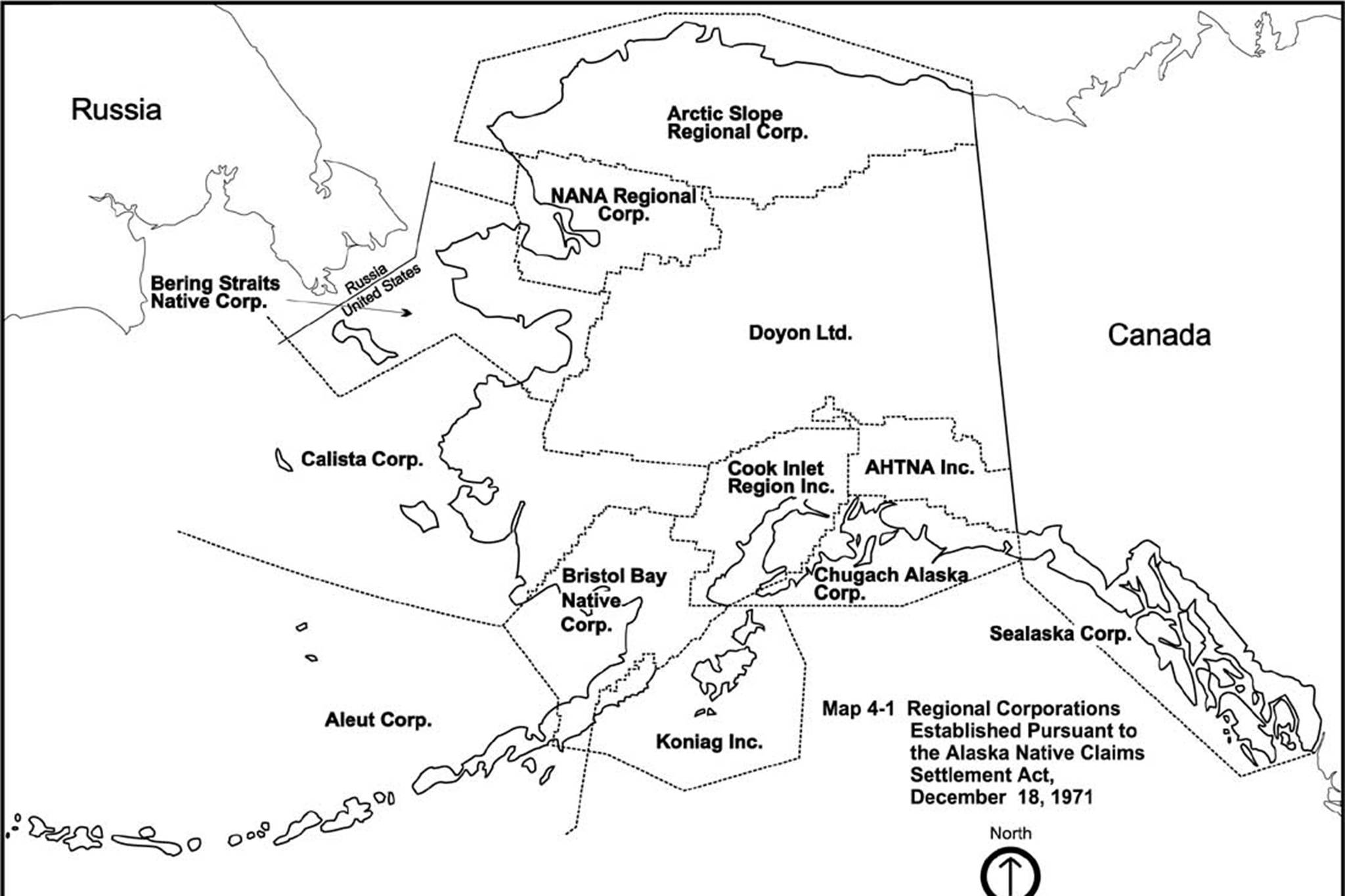
This map shows regional corporations established by the Alaska Native Claims Settlement Act in 1971. On Friday, a judge ruled Alaska Native Corporations are eligible to receive federal coronavirus relief funds. (Courtesy Photo | US National Park Service)

This map shows regional corporations established by the Alaska Native Claims Settlement Act in 1971. On Friday, a judge ruled Alaska Native Corporations are eligible to receive federal coronavirus relief funds. (Courtesy Photo | US National Park Service)

Judge rules Alaska Native corporations can get tribal virus relief money

Alaska Native corporations are eligible for relief funding for tribes, a federal judge ruled.

By FELICIA FONSECA

Associated Press

FLAGSTAFF, Ariz. — Alaska Native corporations are eligible for a share of coronavirus relief funding set aside for tribes, a federal judge ruled late Friday in a case that has been closely watched around Indian Country.

U.S. District Judge Amit Mehta in Washington, D.C., initially granted a request from tribal nations to withhold money from the corporations while he determined whether they qualified for a share of $8 billion.

Mehta said the corporations can be treated as tribal governments for limited purposes after sorting through arguments that picked apart the language in the Coronavirus Aid, Relief and Economic Security Act, congressional intent and the history of other federal laws.

“It stands to reason that Congress, in its effort to distribute emergency funds quickly to Indians under the CARES Act, intended to get those dollars in the hands of the same entities that deliver public services to Indians,” he wrote. “In the lower 48 states, those entities are largely Tribal governments in the traditional sense, but in Alaska, those entities include Alaska Native village and regional corporations.”

Various tribes that sued said they were reviewing the decision and deciding on next steps.

“We sincerely believe that Alaska Native corporations are not governments and should not be allowed to access funding that is intended to go to tribal governments,” said Rémi Bald Eagle, a spokesman for the Cheyenne River Sioux Tribe in South Dakota.

The Treasury Department, responsible for doling out the money, did not immediately respond to a request for comment. It withheld more than $162 million for Alaska Native corporations from an initial disbursement that was based on population data, according to court documents. The total hasn’t publicly been disclosed.

Alaska Native corporations are unique to Alaska and own most of the Native land in the state under a 1971 settlement known as the Alaska Native Claims Settlement Act. The corporations were not party to lawsuits regarding the relief funding but have said they support Alaska Natives economically, socially and culturally.

“This disaster assistance will provide immediate support to Alaska’s rural communities suffering from COVID-19 and help repair the economic damage caused by the pandemic,” said Kim Reitmeier, executive director of the ANCSA Regional Association.

Tribes had expressed concern that a ruling in favor of the corporations would lead to competition between tribal nations and the corporations for limited federal resources.

Mehta disputed that, saying his ruling in no way elevates the corporations to “super tribal status,” as some plaintiffs argued, or fosters competition.

The Alaska Federation of Natives said it understands that the more than 200 Alaska Native tribes have sovereignty that doesn’t extend to corporations through any federal law or policy.

More in News

The northern lights are seen from the North Douglas launch ramp late Monday, Jan. 19. A magnetic storm caused unusually bright northern lights Monday evening and into Tuesday morning. (Chloe Anderson/Juneau Empire)
Rare geomagnetic storm causes powerful aurora display in Juneau

The northern lights were on full display Monday evening.

teaser
Juneau activists ask Murkowski to take action against ICE

A small group of protesters attended a rally and discussion on Wednesday.

A female brown bear and her cub are pictured near Pack Creek on Admiralty Island on July 19, 2024. (Chloe Anderson for the Juneau Empire)
Pack Creek permits for bear viewing area available now

Visitors are welcome from April 1 to Sept. 30.

Cars pass down Egan Drive near the Fred Meyer intersection Thursday morning. (Clarise Larson / Juneau Empire file photo)
Safety changes planned for Fred Meyer intersection

DOTPF meeting set for Feb. 18 changes to Egan Drive and Yandukin intersection.

Herbert River and Herbert Glacier are pictured on Nov. 16, 2025. (Mari Kanagy / Juneau Empire)
Forest Service drops Herbert Glacier cabin plans, proposes trail reroute and scenic overlook instead

The Tongass National Forest has proposed shelving long-discussed plans to build a… Continue reading

A tsunami is not expected after a 4.4-magnitude earthquake northwest of Anchorage Wednesday, Feb. 4, 2026. (U.S. Geological Survey)
No tsunami expected after 4.4-magnitude earthquake in Alaska

U.S. Geological Survey says 179 people reported feeling the earthquake.

ORCA Adaptive Snowsports Program staff member Izzy Barnwell shows a man how to use the bi-ski. (SAIL courtesy photo)
Adaptive snow sports demo slides to Eaglecrest

Southeast Alaska Independent Living will be hosting Learn to Adapt Day on Feb. 21.

Cars drive aboard the Alaska Marine Highway System ferry Hubbard on June 25, 2023, in Haines. (Photo by James Brooks)
Alaska’s ferry system could run out of funding this summer due to ‘federal chaos problem’

A shift in state funding could help, but a big gap likely remains unless a key federal grant is issued.

Photo by James Brooks/Alaska Beacon
U.S. Sen. Dan Sullivan stands with acting Coast Guard Commandant Adm. Kevin Lunday during the after the commissioning ceremony for the Coast Guard icebreaker Storis on Sunday, Aug. 10, 2025, in Juneau, Alaska.
Coast Guard’s new Juneau base may not be complete until 2029, commandant says

Top Coast Guard officer says he is considering whether to base four new icebreakers in Alaska.

Most Read