
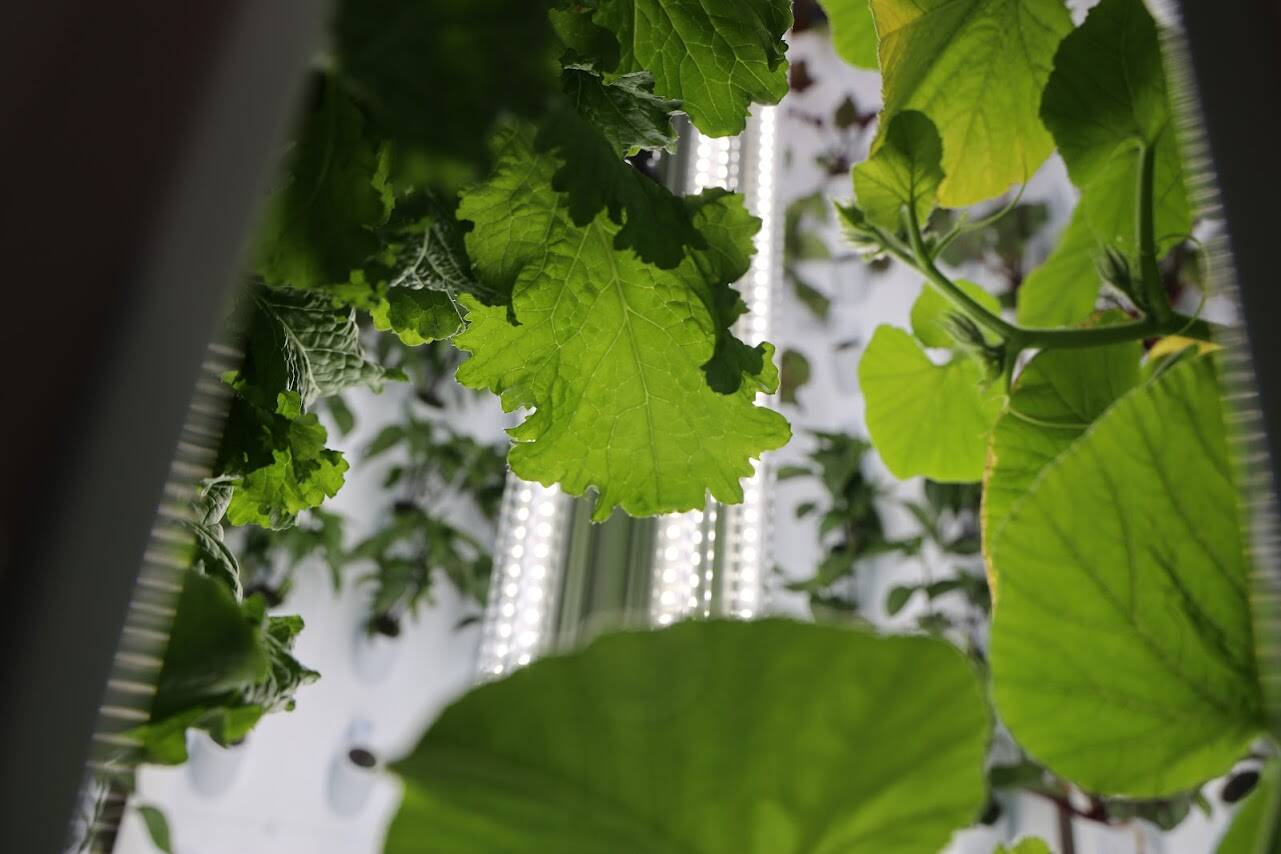
Green might surround the remote Southeast Alaska village of Angoon, but inside its only grocery store, that’s scarcely the case.
According to data from Feeding America, a nationwide nonprofit that works to address food insecurity, it’s estimated that 22.8% of the child population in the Hoonah-Angoon Census Area experienced food insecurity in 2019, which is 56.2% higher than the national average. According to Feeding America, those percentages have likely increased throughout the pandemic.
However, despite the challenges, students and faculty at Angoon’s Chatham School District are taking steps to change that.
Angoon agroscience hydroponic cultivation class Haa Aani’: Haa Yaasi’ Haa (Our Land, Our Harvest) is now in its second year of operation. Its goal, according to Ryan Smith, the teacher and project manager, is to teach the students how to cultivate healthy and sustainable foods to eventually provide to the community by using both traditional Tlingit practices and knowledge in addition to newer technologies.
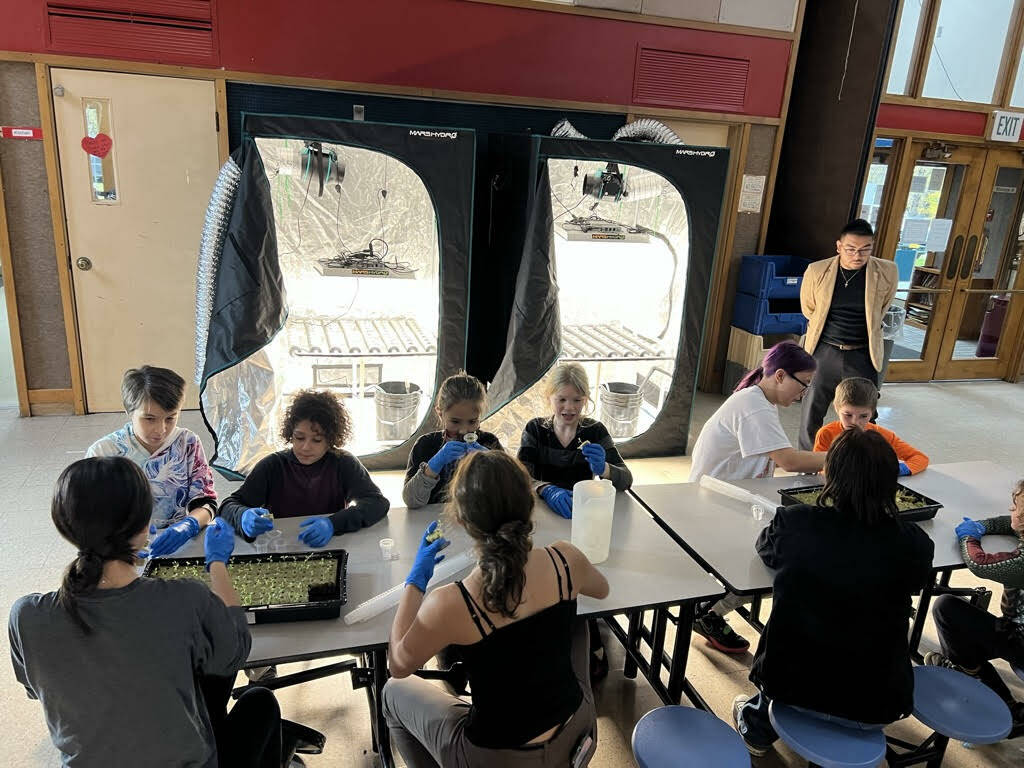
Students work with hydroponic units during class at Chatham School District students. Angoon agroscience hydroponic cultivation class Haa Aani’: Haa Yaasi’ Haa (Our Land, Our Harvest) is now in its second year of operation. (Courtesy / Ryan Smith)
Part of the school’s efforts to grow this curriculum took big steps recently after the school district welcomed a new hydroponic cultivation and demonstration facility this fall. The room, lined with plastic and filled with six indoor hydroponic growing pods, was built after receiving a Department of Early Education and Development American Rescue Plan Act grant this spring, which funded the renovation of its science lab into the new facility. It also provided funds for an Angoon student-led business to make money to build other facilities like ones in Klukwan, Gustavus and Tenakee.
“We want to provide the curriculum, do the build-out, provide the garden and from there, our main goal is to provide enough food to feed the entire community,” Smith said.
The students have already helped Klukwan build its hydroponic garden, including Susan Joseph, an eighth grader at Chatham, who said working with the hydroponic units is one of the best parts of her day.
She said many of her family members suffer from diabetes and she wants to use her knowledge and resources from the class to help them eat a more nutritious diet, something that they have struggled to do while living in Angoon.
“It teaches me a lot of important things and gives me a lot of opportunities later in life,” Joseph said. “It’s inspiring, I think I’ve learned about things but I think the most important thing I have learned is that change can be realistic and possible and I don’t want to stop here — I want to do this for the rest of my life.”
Smith said along with creating large hydroponic gardens across rural Southeast Alaska communities, Chatham was also able to provide individual handheld hydroponic growing units for each third, fourth and fifth grade student in the school through an Our Green Planet initiative.
Smith said throughout the school year the students will learn the ins and outs of how to maintain and grow the plants in their units, and at the end of the year, the students will be able to take their units home to grow greens for their families.
“We’re excited about the opportunity we have and to be able to expand it and share it,” Smith said. “Our store here doesn’t really have a whole lot of selection at all, but hopefully this can help us provide more to the communities.”
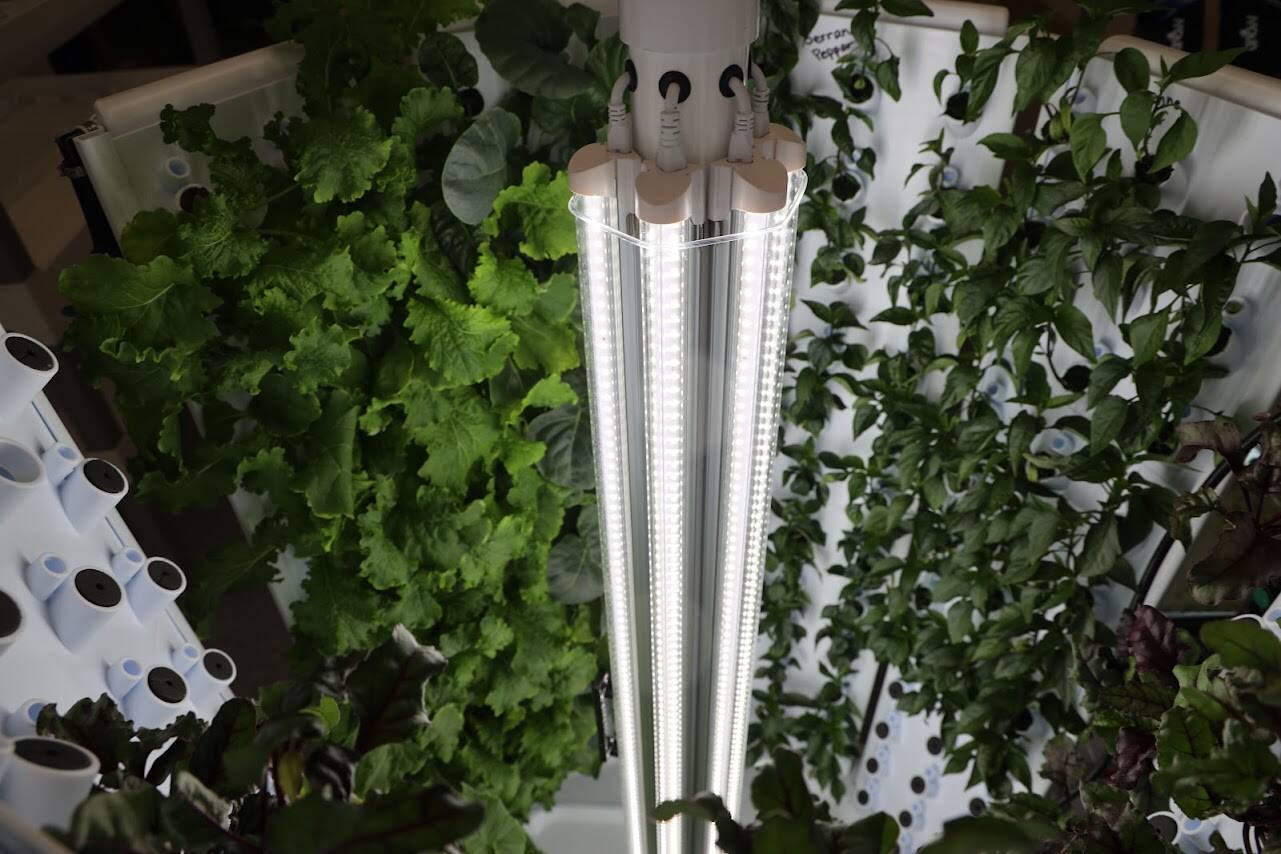
Greens flourish in the bright lights of one of the six hydroponic units located in the hydroponic cultivation and demonstration facility at the Chatham School District building in Angoon. The room, lined with plastic and filled with six indoor hydroponic growing pods, was built after receiving a Department of Early Education and Development American Rescue Plan Act grant this spring, which funded the renovation of its science lab into the new facility. (Clarise Larson / Juneau Empire)
Frank Coenraad, a counselor at Chatham who helped develop the program, said the new facility gives the students the ability to cultivate greens and other plants that are typically unavailable in Angoon and offers hands-on learning in tandem with the ethnomathematics and Food sovereignty class curriculum where they learn about Angoon’s current food system and its future.
Coenraad said the class is among the schools’ focus on offering trauma-engaged and resilience programs integrated within the school. He said the school hopes teaching classes with those lenses inspires the students to engage with the culture of the area and to help students build persistence in themselves and for the next generation of Angoon.
“We integrate resilience among all classes, not just these classes,” he said. “But, one of the things we realized was, in terms of needs, we are in a food insecure zone. We want students to understand what it means to be ‘food diverse’ — to have a program that produces a good diverse food source like greens for the community makes so much sense.”
He said one of the things emphasized in the class is learning the importance of being “food diverse” and sovereign. He said for many of the Alaska Native people in Angoon, can provide food to their families via traditional ways such as hunting, fishing and gathering, but he said that’s not the case for all residents, and many don’t have access to a variety of nutrient-dense foods that aid a healthy lifestyle.
Angoon Mayor Maxine Thompson said finding new means for fresh and healthy food is more important than ever because, for many people in Angoon, climate change is affecting past traditional means of getting food from the land.
“Climate change is impacting our food both on the land and in the water,” she said. “Growing our own vegetables is the biggest thing we can do.”
As mayor, she said she has more recently started to notice the effects of climate change changing the land and waters of Angoon that people have used to gather food for thousands of years.
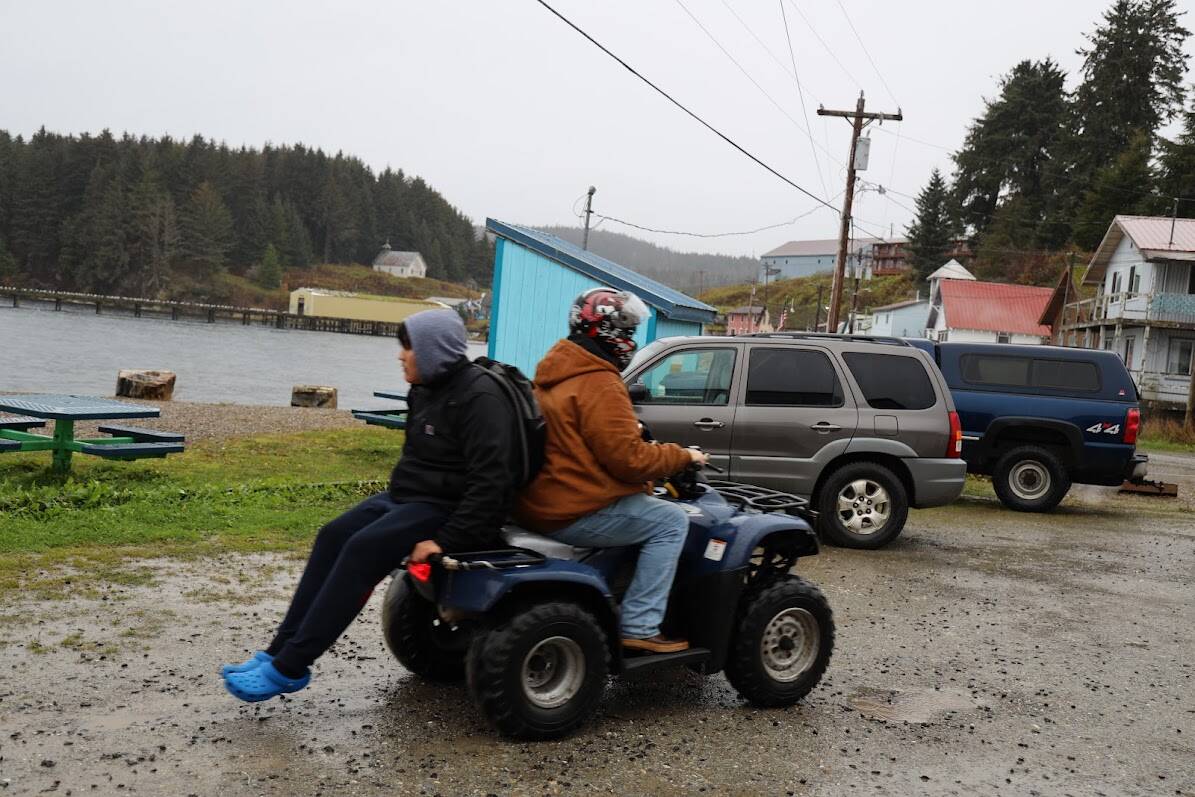
Two Chatham School District students ride their four-wheeler home from the school’s gym in late October. According to data from Feeding America, a nationwide nonprofit that works to address food insecurity, it’s estimated that 22.8% of the child population in the Hoonah-Angoon Census Area experienced food insecurity in 2019, which is 56.2% higher than the national average.(Clarise Larson / Juneau Empire)
“I hate to say it, but we need to start growing our own food, our people need to replace some of the food that is being impacted by climate change,” she said. “They always say we have pristine waters — that’s not the case anymore. Climate change is affecting the makeup of the water, the seawater where our foods grow.”
She pointed to mining drainage into tributaries that lead to Angoon as a big factor in changing the waters and said she thinks the school’s effort to introduce more ways of providing healthy foods to young Angoon residents is a step in the right direction for the village.
“I think it’s a good thing that the young ones are learning how to grow things,” she said.
Thompson said as a former owner of the village’s only store, Angoon Trading Co. Inc, she knows that many residents use a combination of buying store goods and practicing traditional means of getting food to get a variety of goods on the table. With climate change affecting traditional means, she said it puts a heavier burden on making sure the store is stocked with nutritious foods. However, with the recent cutbacks in winter ferry services to Angoon, she thinks it’s impacting the variety of foods the town could be able to provide.
“It’s not about more food, it’s about diversity,” she said.
There are only a few options for filling the shelves at the Angoon Trading Co. Inc — ferry, floatplane or barge.
The ferry is typically the least expensive option, but Thompson said service is insufficient for the village to rely on it, and to cope the store is chartering a barge to ensure food is in the store. There is the option of floatplanes granted that the weather allows for them to fly, however, the cost to fly food in is nearly quadruple the amount that it would cost to have it ferried.
“We’re all at a disadvantage, if we even just had one ferry a month that would really help Angoon,” she said. “Just one round trip a month would really be helpful — it’s not about more food, it’s about diversity.”
Smith and Coenraad agreed and said what the school is doing now with hydroponics is just the beginning.
“Are we there yet? Not yet, but this is a start to begin to provide for the community,” Coenraad said.
• Contact reporter Clarise Larson at clarise.larson@juneauempire.com or (651)-528-1807. Follow her on Twitter at @clariselarson.
