
Millions of federal dollars are going to Alaska Native organizations and entities across the state and Juneau to fund Alaska Native education projects.
The U.S. Department of Education on Friday announced in a news release it awarded funds that total more than $35 million and will be dispersed over three years to support Alaska Native education programs across the state.
Juneau’s Sealaska Heritage Institute, Douglas Indian Association, Goldbelt Inc., Goldbelt Heritage Foundation and Central Council of the Tlingit and Haida Indian Tribes of Alaska were among the 28 Alaska Native organizations and entities grantees that were awarded the funds through the Alaska Native Education program.
The program aims to further curricula, education programs and education needs for Alaska Native students across the state, and can also toward training for educators, early childhood and parent outreach and other similar programs, according to the Department of Education.
[UAS announces search for new chancellor]
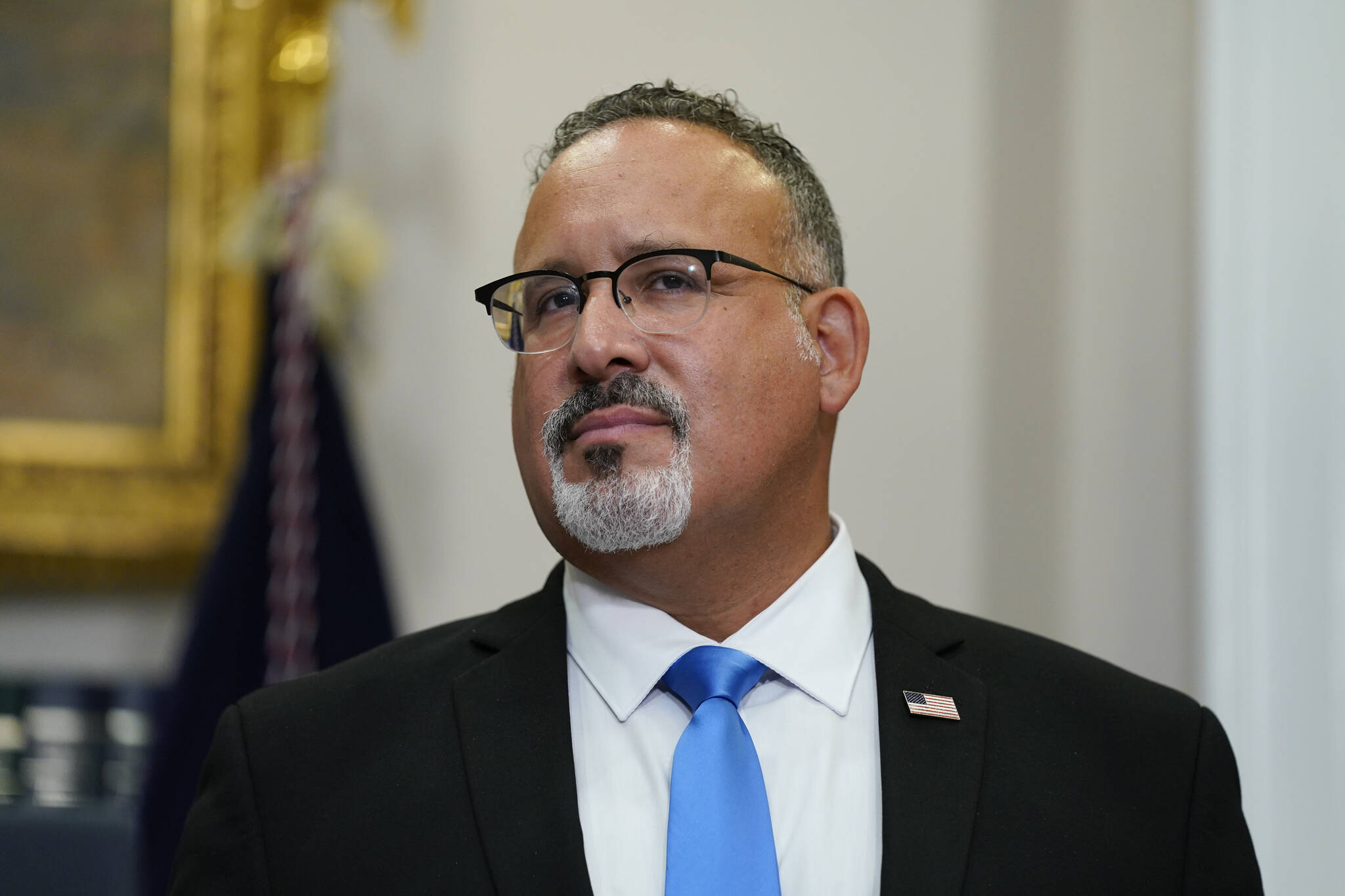
“I am excited to announce 28 new Alaska Native Education program projects, which will help better meet the needs of Alaska Native students at this critical moment and continue to strengthen the relationship between the Department and Alaska Native Organizations,” said U.S. Secretary of Education Miguel Cardona in a statement sent to the Empire. “Every Alaska Native student — in rural and remote villages, in regional hubs, and in urban centers — should have access to high-quality and culturally responsive educational opportunities. These projects help fulfill that obligation by supporting existing partnerships between students, families, schools, and Alaska Native Organizations.”
The Juneau-based SHI located in the downtown area received four separate grants through the program which totaled close to $9 million in combined funding.
“We are elated to have been awarded these four educational grants,” said Lee Kadinger, the chief operating officer at SHI in an email to the Empire. “We will be using them in multiple areas in partnership with the Juneau and other school districts, Tribes and tribal organizations, and the University of Alaska Southeast to regain ground in the academic progress we had been making.”
Kadinger said the COVID-19 pandemic and its impact on schools and the extended pause on in-person learning had a negative impact on SHI and said they experienced a loss of the progress it had been making in the education field, but there were still positive takeaways.
“Through the past years we have learned that integrating Native language and culture into schools has promoted the academic success of Native students and improved school retention,” he wrote.
One of the new programs he said SHI plans to use the newly granted funds toward is furthering their work in integrating traditional ecological knowledge into the sciences, which he said he hopes will lead to an increase in the number of Alaska Native people in science and engineering.
The four projects being funded are named Opening the Box: Culturally Responsive STEAM Education for Middle School, Indigenizing and Transforming Teacher and Administrator Preparation, Át Koowaháa: Expanding the Tlingit Culture, Language, and Literacy Program’s Dual Language Pathway for Alaska Native Students project and Our Ancestors’ Echoes: Xaad Kil, Sm’algyax, and Lingit.
Tlingit and Haida President Richard Chalyee Éesh Peterson said in a statement to the Empire that the funding Tlingit and Haida received — which amounted to more than $1.2 million — will be used to help increase the tribe’s Lingít language immersion efforts, nurture the reemergence of Tlingit and Haida languages through future generations and develop online educational resources for all tribal citizens and language learners. The project is named Kei Naltseen Haa Sgóoni (Our School is Being Strengthened) and is in partnership with Goldbelt Heritage Foundation and Cedar Group.
[Tlingit and Haida launches emergency response platform for tribal citizens]
“Our Indigenous languages are vital to ensuring our identity and place among this land continues for generations to come,” he said. “Tlingit & Haida is committed to the revitalization and preservation of our languages and supporting our children and other language learners. We are very excited about this award from the U.S. Department of Education.”
Goldbelt Heritage Foundation and Goldbelt Inc. each received grants, too.
The Goldbelt Heritage Foundation’s project named Yee Yeex̱ Kawdliyáas’ — which amounted more than $450,000 — will “create a safe space to share Tlingit learnings, traditions, and resources” throughout school districts in Juneau and other nearby Southeast Alaska towns, according to the project’s abstract.
“We hope to see: improved skills among school staff related to social-emotional learning and trauma-informed practices; improved communications and technical skills among GHF staff; and increased understanding and appreciation of Tlingit culture and traditions. Ultimately, we hope that these trainings will contribute to an increased sense of community, belonging, and safety among Alaska Native students in Southeast Alaska and improved student engagement in school,” as written in the abstract.
Its other project grant — Haa Shuká Tundatáani — amounting close to $800,000 has a goal of “aligning pedagogy, curriculum, student assessment criteria, and teaching methods, all embedded with culturally relevant content vetted by our Curriculum Pedagogy Oversight Committee (CPOC) to ensure each is rooted in indigenous thought and culture as well as national and state content standards.”
GHF’s abstract outlines the project’s plan to publish 1,000 books each of nine different titles from Tlingit Language Early Childhood Primer Lingit and wrote its plan to serve 7000 children during the three year grant period, and build the capacity of 45 teachers who will use indigenous-based curriculum and instruction to teach an at least 400 Pre-K to 12th-grade students per year.
Douglas Indian Association received just under $1.5 million and will go toward Haa Shuka Kaawu Jooni Aya Oowahaan (We Are Our Ancestor’s Dream); Anax Yaa Andagan Ye Daakahidi: (Where the Sun Rays Touch First) Cultural Historic Education and Language Preservation Center, according to the news release.
“Douglas Indian Association Project creates New Educational Pathways that reawaken our connections to each other, the land, restores our visibility as Alaska Native people with rich traditional education pathways and affirms our youth’s identity and paths to achievement. Each new educational pathway will be housed in a new education center to benefit students, educators, cultural specialists, language specialists, families, and community to become future cultural knowledge bearers, fluent language speakers, mentors, accomplished students, and culturally responsive educators who participate, perpetuate and benefit from an authentic traditional educational model that is holistic and far reaching,” as written in the project’s abstract.
• Contact reporter Clarise Larson at clarise.larson@juneauempire.com or (651)-528-1807. Follow her on Twitter at @clariselarson.
