
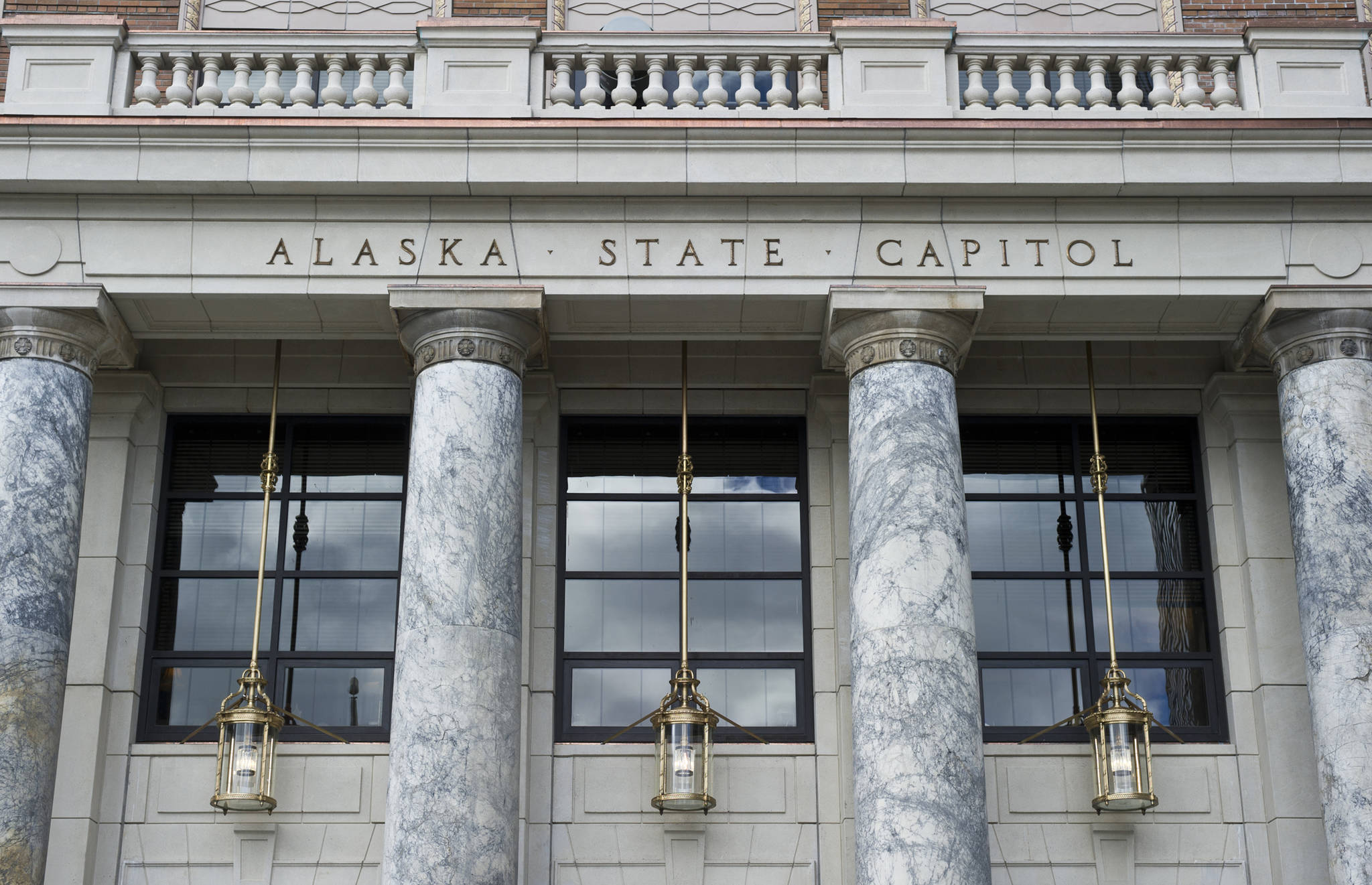
It’s a situation like a homeowner who opens a wall during renovations and unexpectedly finds termites. A legal dispute between attorneys could make billions of dollars worth of Alaska state debt invalid.
In a legal opinion dated April 13, attorney Emily Nauman of the Alaska Legislature’s legal department wrote that “there is a substantial risk that a court may determine that (Senate Bill) 176 is unconstitutional.”
That would mean that SB 176, a proposal by Gov. Bill Walker to borrow up to $1 billion to repay tax credits owed to oil and gas companies drilling on the North Slope, would be unlawful.
But the problem is more widespread: If SB 176 is deemed unconstitutional, other state borrowing programs might be as well.
Approaches similar to SB 176 have been used by the University of Alaska ($311 million debt), the Knik Arm Bridge and Toll Authority ($300 million debt) and the Alaska Pension Obligation Bond program ($5 billion debt), among others. (The bridge authority and pension obligation bonds are authorized, but the money has not yet been borrowed.)
“A broad reading of the constitution … would be highly disruptive, and would likely invalidate multiple forms of existing debt in Alaska,” State Debt Manager Deven Mitchell wrote in a memo dated Monday.
On Wednesday, Attorney General Jahna Lindemuth responded to Nauman’s interpretation of the Alaska Constitution with one of her own: “We’ve carefully reviewed the legal issues and are confident that these bonds are lawful under Alaska law.”
Ordinarily, this kind of dispute between attorneys would be normal: legislative and executive-branch legal opinions frequently differ, and there is no obvious sign that Senate Bill 176 will advance in this year’s Legislature. The Senate Finance Committee has not scheduled it for a hearing, and its language is not included in the state operating budget. The danger, if there is any, lies with programs that already exist.
Article IX, Section 11 of the Alaska Constitution prohibits the state (in most cases) from borrowing money without a statewide vote. Article IX, Section 8, lays out a few exceptions, including that the prohibition doesn’t apply to “a public enterprise or public corporation … when the only security is the revenues of the enterprise or corporation.”
In other words, a state corporation can borrow money if the debt stays its own: The Alaska Legislature won’t come to the rescue.
If signed into law, SB 176 would create the “Alaska Tax Credit Certificate Bond Corporation” to borrow money and repay oil and gas companies. The corporation’s only “revenue” would come in regular appropriations from the Alaska Legislature, and Nauman suggests that doesn’t meet the constitutional standard.
“Under the current structure of SB 176, it is unclear how the bonds are secured by a revenue-producing product of the corporation,” she wrote.
The issue was first raised in a February hearing of the Senate Resources Committee by Sen. Bill Wielechowski, D-Anchorage.
“It seems like a really questionable way to circumvent the constitutional provision on bonds,” he said at the time.
On March 2, assistant attorney general Bill Milks and state debt manager Mitchell wrote in a memo to Sen. Cathy Giessel, R-Anchorage and chairwoman of the committee, that the bonds are “a form of financing that has been utilized in the past by the state and has not been considered to be unconstitutional state debt.”
Reached by phone Wednesday, Mitchell said Nauman’s argument isn’t necessarily a new one: The state frequently examines its constitutional limits through its own attorneys and outside counsel, and has always been found to be on the correct side of the line.
“It’s been looked at multiple times,” he said.
Different legal firms have examined the issue, created inches of paperwork on the topic, and bond sales have gone ahead, he said.
“They thought it was legal within the framework and the historical practice of the state,” he said.
Nauman had no additional comment when reached by phone on Wednesday.
• Contact reporter James Brooks at jbrooks@juneauempire.com or 523-2258.
