
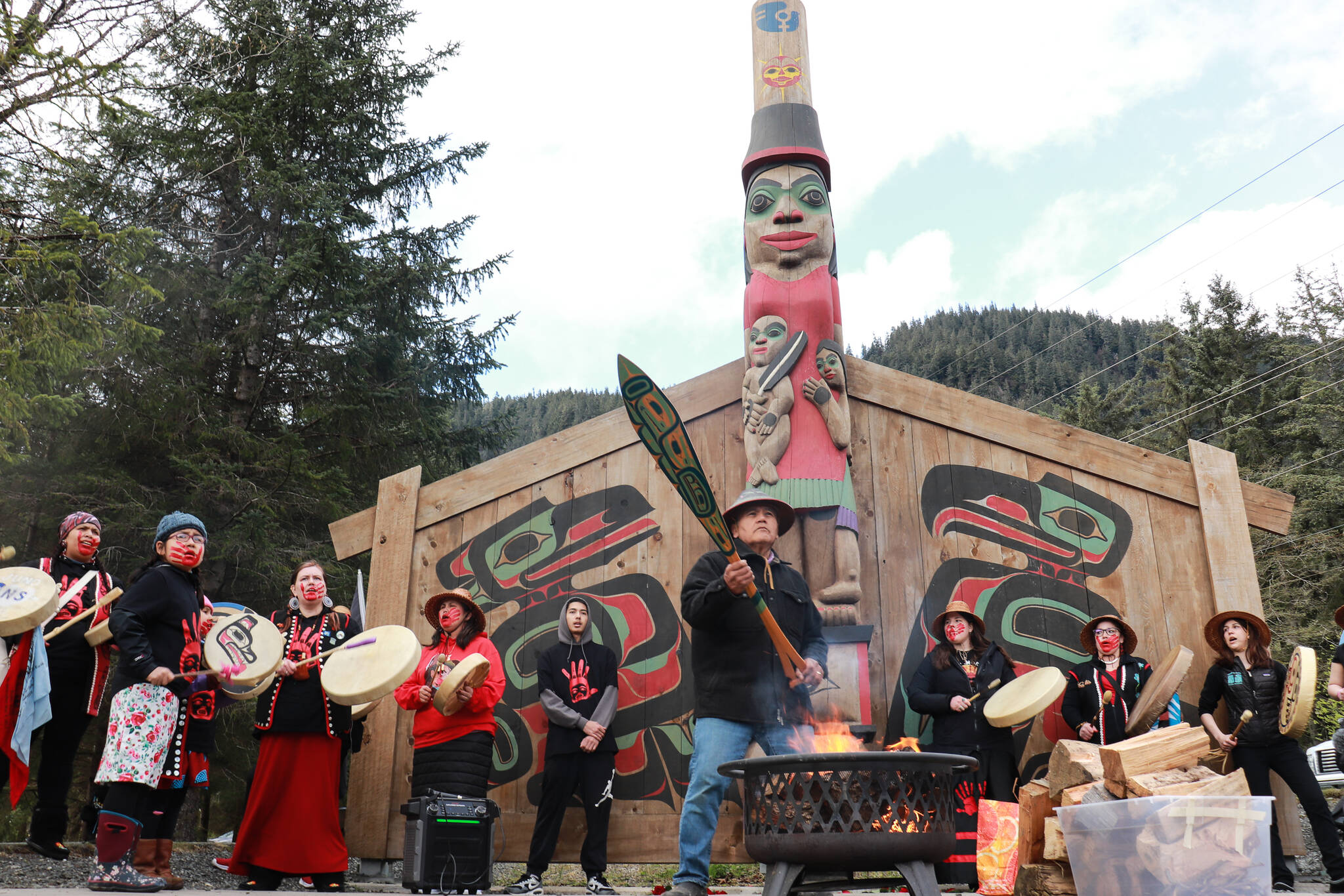
In recognition of Missing and Murdered Indigenous Persons Day, Tlingit master carver Wayne Price said he brought two healing monuments together on Monday: his dugout canoe, Jibba, and his healing totem, Kaasei Satú.
He also brought together a third monumental moment — a community gathering to remember loved ones.
“What a blessing to be granted a gift that I can provide with my artwork,” he said at the Twin Lakes event.
The 22-foot-tall totem Kaasei Satú, which means “higher voice” in Tlingit, was raised at Twin Lakes in 2022. Price created it to increase awareness about domestic violence and sexual assault. It also serves as a place for healing ceremonies. Jibba, his healing dugout, was created in 2014 and is named after his wife’s son. It has 1,400 nautical miles. Price said Kaasei Satú and Jibba are not just his creations — they belong to everyone affected.
“All the men are going to dance at the dugout and show solidarity and strength and unity to all the women and all the victims,” he said. “Just to be here and let them know that there’s good men too.”
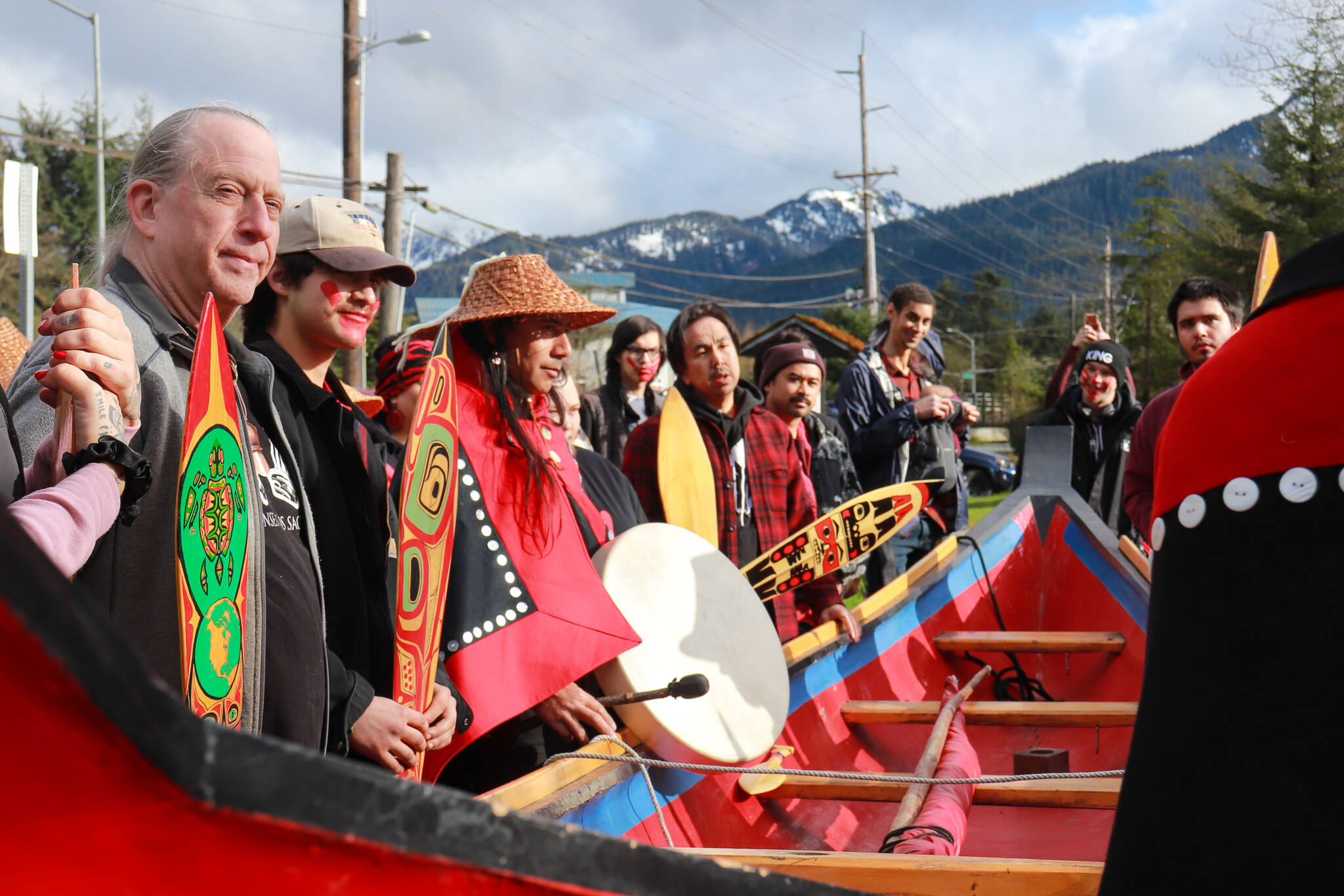
Men carry Wayne Price’s dugout canoe, Jibba, to a Missing and Murdered Indigenous Persons Remembrance Ceremony at Twin Lakes in a show of solidarity on Monday, May 5, 2025. (Jasz Garrett / Juneau Empire)
The ultimate goal is for the number of missing and murdered Indigenous people to decrease, Price said.
Native American and Alaska Native rates of murder, rape, and violent crime are higher than the national averages, according to the U.S. Department of the Interior Indian Affairs.
Alaska has the fourth-highest rate of missing and murdered Indigenous women and girls in the country, according to the Urban Indian Health Institute. Anchorage ranks third among the top 10 U.S. cities with the most cases. Murder is the third leading cause of death among Indigenous women.
In 2023, the Alaska Department of Public Safety began publishing a quarterly Missing Alaska Natives and American Indians report.
During fiscal year 2025, Gov. Mike Dunleavy and the Alaska Legislature secured funding to support four full-time DPS investigators dedicated solely to missing and murdered Indigenous persons cases. The state effort also includes two tribal liaisons.
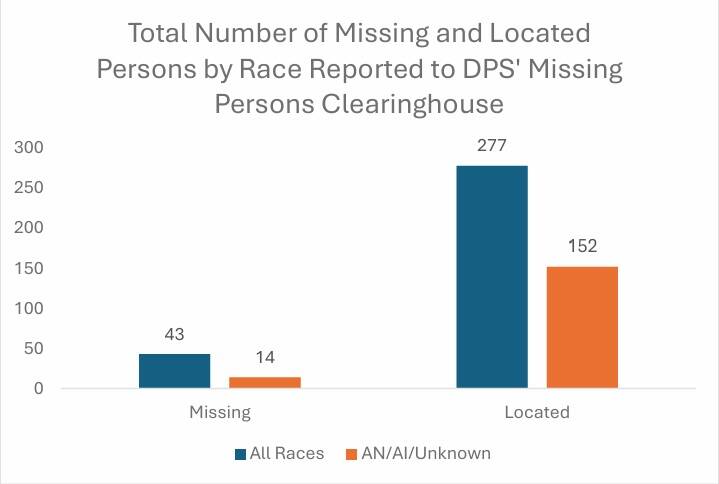
Figure 1 represents the number of persons reported missing and located to the Department of Public Safety’s Missing Persons Clearinghouse between Jan. 1, 2025, and March 31, 2025. (Department of Public Safety)
Haa Tóoch Lichéesh Coalition organized Monday’s event. Sealaska Heritage Institute helped rent a cabin at Twin Lakes as a memorial space. Juneau Tlingit and Haida Community Council provided snacks and water.
Sixteen people are listed as missing on the Juneau Police Department website. Half of them are Indigenous – including Tracy Lynn Day of the Deisheetaan Raven-Beaver clan, who was reported missing on Feb. 14, 2019.
Kaelyn Schneider, whose Tlingit name is Lady of the Land, spoke about the loss of Day, her mom, on Monday.
“It’s easy for non-Native people to say that what happened to us was long ago, when the authorities refuse to update MMIP statistics, when they take down the posters that we desperately hang in search for our loved ones and they fail to accurately report when our family members go missing,” she said. “Despite all of this, I’m so proud to see our people fighting to preserve the language and culture, as well as showing up to support and bring justice to MMIP families.”
Across the country, thousands of cases of missing and murdered Indigenous people are unsolved, with many going unreported. In 2016, only 116 of the 5,712 cases of missing and murdered Indigenous women and girls were recorded in the U.S. Department of Justice’s missing persons database. Schneider said that made her wonder how many more cases could be unknown today.
She talked about the challenge of preserving language and culture without her mother.
“Unlike my son, I had the privilege of knowing my mother, and I was able to be taught from her a few things that we didn’t learn in these school programs,” she said. “But she didn’t get to finish teaching us everything because her time was cut short.”
She said the loss has left her family uncertain about sacred practices or how to phrase terms in Tlingit. She shared that her son has not received his Tlingit name since it has to be done traditionally.
“I need people to understand that when Indigenous people go missing, it’s so much deeper than anyone realizes,” Schneider said. “Not only are these our family members who we love and miss every single day, but these are the people who pass on sacred knowledge to the next generation of our family.”
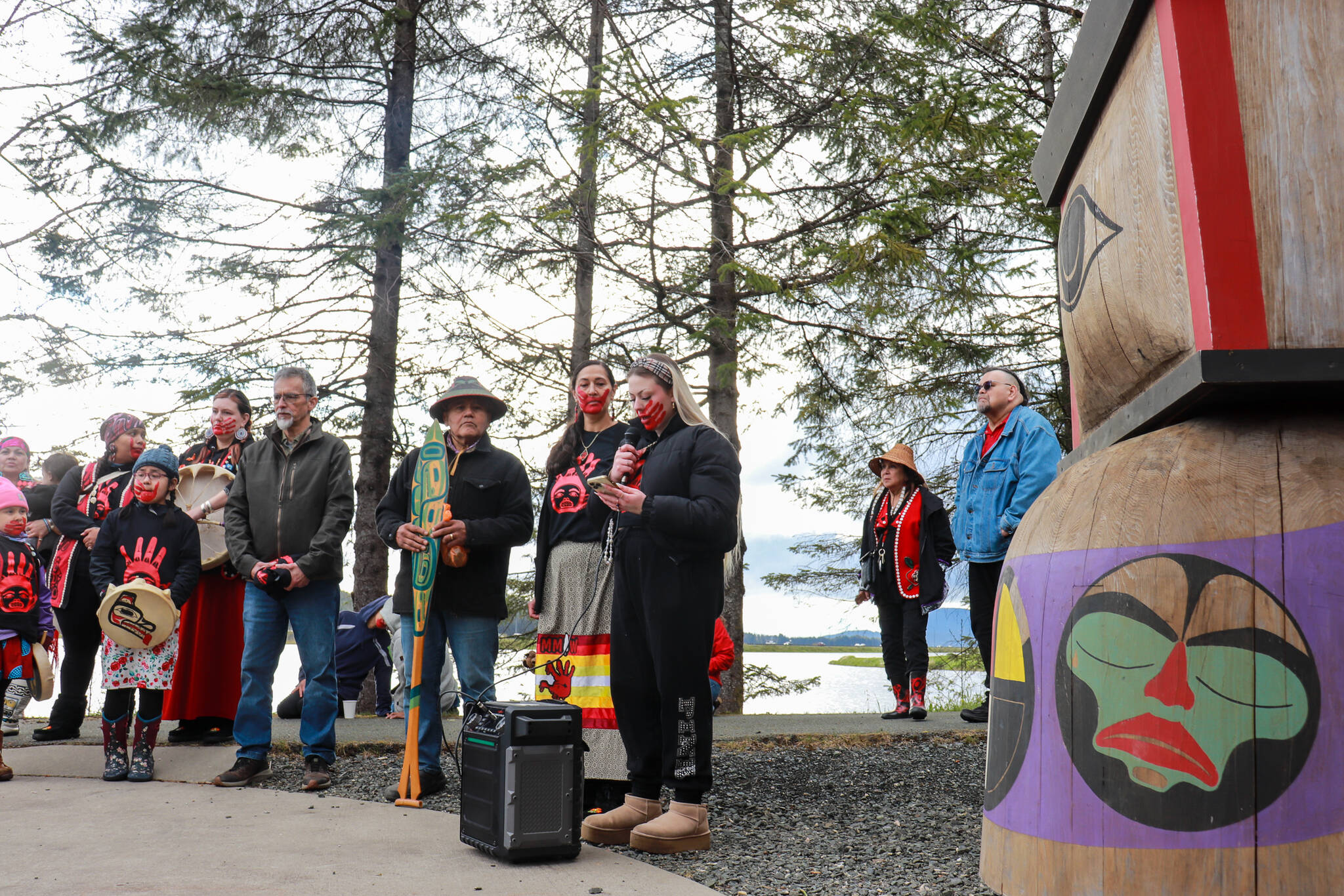
Kaelyn Schneider speaks about her missing mother, Tracy Lynn Day, at a Missing and Murdered Indigenous Persons Remembrance Ceremony on Monday, May 5, 2025. (Jasz Garrett / Juneau Empire)
She said six years after her mom’s disappearance, her family made the hard decision to declare Day deceased with the hope of accessing more family records and documents. Her mother would be 49 years old today. Schneider said the declaration will also give her family access to court and police records “because our goal is to see if there’s anything that they are hiding and not telling us.”
She said the community organizing the remembrance ceremony did help, but she wants to see more done by law enforcement.
“It makes me angry, though, because the police should be doing it,” Schneider said. “We shouldn’t have to gather like this. We’re grateful that we have it, but we shouldn’t have to do this.”
Jes L’xook Kinville-James related to Schneider about being unfamiliar with introducing herself in Tlingit. It was her first time doing it in front of the crowd, who were dressed in red. The color red represents the widespread violence and injustice faced by Indigenous women and girls. Kinville-James sang “Stolen Prayers,” a song she wrote in remembrance of Day.
“This is a song for healing,” she said. “It doesn’t belong to me. It belongs to everybody here.”

Jes L’xook Kinville-James (far right) leads the “Stolen Prayers” song on Monday, May 5, 2025. Kanaagoot’ Mike Kinville’s t-shirt, sponsored by Sealaska Heritage Institute, is worn. (Jasz Garrett / Juneau Empire)
Kanaagoot’ Mike Kinville also spoke in remembrance of Day. He designed a t-shirt for Missing and Murdered Indigenous Persons Day, which was worn during Kinville-James’ song.
“If there’s anything that we personally can do to make a child safer, to make a child healthier, that’s what we can do going forward in looking out for each other,” Kinville said. “It’s a hard thing to come and talk about those that we’ve lost, but we need to remember the ones that are here, and cherish them and love them – protect them.”
Like Price and Kinville-James’ creations, Kinville said his design is for everyone affected.
The last ceremony held at Kaasei Satú was on March 13 for Emily Pike, a 14-year-old San Carlos Apache girl. Her dismembered remains were found in Arizona in February. Indigenous people stood in solidarity throughout the world for her. In Juneau, people danced for Pike at Twin Lakes under the eclipse, a moonlit dove at the top of the totem symbolizing hope.
“We want to have these events, but we also want to make sure that all that can be done is being done,” Price said. “And I want to see the change. The whole project – it’s been my goal to bring about some change. Hopefully, gatherings like this will help do that.”
Price is now carving his 17th dugout canoe. In a traditional dugout canoe wood chip burning ceremony, people could write a loved one’s name on a chip to burn as a prayer. He said every chip from a healing dugout or totem represents a missing or murdered Indigenous life, as well as those affected by sexual assault, spouse abuse, and addiction.
“Of all the chips that come off these projects, I’m going to find there’s never enough chips,” Price said. “Let’s get to the part where it actually starts to have an effect.”
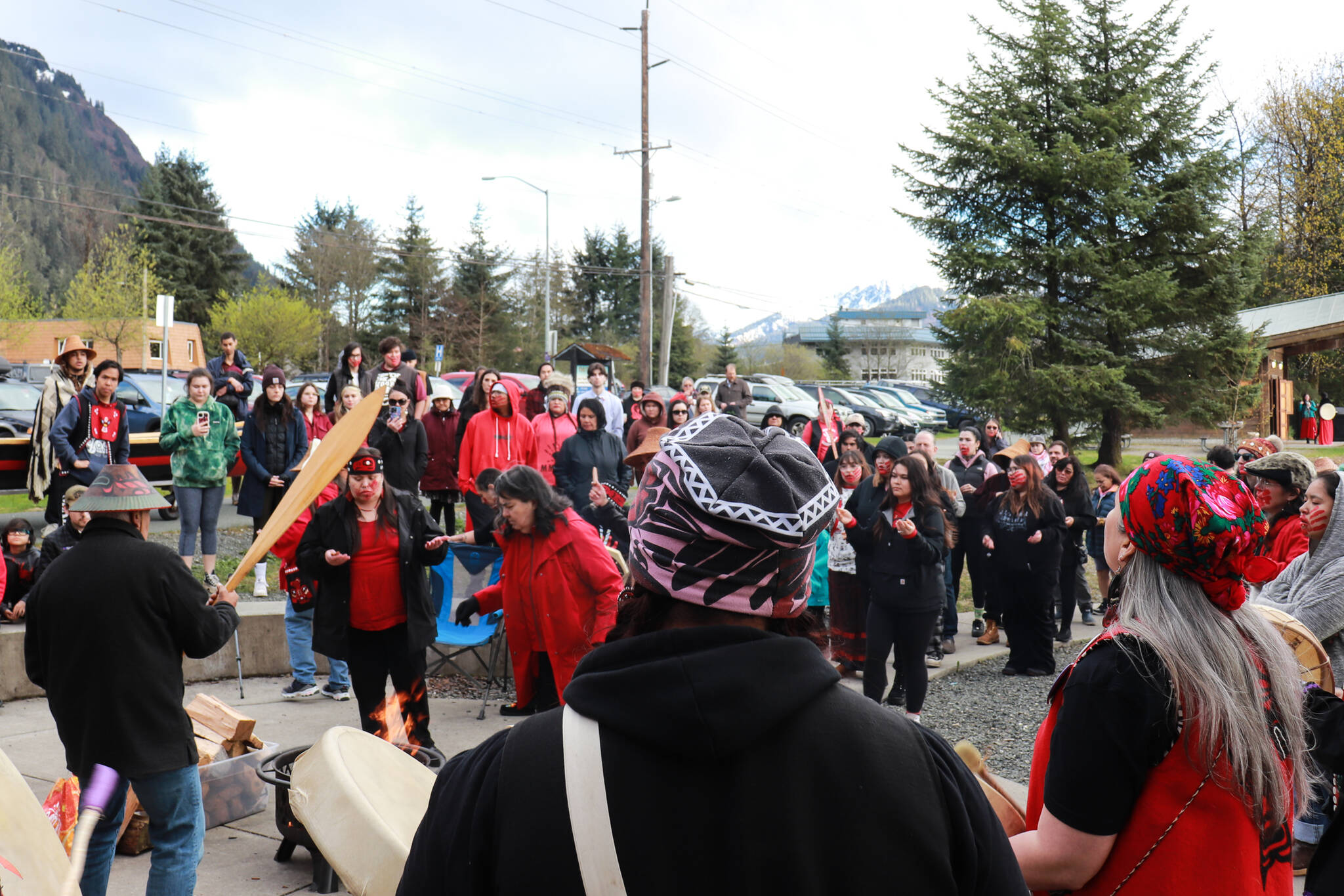
People walk down a trail at Twin Lakes to participate in a traditional dugout canoe wood chip burning ceremony on Monday, May 5, 2025. (Jasz Garrett / Juneau Empire)
The ceremony was held during the “Women Warrior” song, gifted by Lil’wat Nation elder Martina Pierre to all nations more than 30 years ago, when Missing and Murdered Indigenous Persons Day was just beginning. Organizers of the event said since then, the day has started to receive more public recognition.
A fire dish “saying their names” ceremony was also held, where a spirit plate of traditional food was offered. People said the names of their missing loved ones, and everyone repeated those names together. After the names were spoken, the plate was burned to “feed those spirits,” according to S’eiltin Jamiann Hasselquist, an event organizer.
Tanya Ulrich came with her family to the ceremony as it was closing. She said she works two jobs, and arriving late caused her to miss the ceremonies. Hasselquist still invited her to speak the name of her dead sister, Isabelle Sam.
Like Schneider, Ulrich’s family is still seeking justice. She said the gathering connected her to resources and support.
“I felt a little relief because I feel like it’s been weighing down on me,” she said. “I was actually able to get a little bit more answers because I did not know where to go or where to start to try and find justice for my sister.”
• Contact Jasz Garrett at jasz.garrett@juneauempire.com or (907) 723-9356.
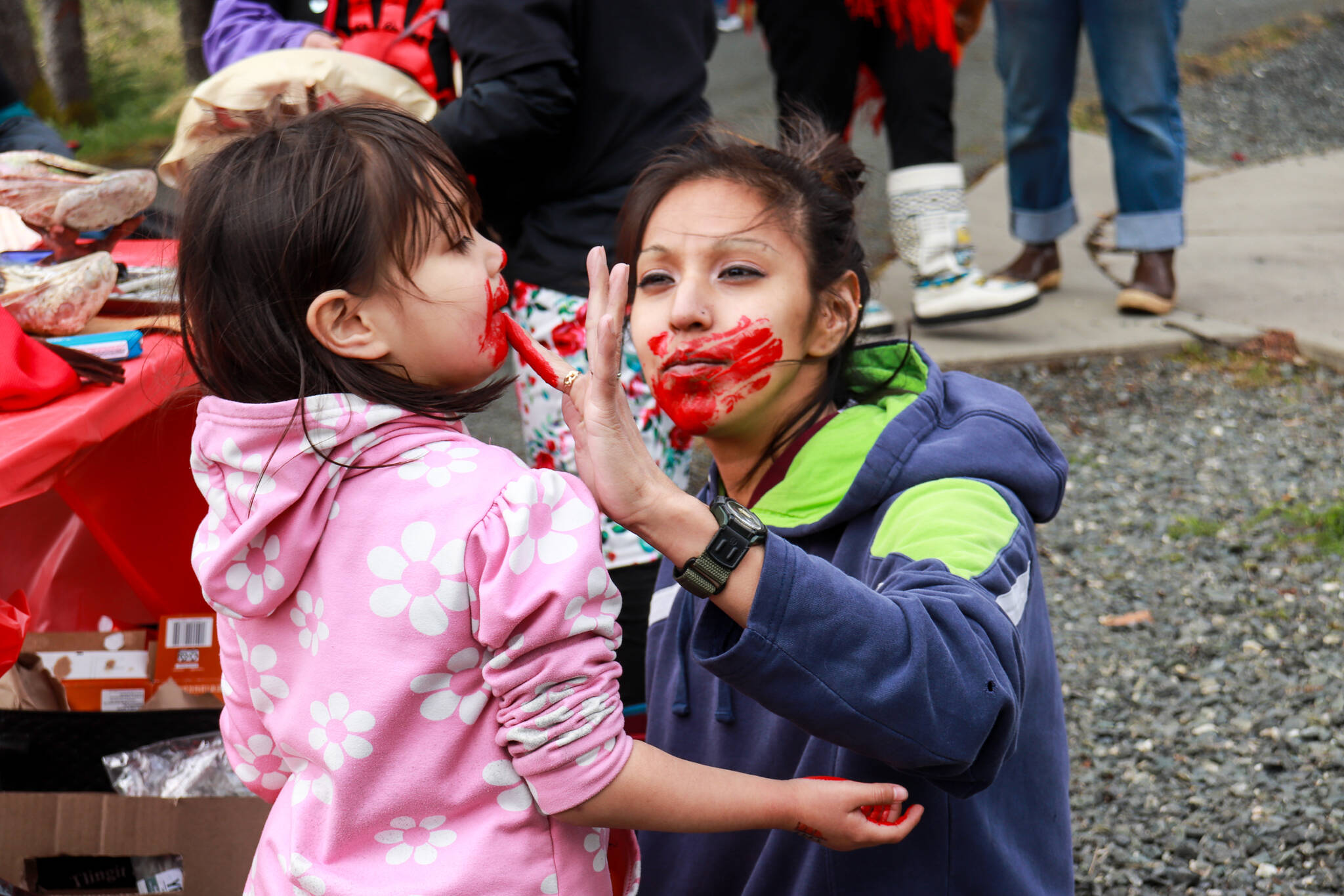
Julie Strawn paints her daughter’s face on Monday, May 5, 2025. A red handprint across the mouth symbolizes the silenced voices of Missing and Murdered Indigenous Women in a show of solidarity. The color red represents the widespread violence and injustice faced by Indigenous women and girls. (Jasz Garrett / Juneau Empire)
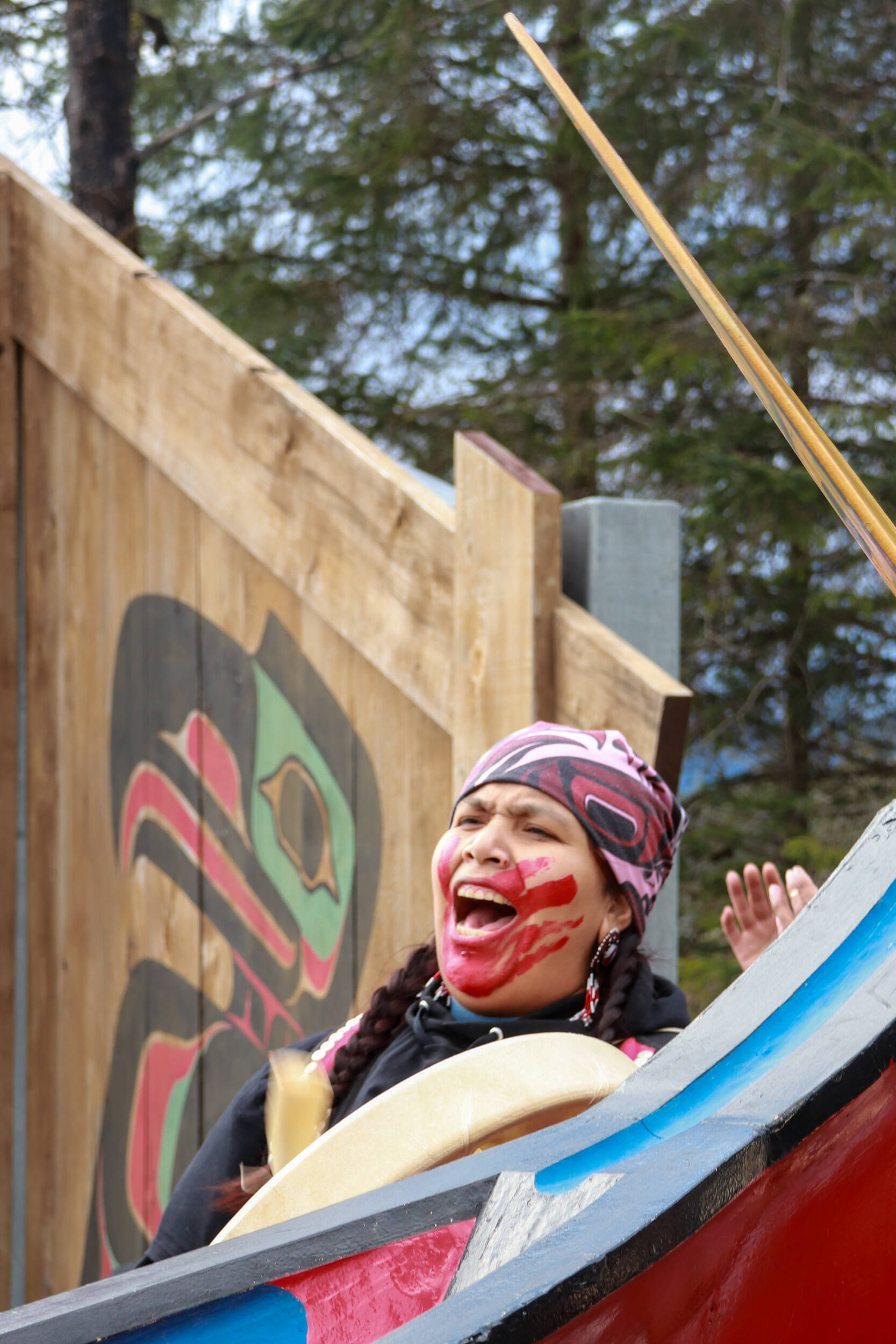
Bamby James sings at a Missing and Murdered Indigenous Persons Remembrance Ceremony on Monday, May 5, 2025. (Jasz Garrett / Juneau Empire)
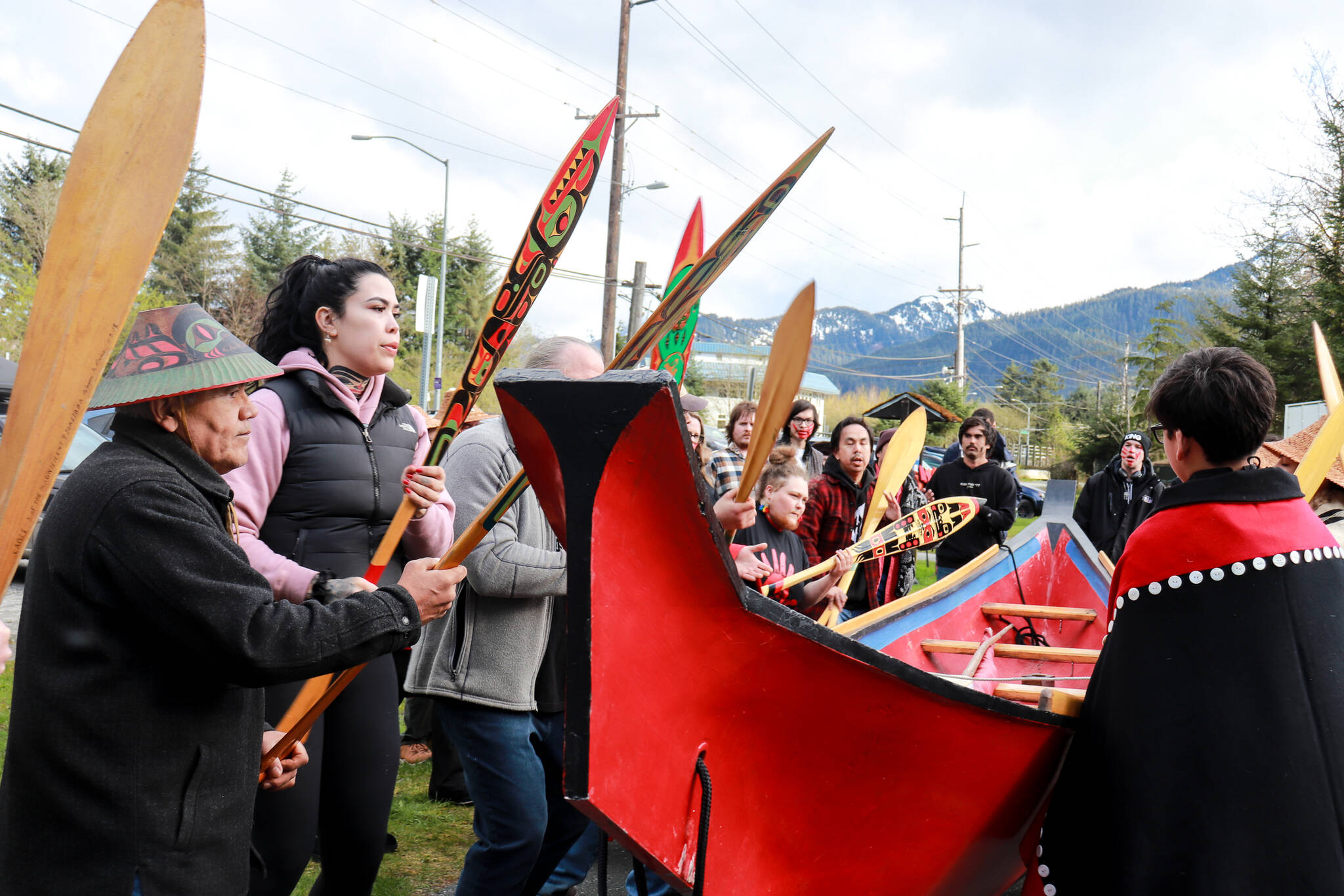
Wayne Price, master carver, (left) dances with his healing dugout canoe at Twin Lakes beside the community healing totem Kaasei Satú in a show of solidarity on Monday, May 5, 2025. (Jasz Garrett / Juneau Empire)

People attending a Missing and Murdered Indigenous Persons Remembrance Ceremony place paddles back into a healing dugout canoe after a dance on Monday, May 5, 2025. (Jasz Garrett / Juneau Empire)
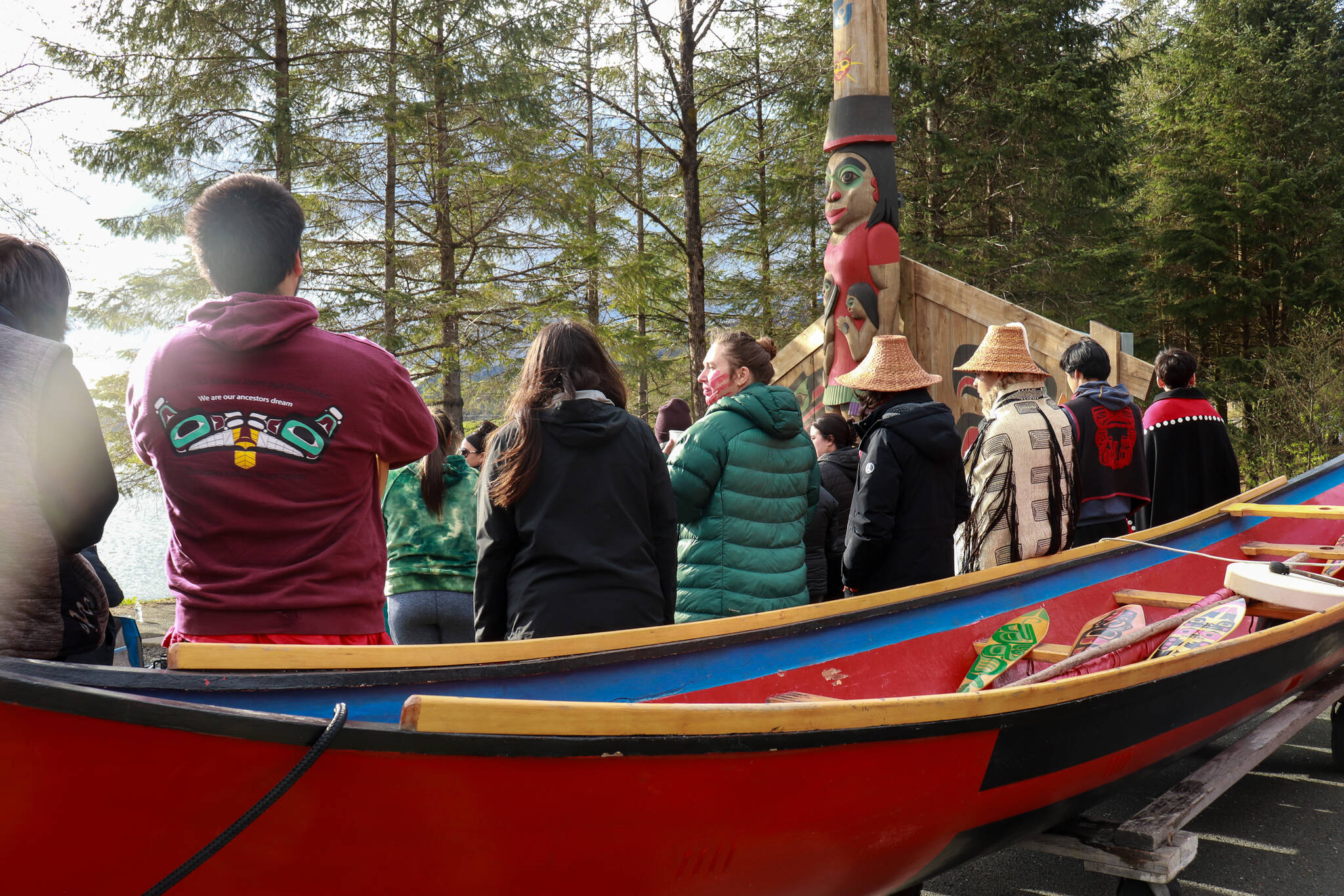
People attend a Missing and Murdered Indigenous Persons Remembrance Ceremony at Twin Lakes on Monday, May 5, 2025. Two of Wayne Price’s creations, a healing dugout canoe and totem pole, are seen together for the ceremony. (Jasz Garrett / Juneau Empire)
