
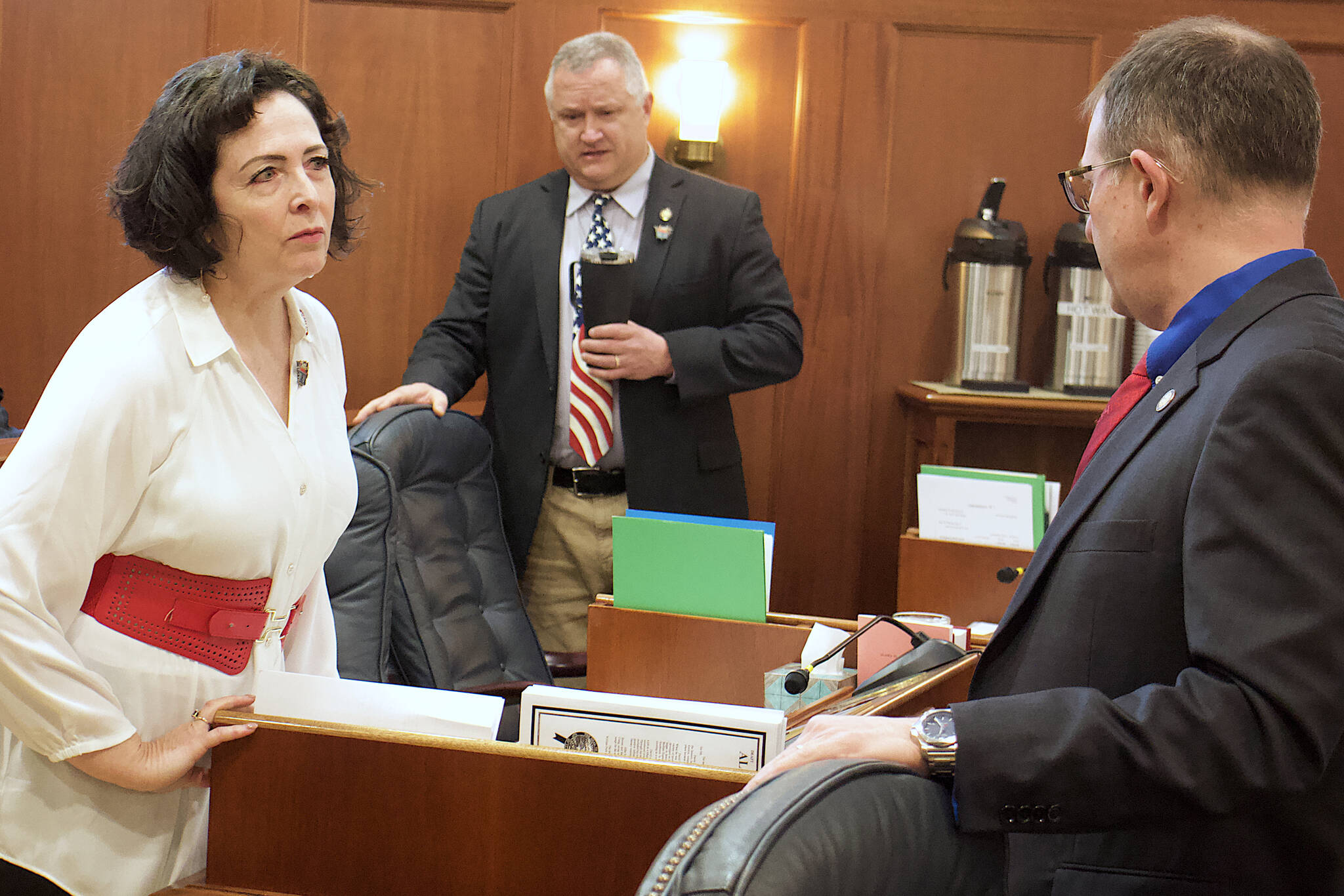
The state Senate on Monday unanimously approved allowing Alaska to seek extra revenue via the carbon credits market, which essentially would involve leaving vast amounts of carbon-absorbing areas such as forests undisturbed. The approval came despite strongly voiced concerns by a couple of members.
Within hours the bill authorizing the state to enter such agreements, introduced by Gov. Mike Dunleavy, received its initial consideration by the House Finance Committee during a late-night meeting, part of a series of moves aimed at resolving differences among the House, Senate and governor before the session is scheduled to adjourn Wednesday. Part of the plan involves the House passing what many lawmakers are calling the “trees bill” in time for the Senate concur with any changes.
“We’re trying to work for the governor on one of his priorities,” said state Rep. Neal Foster, a Nome Democrat who co-chair the committee, after Monday night’s meeting.
The bill would also allow legislators to state they are creating a new source of sustainable revenue as part of a long-term fiscal plan, the proposed elements of which are one of the prime causes of division this session.
Dunleavy’s proposal seeks to expand on the sorts of agreements three Alaska Native corporations have entered into since 2016, including Sealaska Corp., which claims to have earned more than $100 million by agreeing to leave forest land unharvested for 100 years.
Generally purchasers of carbon credits are pollution-emitting companies looking to decrease their “net carbon footprint” and environmental entities seeking overall reductions in climate change impacts.
Dunleavy claimed when introducing the bill the state could potentially earn billion-dollar sums annually within a few years, although subsequent reports generally project considerably lower amounts. A fiscal analysis by the Department of Natural Resources estimates it will incur about $137,000 in staffing and other costs annually, but avoids predicting income for the carbon offset and leasing programs.
“Revenues are not specifically estimated for either program due to timeline uncertainty and potential project variations,” the analysis states.
However, the department also issued a report projecting carbon credits pilot projects in three forest areas — involving the Haines, Tanana Valley and Matanuska-Susitna Valley areas — could earn about $5 million beginning as soon as next year. concurrently
But the bill is also being highlighted as part of a multi-part plan to give the state long-term financial stability. Sen. Bill Wielechowski, an Anchorage Democrat, said during Monday’s floor session the bill allows Alaska to fulfill a constitutional requirement to maximize the public benefit of natural resources without increasing industrial activities such as mining or oil drilling — but in general doesn’t limit those options either.
“In short we have an obligation to manage our state’s replenishable resources,” he said. “This bill sets a framework for how we do that. It does not lock up state land, it does not put tax on Alaska, it does not limit emissions.”
Changes made during the committee process to Dunleavy’s original bill, generally with the administration’s cooperation, including more thorough accountability measures available to the public and increasing the competitive process for entities wanting to buy carbon credits from Alaska, Wielechowski said,. He also emphasized the bill does not reflect Alaska lawmakers taking a position on issues such as climate change and ESG (environmental, social and governance) policies.
While the Senate vote was unanimous, two of the three members of the minority caucus expressed strong reservations about aspects of Alaska entering carbon markets.
Sen. Mike Shower, a Wasilla Republican, said there are national security implications to allowing global entities to buy carbon credit leases in the state.
“China is buying carbon credits and they’ll be able to continue to pollute while the West is hamstrung,” he said. He also asserted “Russia is claiming half of the Arctic” and if Alaska “is turned into a national park that’s not good for this nation.”
Also voicing concerns was Sen. Shelley Hughes, a Palmer Republican, who suggested amending the bill to prevent foreign adversaries from purchasing carbon leases from the state. She also said she was “taking a sip of this sour lemonade” even though she questions
“The whole carbon credit system is a commitment that is based on a belief system,” she said. “If it doesn’t do what it’s supposed to do, poof, the whole thing could implode.”
• Contact reporter Mark Sabbatini at mark.sabbatini@juneauempire.com
