
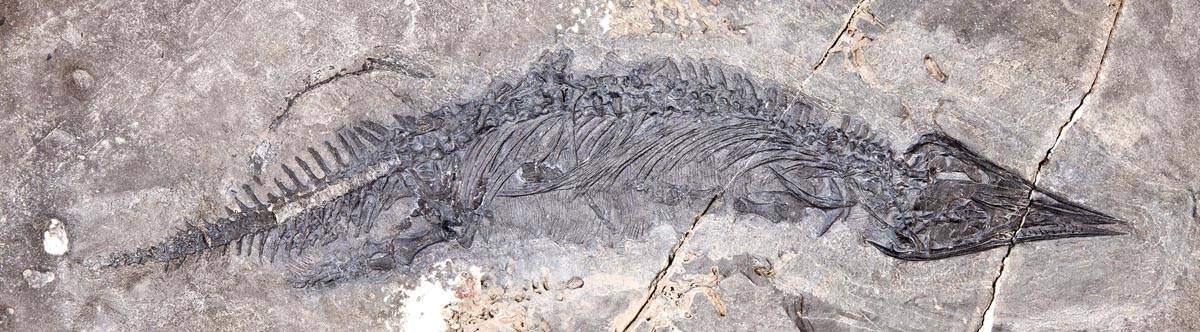
An ancient species of marine reptile whose remains were discovered near Kake was given a Tlingit name.
Gunakadeit joseeae, ancient seagoing reptiles that lived roughly 200 million years ago, was named in cooperation with a panel of traditional scholars, Tlingit Elders from Kake, and scientists from University of Alaska Fairbanks, according to a press release from Sealaska Heritage Institute.
“I really appreciated the fact that more and more people are becoming aware of the cultural sensitivities and that the Tlingit people view names as property,” said Rosita Worl, president of the Sealaska Heritage Institute. “Everything is owned by groups. Some names are owned by clans. Some are owned by the Tlingit people. The Gunakedeit is one.
Patrick Druckenmiller, the director of the UAF Museum of the North and a professor of geology, was the lead author on the project. He said that a friend of his, Ray Troll, an artist in Ketchikan, suggested looking into a Tlingit name.
“You know, if this is a new species, you might consider using the name of this creature from Tlingit legend,” Druckenmiller said that Troll told him. “A lot of different people got involved in considering that, and they decided it was an appropriate name.”
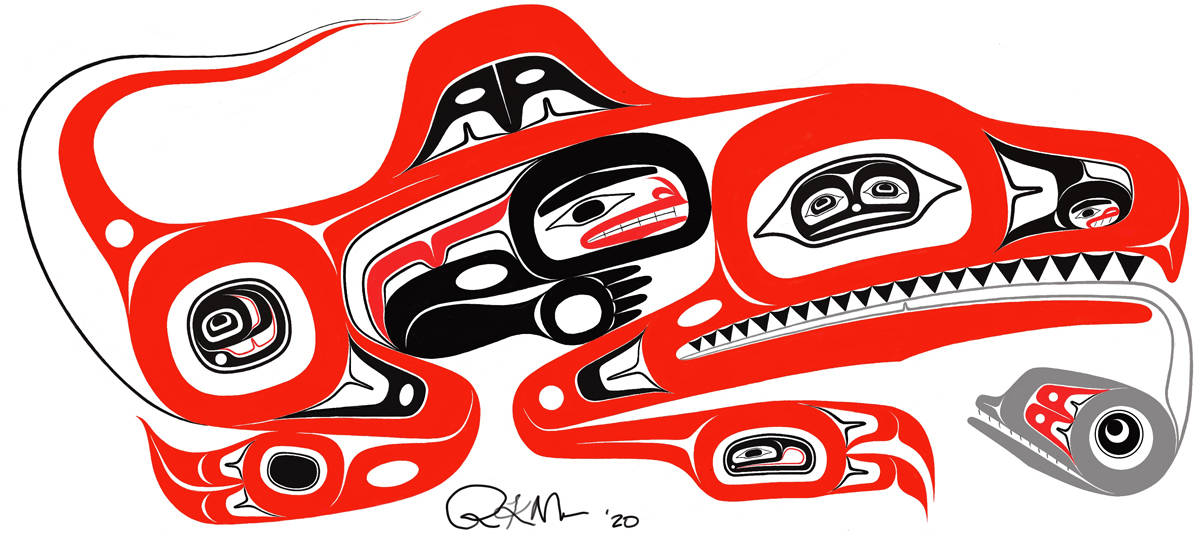
The Gunakadeit is a part of Tlingit cultural lore, a sea creature that grants good fortune to the worthy. (Courtesy art | Robert Mills)
Worl said that when Druckenmiller brought the offer to SHI, they consulted with their traditional scholars, who talked it over.
“In respect for the Kake people, because it sits adjacent to Kake, they thought that the Kake people should have the final say on the name,” Worl said.
The Gunakadeit joseeae is a part of a group of legged marine reptiles called thalattosaurs. The Kake fossil is the most complete example of the species in North America.
“It’s a pretty exciting find and it’s also one of the rarest kinds of finds that we’ve made in Alaska,” Druckenmiller said. “This is the first time we’ve ever really found not only a complete skeleton for this group of reptiles in Alaska but the most complete skeleton of its kind in North America.”
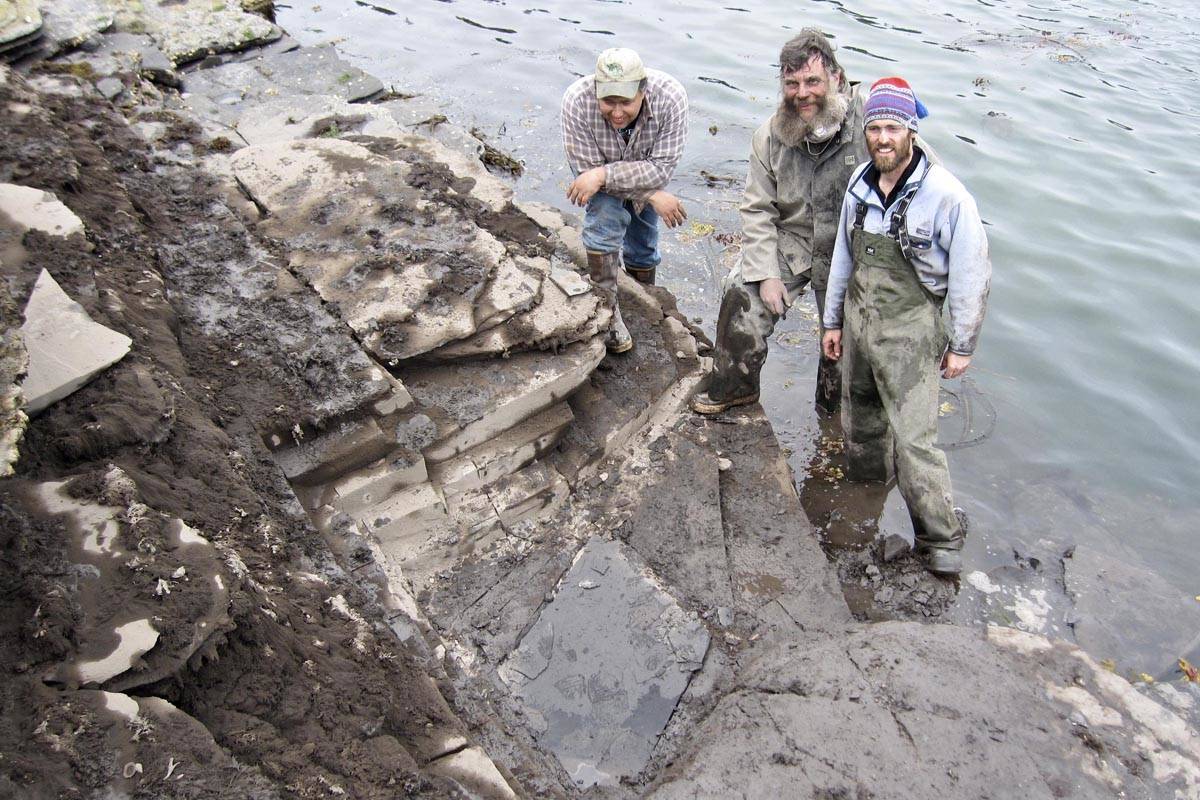
Kevin May | UA Museum of the North Gene Primaky, Jim Baichtal and Patrick Druckenmiller stand in rising tidewater after the last of the two blocks was removed. Minutes later, the tide submerged the excavation site.
The fossil was found in the intertidal zone in the Keku Islands near Kake, roughly six miles from the Southeast village. Gene Primasky, an IT specialist with the U.S. Forest Service, was exploring the beach when he stumbled on the fossil near the low tide mark. He asked Jim Baichtal, a geologist with the USFS, who recognized it as a fossil and contacted Druckenmiller.
In Tlingit lore, the gunakadeit is a sea creature that brings good fortune to those who are worthy and see it, Worl said. The second part of the name, joseeae, comes from the name of the mother of the fossil’s discoverer, Joseé Michelle DeWaelheyns.
“It was probably poking its pointy schnoz into cracks and crevices in coral reefs and feeding on soft-bodied critters,” Druckenmiller said. “We think these animals were highly specialized to feed in the shallow water environments, but when the sea levels dropped and food sources changed, they had nowhere to go.”
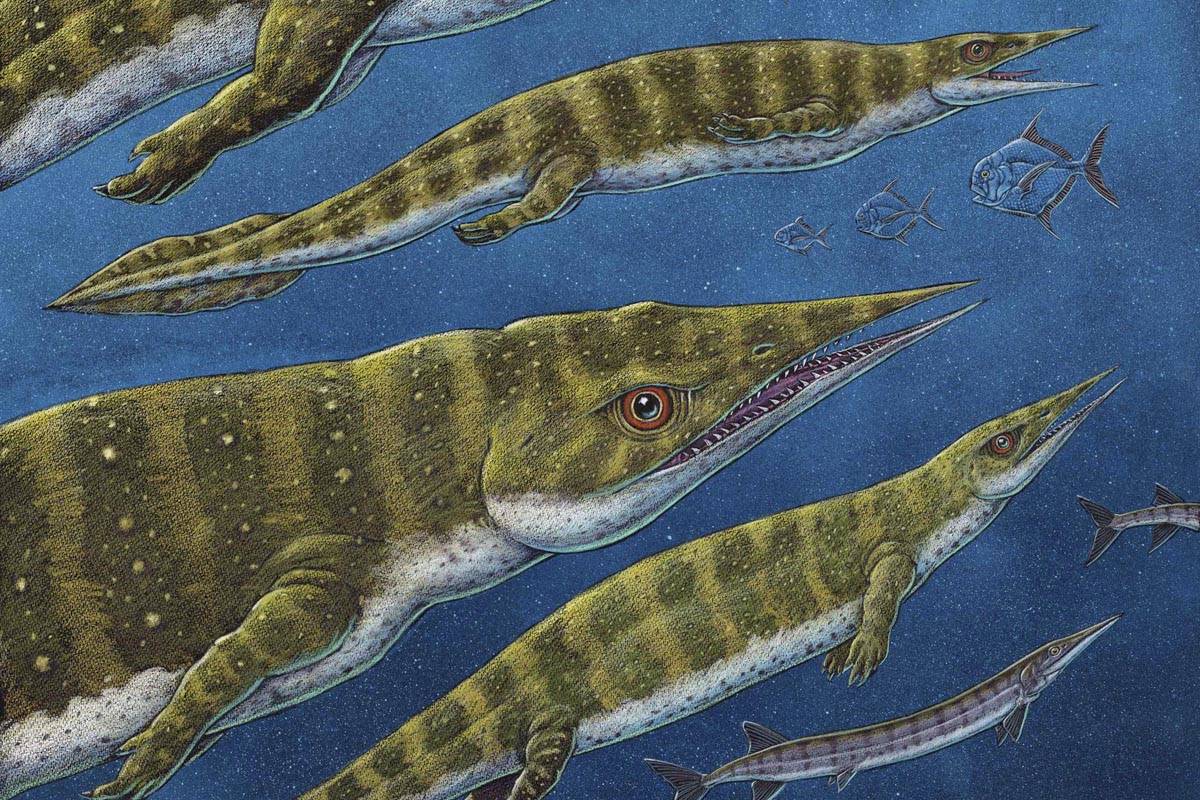
Artists depiction of Gunakadeit joseeae. (Courtesy art | Ray Troll 2020)
Druckenmiller and his team went to the site a month later, when the last low tides for nearly a year were predicted. The team had four hours a day for just two days to cut the fossil free.
“We rock-sawed like crazy and managed to pull it out, but just barely,” Druckenmiller said. “The water was lapping at the edge of the site.”
Druckenmiller said the excavation was fast-paced but successful. The fossil is now on display on the Museum of North in Fairbanks.
“It’s now part of our state heritage,” Druckenmiller. “It’s in our state museum.”
Worl said she was very excited by the progress shown in respecting the traditions of the Tlingit in naming this species.
“Science is still uncovering so many things,” Worl said. “We like it to be recognized that we have ancient ties to this land.”
Found something that looks like a fossil?
Druckenmiller said that many fossils in Alaska are discovered at the water’s edge, with the forest covering much else in Alaska.
“Many of the most important discoveries are not made by paleontologists but by regular people who are out fishing or hunting or whatever,” Druckenmiller said. If you locate something you think may be fossil, email him at psdruckenmiller@alaska.edu.
• Contact reporter Michael S. Lockett at 757.621.1197 or mlockett@juneauempire.com.
