
Melt season is a sad time for people who enjoy the magic of snow crystals bonding so well to one another, resulting in a web of trails over the face of Alaska.
As of this writing, however, middle Alaska is still locked in winter cold despite being bright enough to need sunglasses at both 7 a.m. and 10 p.m.
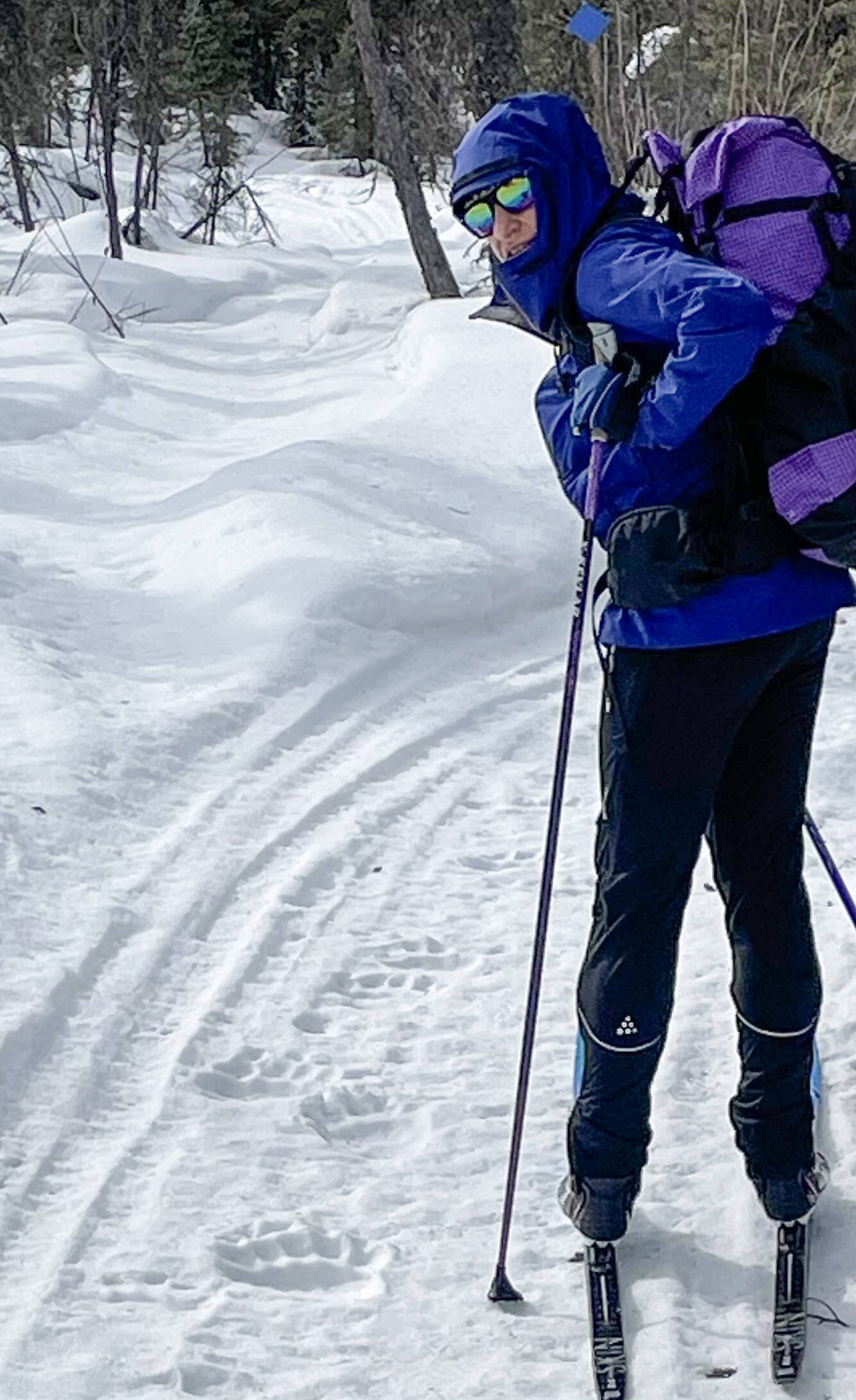
This intersection of winter and summer allows for unique observations. During a trip to a cabin 7 miles from a paved Alaska road last weekend, my wife and I saw bear tracks in the snow.
Those tracks belonged to a grizzly bear, according to Dick Shideler.
“That’s a big male,” Shideler said after seeing the photo. “It’s pretty amazing that it’s out wandering. Could be looking for a moose carcass.”
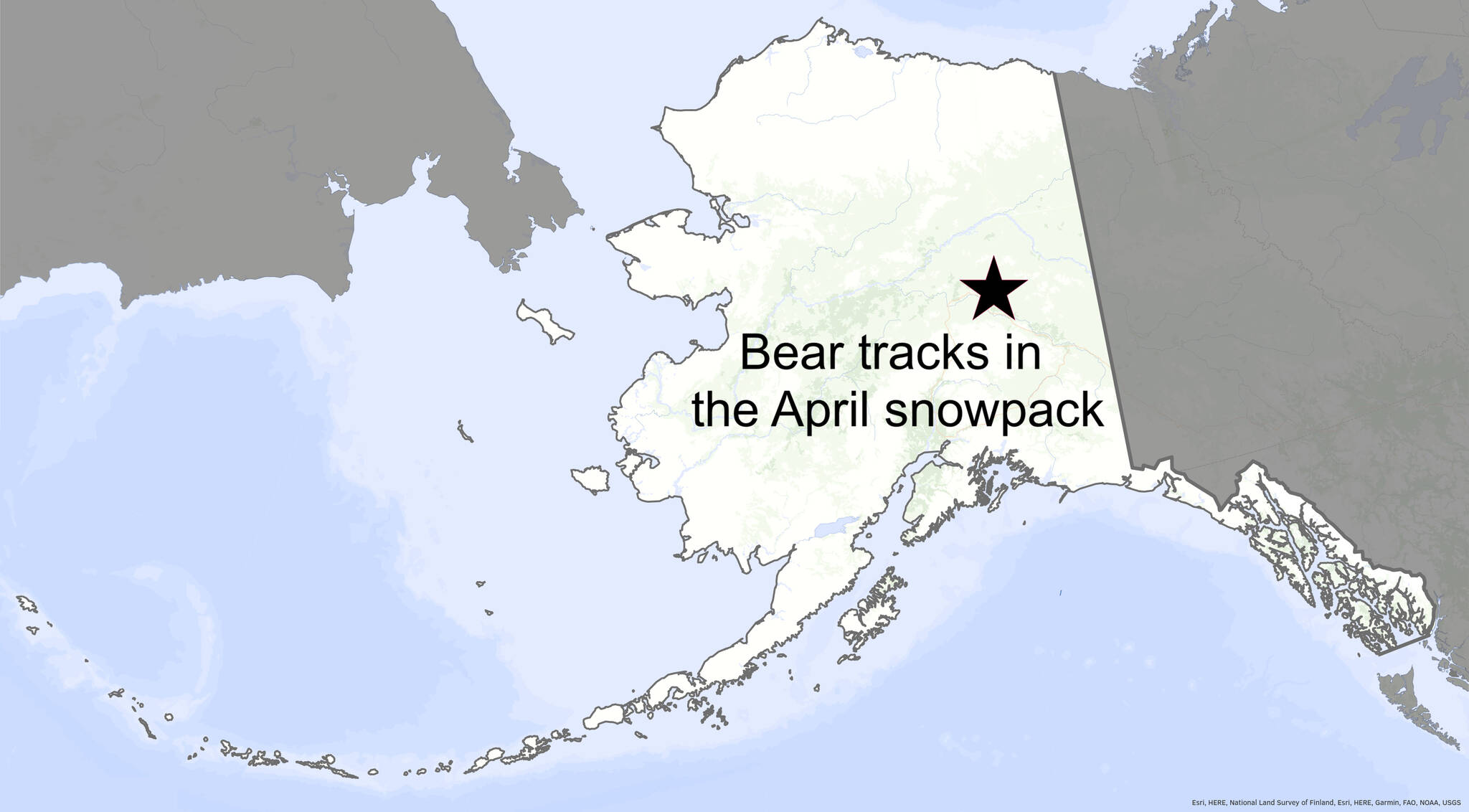
This map shows the location of bear tracks. (Courtesy Image / Ned Rozell)
Shideler is a biologist retired from the Alaska Department of Fish and Game. He has spent years in the company of far-north grizzly bears and polar bears. He said bears can emerge from hibernation now, or even earlier.
Over the years, he saw many North Slope bears, mostly adult males, leave their overwintering dens in early April, when cold temperatures north of the Brooks Range — including the frozen Arctic Ocean coast — made it seem like deep winter except for the brilliant sunshine.
“They probably couldn’t find much to eat besides carcasses (of animals that had fallen in winter) or the occasional live caribou or muskox,” he said. “They’ll eat whatever they can find, like dead grass. It’s definitely lean times when they come out, before ground squirrels or vegetation.”
Shideler noted that bears just out of hibernation are shifting from their lower metabolism of the past months to a more active state, “so their energy requirements aren’t as high immediately after emergence.”
Male grizzly bears are the first to leave winter dens, Shideler said. Females with cubs usually stay in hibernation for a few weeks longer.
Six months ago, maybe on some Tuesday afternoon in October when the sun was barely tickling your cheek, the bear whose tracks we saw crawled into a cubby it had dug into a hillside. The grizzly had stirred a few times throughout the long winter, maybe getting up, circling like a dog and plopping back down. But for most hours the animal was still, conserving energy while it avoided the leanest season.
During its half-year hibernation, the bear had neither eaten nor left the den as snowflakes slowly coated its winter sanctuary. Only a tiny airhole steaming above the snow might have been evidence a creature larger than a human was just beneath the surface.
What prompted the bear to leave its den now? Swedish scientists who instrumented grizzlies there concluded that the animals might become hot in their superinsulated space with the returning hours of sunshine. They found that bears had something like an internal clock that stimulated their metabolism when spring came, but the rise in air temperatures was what caused them to leave the den.
“Maybe the den warms up to the point where it gets uncomfortable for them,” Shideler said. “Or, with all that warm weather we had (in previous weeks) the bear could have picked a den location that might have flooded.”
Up early before any new vegetation pops up, bears that press their way out into a cold spring often sniff out the remains of moose or other animals killed along roadsides during the winter. Bears will often find and eat people’s garbage or food stored in places vulnerable to claws and muscle power.
The cabin we had rented still had its windows and doors intact, with no sign of bears interested in the big can of chili sitting on a shelf.
As we passed the bear’s tracks on the way out a day later, we saw where it had leapt off the trail and powered into the black spruce forest. That male was maybe the first of its kind to turn its massive head this way and that, surveying the quiet valley.
• Since the late 1970s, the University of Alaska Fairbanks’ Geophysical Institute has provided this column free in cooperation with the UAF research community. Ned Rozell is a science writer for the Geophysical Institute.
