
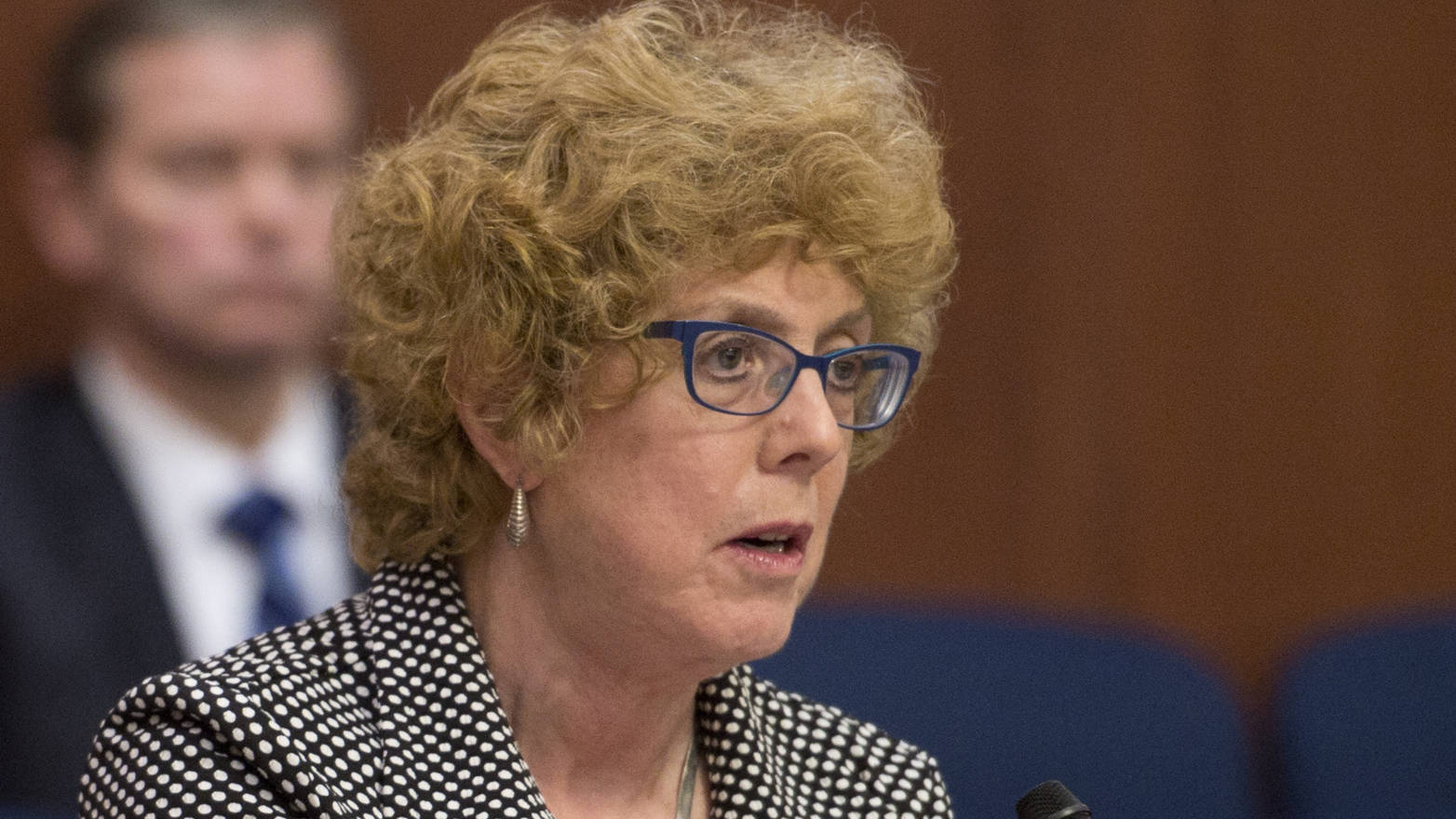
The chairwoman of the powerful House Rules Committee believes she has a plan to drive Alaska politics toward the center.
Her Republican critics say it’s a plan to dismantle the Alaska Republican Party.
Gabrielle LeDoux, R-Anchorage, in late March introduced House Bill 200, a measure that would ─ if approved by the House, Senate and Gov. Bill Walker ─ switch Alaska’s existing primary elections with what’s known as a “blanket primary” or a “top-two” primary.
In a top-two primary, all the candidates running for a particular office are put onto a single ballot during the primary. A voter picks his or her favorite. The top two vote-getters in the primary advance to the general election in November.
Alaska’s current primary elections are partially closed. Republican candidates show up on the Republican ballot, and registered Democrats can’t vote that ballot.
“I hear so many people complain about the closed primary system. It seems to be something that people, at least in my district, really don’t like,” LeDoux said.
Last year, after winning re-election to the Alaska House, LeDoux broke with her party and joined the coalition majority that now controls the House.
In turn, her party broke with her and two other Republicans who also joined the majority. In a late-winter vote, the Alaska Republican Party’s leaders revoked all support for LeDoux, Rep. Paul Seaton, R-Homer; and Rep. Louise Stutes, R-Kodiak.
The party has since vowed to run primary challengers against the three.
LeDoux specifically denied the bill is self-serving. HB 200 has a clause requiring a two-year phase-in process, so even if it were to pass in the 30th Alaska Legislature, the 2018 state elections would still operate under the existing primary system.
“This is something that I feel is important to get out there, to begin the discussion. When you ask me who’s with me on this, I think the people of Alaska are with me on this,” she said.
LeDoux’s idea isn’t a new one for the 49th state. Alaska held a blanket primary from 1947 to 1960, from 1967 to 1992, and from 1996 to 2000. Washington state has a top-two system, as do California and Louisiana, according to the National Conference of State Legislatures. Nebraska operates one for its state elections but not its federal elections.
HB 200 would apply to federal and state-level elections here.
LeDoux said her goal is to allow candidates flexibility in governance. The traditional view is that low turnout during primary elections means radical voters on the right and left are the most likely to turn out. That, in turn, results in politicians less likely to compromise at the center.
“I want to make it more possible for when people are governing, they can govern to their entire districts ─ the entire state if they’re statewide ─ without being concerned about their right flanks or their left flanks,” LeDoux said.
Political scientists are divided about the effectiveness of top-two primaries in this regard. California, for example, has seen a rising number of statehouse races in which both candidates in the general election are from the same political party.
The general belief is that a top-two primary must be combined with fair district lines in order to ensure moderate candidates.
LeDoux’s bill has not yet been scheduled for a hearing, and it isn’t clear whether it has the support to pass either the House or the Senate, but she said it’s the right action regardless.
“I think it is great for the people of Alaska,” she said.
• Contact reporter James Brooks at james.k.brooks@juneauempire.com or call 419-7732.
