
Clarification: An earlier version of this article referred to Haa Yoo X’atángi Kúdi as the first-ever Tlingit language immersion preschool. It is the first for Juneau, not the whole state.
By February, Juneau could have a childcare program entirely in Lingít.
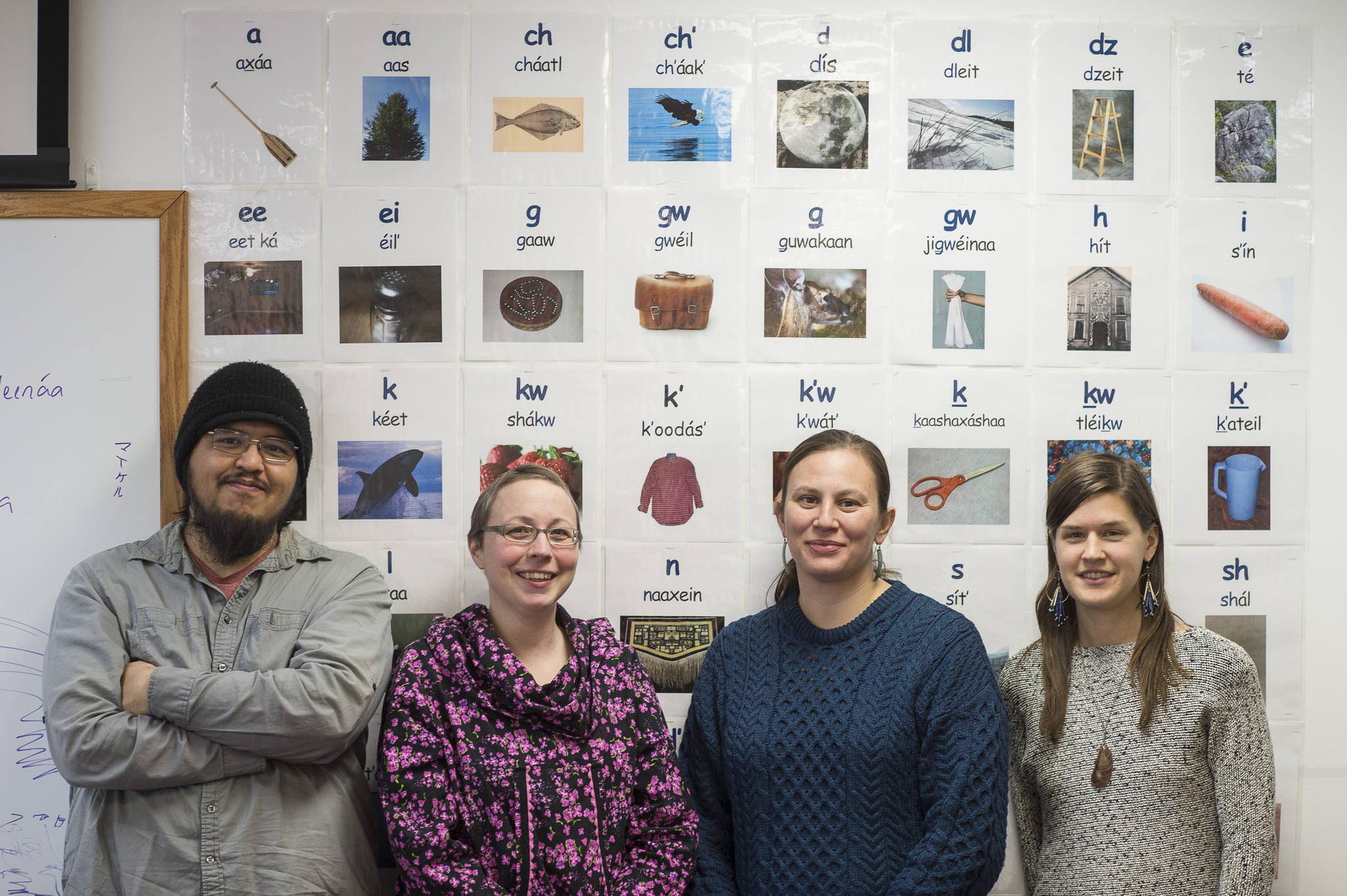
Haa Yoo X’atángi Kúdi is Central Council of Tlingit & Haida Indian Tribes of Alaska’s new “language nest,” an immersive program intended to help revitalize the Tlingit language of Lingít.
After four years of development, the program is close to getting off the ground, with the goal of immersing Juneau students between the ages of 3 and 5 in the Tlingit language.
“We’re absolutely excited,” said Tlingit & Haida President Chalyee Éesh Richard Peterson. “Every day as time goes by we lose more fluent first speakers.”
The Endangered Languages Project estimates there are about 200 fluent speakers of Lingít worldwide. The Alaska Native Language Center similarly puts that figure at 175 speakers.
The state Legislature and former-Gov. Bill Walker recognized a linguistic emergency for Alaska Native languages last year. Alaska Native languages are endangered because of past colonial efforts to stop Alaska Natives from speaking their languages, including boarding schools, which persisted into the 20th century.
Peterson praised language revitalization efforts in Juneau as well as villages, including Hoonah, Yakutat and Kake, and said new endeavors are necessary for Alaska Native language resurgence.
“We need to do more now,” Peterson said. “We need to be part of that solution.”
[Tlingit & Haida president speaks about tribal governance]
Haa Yoo X’atángi Kúdi
Haa Yoo X’atángi Kúdi itself means “our language nest” in Lingít.
It’s hoped that the first pilot year will just be the first step in language-immersion education.
“I think there’s a lot of potential for this program,” said Mary Daaljíni Folletti, lead instructor and administrator for the language immersion nest.
It is expected to take place in Tlingit & Haida’s Vocational Training & Resource Center, Folletti said, and the first year will have a cap of 10 kids.
So far, 16 applications have been received, Folletti said, but applications will continue to be accepted until Jan. 11. Applications are available online at ccthita.org and can be submitted by email to mfolletti@ccthita-nsn.gov.
“Criteria for the first year is we hope that the children have already had exposure to the Tlingit language,” Folletti said.
Additionally, there will be two family events per month that parents or guardians will be expected to participate in, Folletti said.
The February start is dependent on licensing from the Alaska State Department of Health and Social Services which only happens once per month, but it’s expected to come through in time.
“I think there’s a pretty good chance,” Folletti said.
[Local woman, Tlingit & Haida employee benefits from drag show]
Peterson said he was unsure when the February start date will be confirmed.
If the permitting doesn’t come through, Folletti said the most significant consequence will be possible scheduling concerns for parents who wish to enroll their kids, and the pre-school will need to continue into the summer to meet a 500-hour benchmark set be a grant that is helping to fund the program.
Kaaxh Ts’éen Herb Sheakley said he has no reservations about the uncertain start date and is just excited for the program to begin, and he plans to enroll his daughter, Kax Du.óo Mayzie.
“We were doing the Tlingit toddler time for a few years now,” Sheakley said. “It was something we wanted. I’m fully on board with it. A Tlingit immersion school is something I back 120 percent. If you go anywhere else there’s a Russian immersion school and a Spanish immersion school.”
Nuts and bolts
In addition to Folletti, the language nest will be staffed by two other full-time employees and two part-timers.
A typical Haa Yoo X’atángi Kúdi day is expected to run from about 1- 5 p.m. and include quiet time, snack time, exploration time and more. All of which will be done in Lingít.
“The goal is to be 100 percent immersion,” Folletti said.
The late start time allows parents who have their children enrolled in other pre-school programs to attend both if they choose.
Sheakley, whose daughter is currently enrolled in Tlingit & Haida Head Start, said he plans to withdraw from that program once the language nest starts.
“It’s pretty much the same, and it’s scientifically proven bilingual babies are smarter,” Sheakley said.
A 4-year-old effort
Efforts to create a Lingít-language childcare program are almost as old as the kids who will be part of the program.
“Four years ago at our tribal assembly there was a motion to start a language department,” Peterson said.
It’s been pursued ever since and in July it received a big boost from a three-year, $1 million federal grant from the Administration of Native Americans.
For that reason, Folletti said the first year of the language nest will be free to participating families, but as the program goes on there will eventually be fees to allow it to continue.
[PHOTOS: Alaska Native language summit]
Folletti said she is hopeful the program will be lasting and be a first step toward immersion schools for older students.
“That’s my hope for this,” Folletti said.
Peterson said that’s one of his hopes, too, but for now the immediate focus is Haa Yoo X’atángi Kúdi.
“We need to get this right and go from a place of success,” Peterson said.
• Contact arts and culture reporter Ben Hohenstatt at (907)523-2243 or bhohenstatt@juneauempire.com.
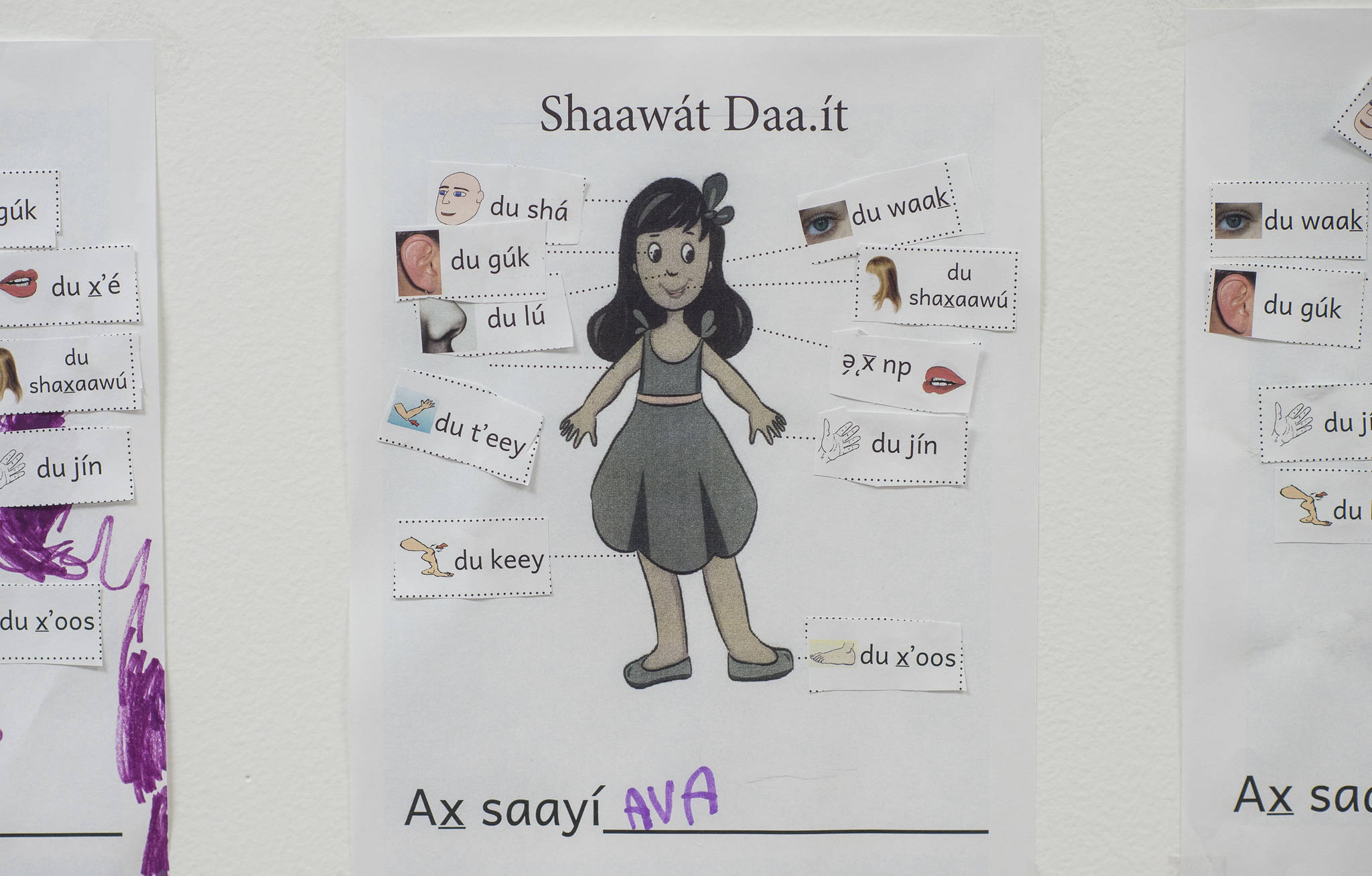
Central Council of Tlingit and Haida Indian Tribes of Alaska has been awarded a $1 million operate a Tlingit Language Immersion Nest for 3- to 5-year-old children at the Vocational Training & Resource Center on Hospital Drive. (Michael Penn | Juneau Empire)
