
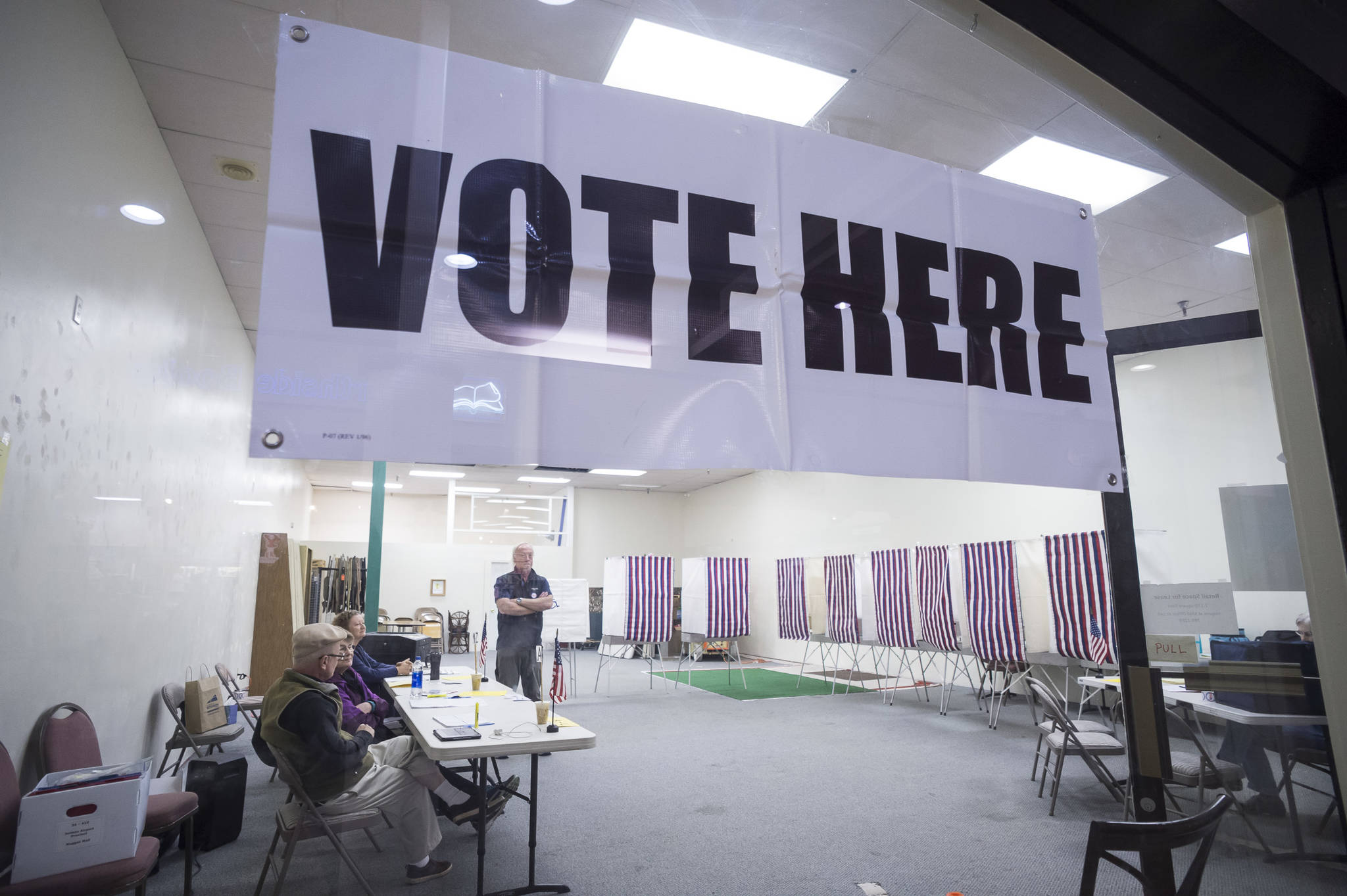
Alaska now has more registered voters than it has people eligible to vote.
According to the newest figures from the Alaska Division of Elections, the state has 569,903 registered, active voters. The latest population estimates from the Alaska Department of Labor, released in January, show Alaska has 548,373 people who are 18 or older.
Take into account the number of people who are noncitizens or are otherwise barred from voting by criminal conviction, and the state of Alaska likely has tens of thousands of extra people on its voting rolls.
Using figures from the United States Elections Project at the University of Florida, Alaska has registered 109 percent of its eligible voters.
“It’s not all that unusual,” said Charles Stewart III, a professor at the Massachusetts Institute of Technology who studies voting in America and has provided advice to the Presidential Commission on Election Administration.
“My guess is now that it’s up to a dozen states or so where that’s true,” he said.
Wendy Underhill, director of the National Conference of State Legislatures’ elections and redistricting team agreed.
“It’s not where anyone wants to be, but it’s not unusual,” she said. “We hear this from time to time in various jurisdictions.”
Under the administration of President Donald Trump, the federal government has taken a greater interest in the possibility of illegal voting, and registration errors increase that possibility. There is little evidence that illegal voting is actually happening.
“I think there’s evidence that people are registered in two states; I don’t think there’s any evidence that there’s people voting in two states,” Stewart said.
Even without fraud, over-registration poses problems.
“It requires Juneau to print ballots and do all sorts of things to accommodate people who are not eligible to vote in the state, so that is a cost imposed by the state,” he said.
The gap between registered voters and eligible population may be larger in Alaska than in any other state thanks in part to Alaska’s unique demographics and a recent surge in voter registration.
In 2016, voters approved a program that automatically registers eligible Alaskans to vote when they apply for a Permanent Fund Dividend. The program allows Alaskans to opt out, but most haven’t. Between October 2016 and October 2018, the state added more than 41,000 registered voters to its rolls, even as the state’s overall population stayed almost flat.
Before the start of the PFD voter program, Alaska already had one of the best voter-registration rates in the country, according to figures from the U.S. Census Bureau. Eighty-eight percent of participating Alaskans said they were registered to vote. The District of Columbia, with 94 percent registration, had the highest registration rate nationally.
While it’s relatively easy to register a voter, it’s much more difficult in Alaska for someone to be removed from the roll.
“The state’s list maintenance process relies on the postal system returning the state’s by-mail contact attempts as undeliverable. These contact efforts only begin after two federal elections with no voter activity. In many cases, removal of voters no longer in the state lags roughly four years behind. This was established by federal and state law,” wrote Samantha Miller, a spokeswoman for the Division of Elections, in an email responding to a question from the Empire.
If voters don’t answer a letter questioning their voting status, they can be deemed “inactive.” Miller confirmed by email that the figures released by the state are for active voters only, and that they don’t publish inactive statistics.
Miller pointed out that “Alaska is a state with a large transient population,” something state demographer Eddie Hunsinger and the Alaska Department of Labor have repeatedly identified.
“Between 5 and 7 percent of the state’s population enters or leaves each year,” the department said in 2012, and the pattern holds true today.
“The story that was always told to me about Alaska was that there’s both a lot of people who move in for construction, military, and a large fraction of people in Alaska are living there for a short period,” Stewart said. “Most likely what’s happening is people are registering, and then moving out of the state, and then not telling the state.”
A few months before voters approved the PFD voter program, the Alaska Legislature voted almost unanimously to try to fix that problem. Lawmakers approved the state’s participation in the Electronic Registration Information Center, a nationwide database that allows states to share voter information and eliminate duplicate entries. Twenty-five states are tied into that database.
“My sense it does help to keep the dead wood down,” Stewart said, but it’s not a perfect solution.
“You still have to comply with the National Voting Rights Act,” he said.
That requires waiting until at least the next federal election, and as Miller said, under Alaska law, it might take two election cycles.
People who have died are removed more quickly: Under state law, the Division of Elections is supposed to get monthly updates from the state bureau of vital statistics.
Even then, “it’s almost impossible to remove literally everybody who has died or moved out of the state,” Stewart said. “I think every state is going to be in the position that Alaska’s in.”
• Contact reporter James Brooks at jbrooks@juneauempire.com or 523-2258.
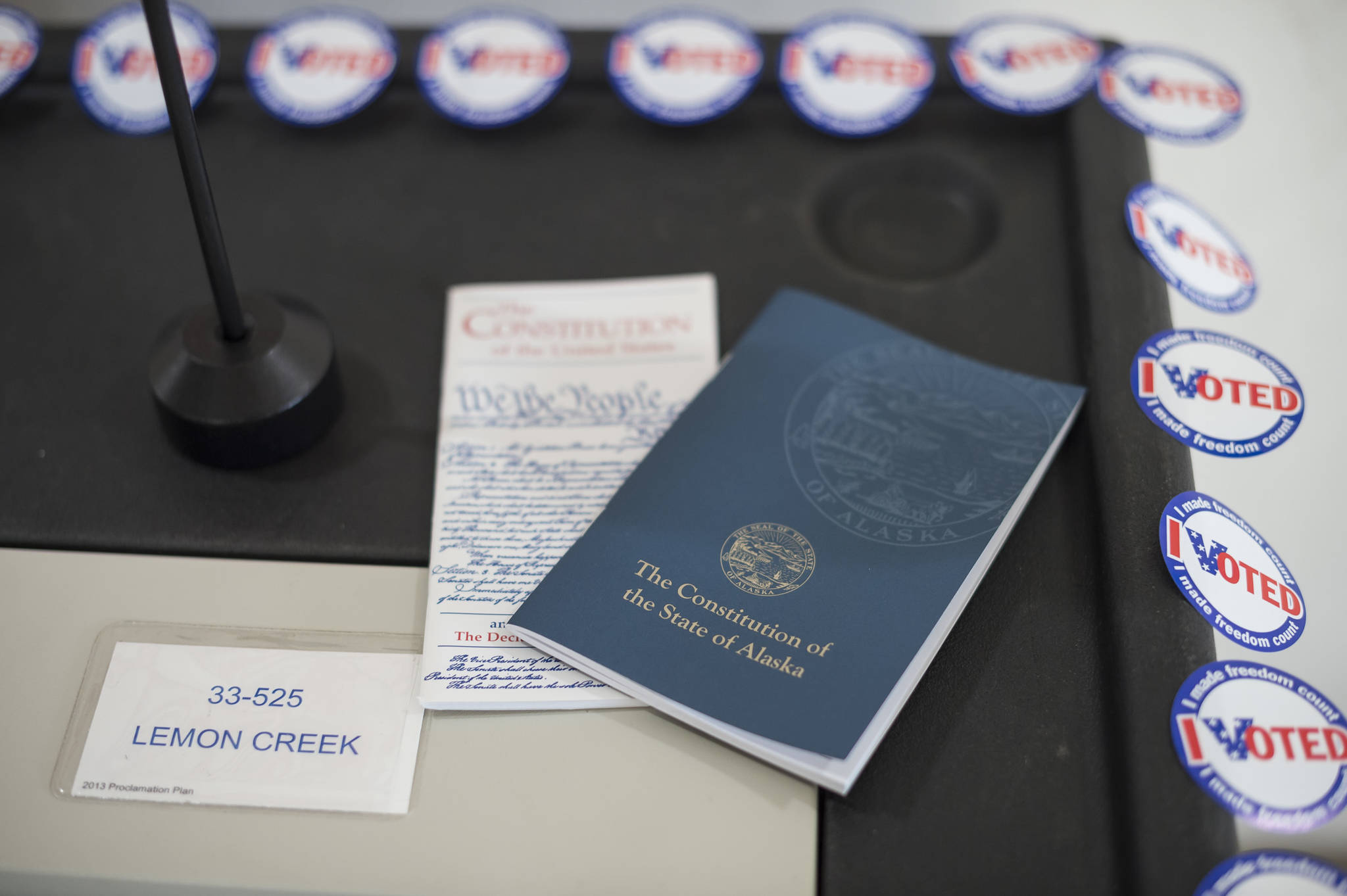
Copies of the U.S. Constitution as well as “I voted” stickers are available to voters during the Municipal Election at AEL&P on Tuesday, Oct. 2, 2018. Estimates indicate Alaska has registered 109 percent of its eligible voters. (Michael Penn | Juneau Empire File)
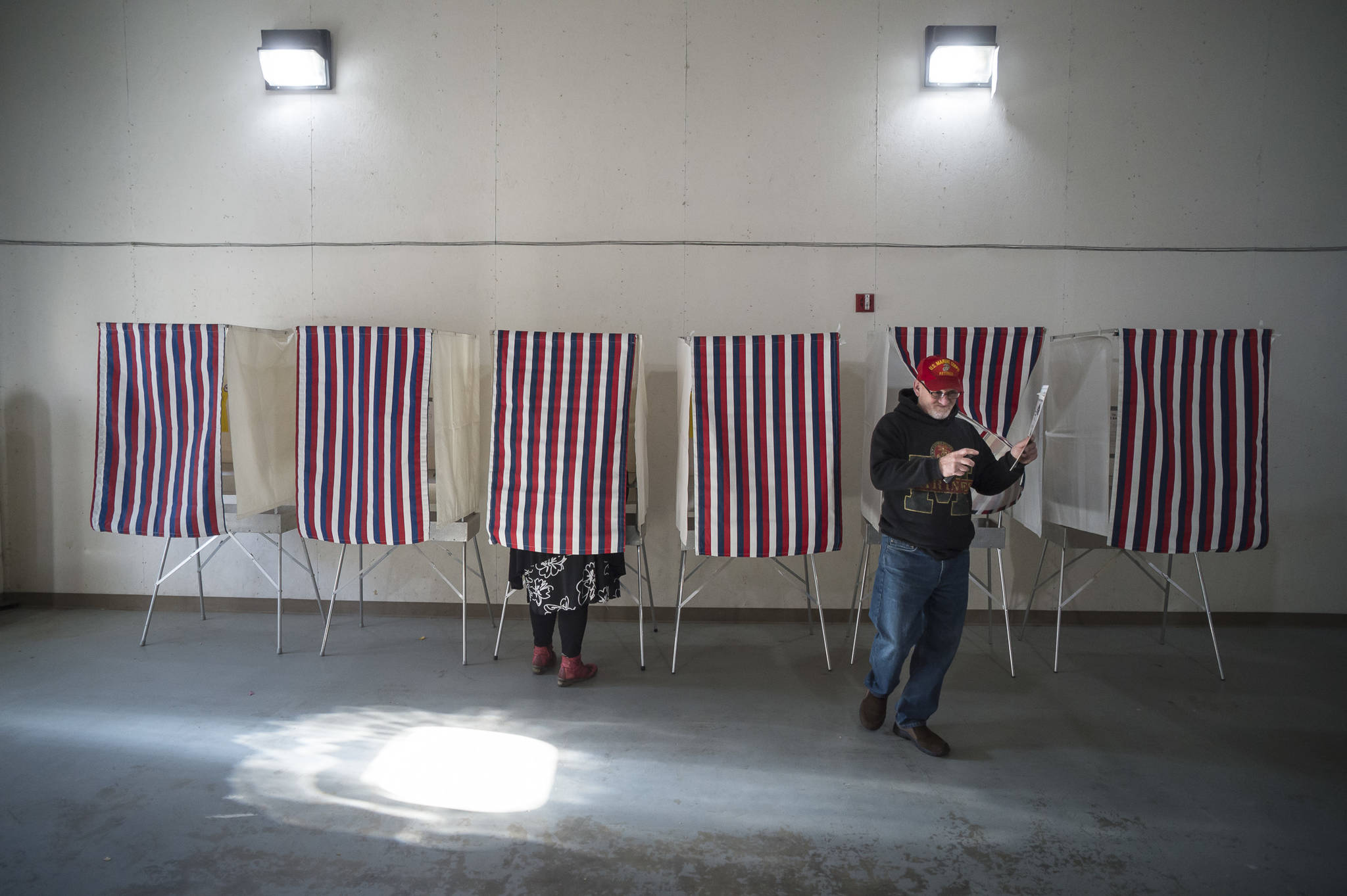
Michael Boisvert exits a voting booth in the Municipal Election at AEL&P on Tuesday, Oct. 2, 2018. Estimates indicate Alaska has registered 109 percent of its eligible voters. (Michael Penn | Juneau Empire File)
