
The last part of March seemed to pass slowly, at least for those of use impatient for spring. Each of us has their own sequence of observations for the arrival of spring, depending on their interests and where they walked. But here is how spring came along for me in March.
There were some lovely sunny days (and chilly nights) and the signs of a coming season were there. The crocuses at the arboretum drew visits from bumblebee queens, who burrowed deep into the flowers for nectar and also sampled the pollen from the stamens. They also went to the butterbur inflorescences near the entrance; this species is related our local coltsfoot. It would be interesting to know just how each bee times her spring emergence from hibernation. Rising soil temperature around the underground winter nest must be part of the stimulus, but body condition also matters. Those that weigh less than expected for their size are in poor condition, and they tend to emerge early. Bigger queens can store more fat than small ones and use it more slowly, so they can stay underground longer. Small ones deplete their resources sooner and may often emerge ahead of the big ones.
A little squadron of bufflehead on the river near the wetlands held several males in full array and feeling feisty, but the accompanying females seemed unimpressed. Out past Nugget Falls, hundreds of gulls gathered on the cliffs and out on the lake ice. In the strawberry fields at Eagle Beach, there were a few very new leaves just emerging. Devil’s club buds were just emerging from the tips of the stalks, particularly in places exposed to sun. Red-breasted sapsucker drummed and occasionally called in several places.
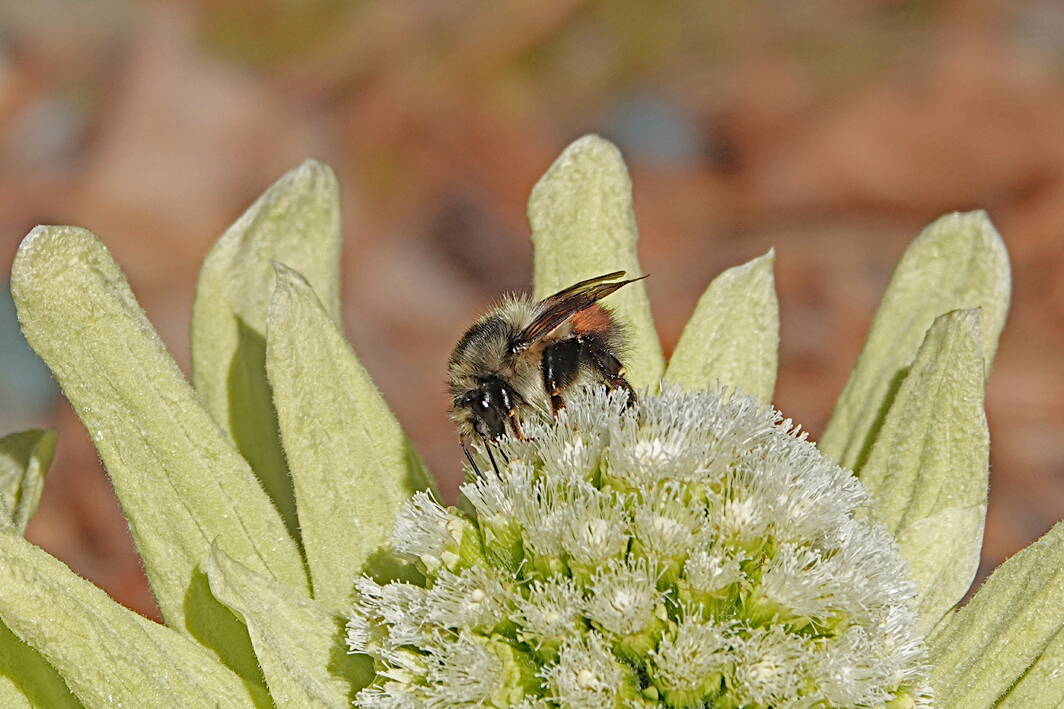
A queen bumblebee visits a butterbur inflorescence at the Arb. (Photo by Bob Armstrong)
On a beach near the Rainforest Trail, a friend and I found one mermaid’s purse (the egg and embryo case of skates). This one was undamaged by predators but empty of detectable embryos. We’ve found them in large numbers on this beach in other years, indicating that skates breed somewhere offshore, so I wondered if our timing was off or if the skates have moved away to breed in a different place.
And then it was April! When I stepped out my door one morning in very early April, the first thing I heard was a robin — a bit rusty, perhaps, but telling the world than he was Here. A little later I heard a varied thrush, likewise a bit creaky, but nevertheless saying it was springtime again.
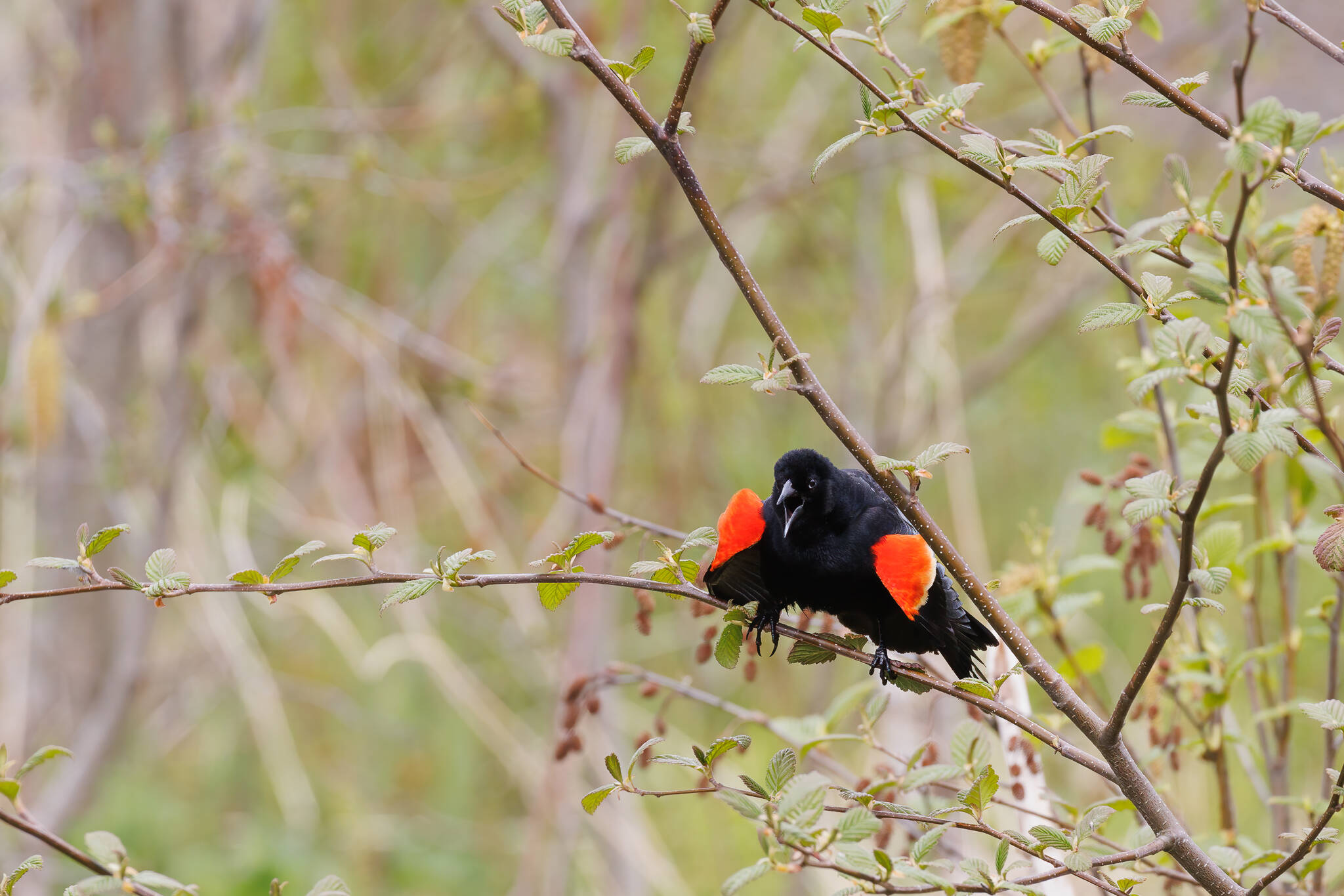
The previous day a visit to Kingfisher Pond found red-winged blackbirds singing vigorously and displaying their red “epaulets.” When the wing is folded, the red looks to be on a shoulder, but it is really near the wrist, as can be seen when the wing is expanded. No females yet visible, but the guys were ready. Just a few days before, there had been no singing or displaying, but the time had now come. A song sparrow held forth, perched on a tall stalk right in front of the viewing platform — a spot later claimed by a red-wing, so the sparrow retreated to the shrubby margins of the pond. A pair of mallards swam cautiously away from the platform area, looking over their shoulders. A belted kingfisher chattered and flew over to the adjacent bigger pond, allowing the small pond to keep its name. A friend heard a ruby-crowned kinglet in full song. Another friend reported seeing a calm and peaceful bear using the trail.
In the marshy areas near some roadsides I saw the yellow point of skunk cabbage inflorescences just emerging from the muck. So it’s really happening, if a bit reluctantly. Here in the upper Valley, it has still been freezing at night. My home pond and some others in the Valley carry a lot of ice, but there are some ponds that are wide open. I recently found a trumpeter swan consorting with a bunch of mallards on Moose Lake, in the Dredge Creek system.
We revisited the Rainforest Trail about ten days after the March visit. No more mermaid’s purses, some juncos were still in a flock, but varied thrushes and robins were calling and a couple of robins foraged out on some mussel-clad little reefs exposed at low tide. A beach-fringe Douglas maple bore bright red buds. Some early blueberries were flowering; a bee was zooming around but seemed to be more interested in following us than in visiting the flowers. And we were treated to the songs of ruby-crowned kinglets and Pacific wrens; a kinglet even came out on the upper beach to forage.
• Mary F. Willson is a retired professor of ecology. “On The Trails” appears every Wednesday in the Juneau Empire.
