
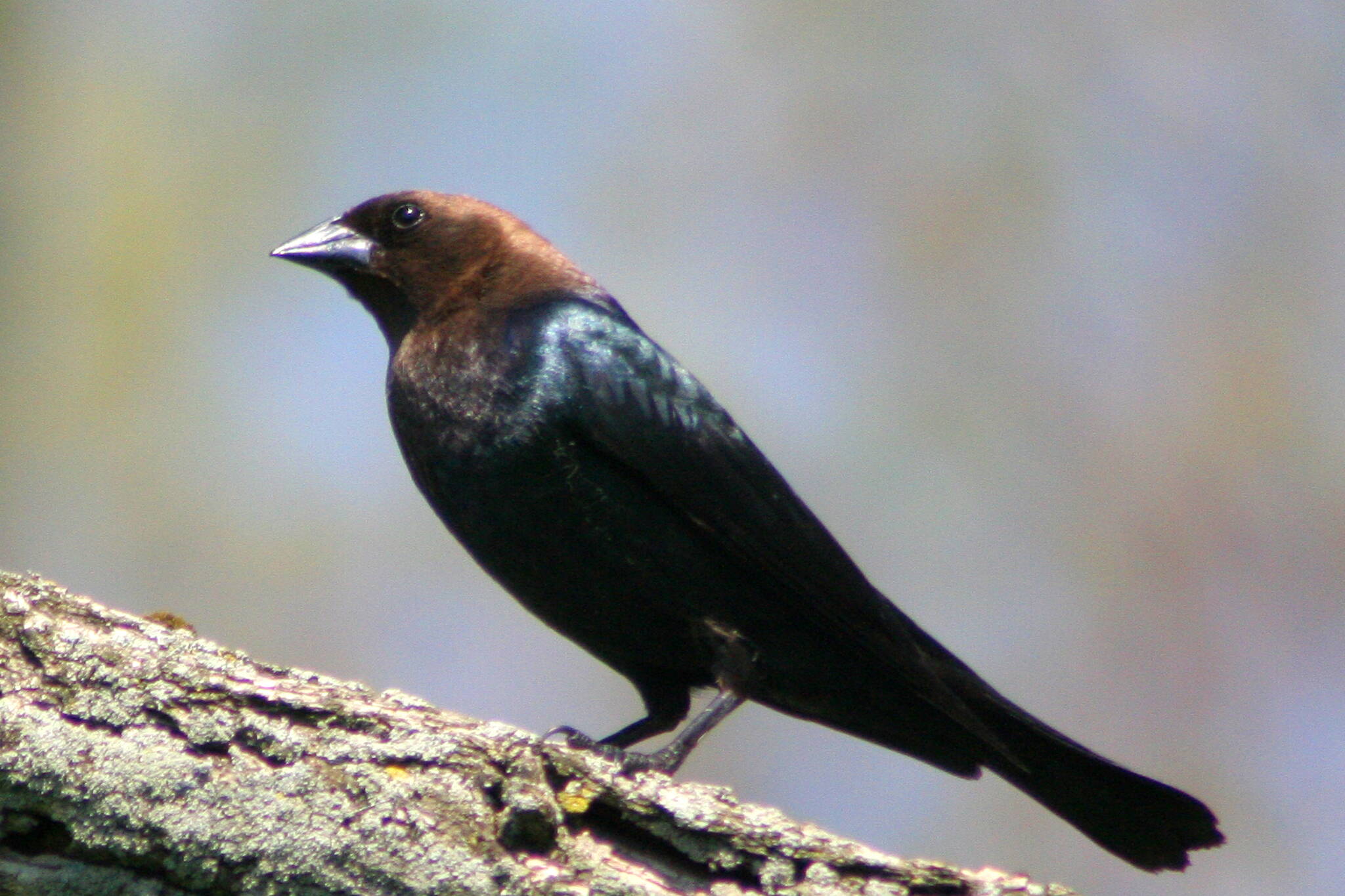
Egg-dumping refers to the behavior of a female who puts her eggs in another animal’s nest, leaving all other parental behavior to the host. Some animals are what you might call professional egg-dumpers because they never make nests of their own and always put their eggs in the nests of other species.
For example, there’s an African catfish that routinely puts its eggs into the mouth of a mouth-brooding cichlid fish, and there are cuckoo-bumblebees who put their eggs in the nests of other social bees. However, the best known professional egg-dumping occurs among birds. Bird species that always put their eggs into the nests of other bird species are usually called interspecific brood-parasites.
Interspecific brood-parasitism in birds has evolved several times: it is the rule for the several species of cowbirds in the Americas, for indigobirds, whydahs, and honeyguides in Africa, for cuckoos in the Old World and two cuckoos in South America (but only occasional in North American cuckoos), and for black-headed ducks in South America. Some are not terribly fussy about whose nest they choose for hosting their eggs but parasitize a variety of species. Others, such as the European common cuckoo, often specialize to some degree; although the species as a whole parasitizes many kinds of hosts, there are groups of females that specialize on particular host species.
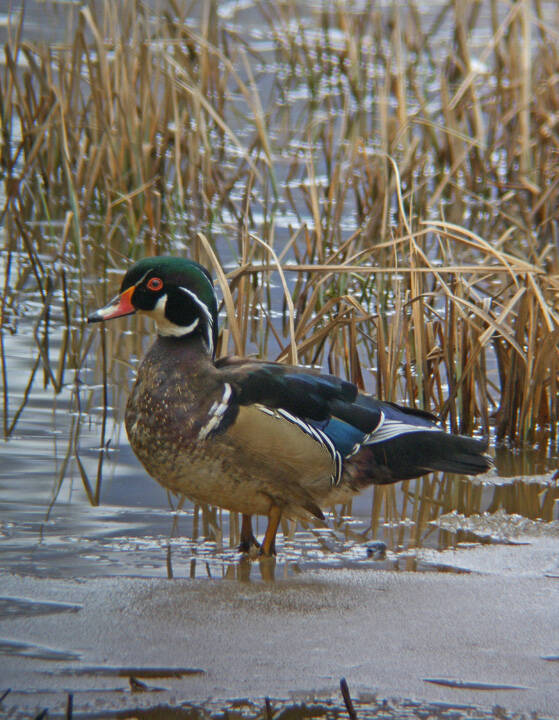
Female wood ducks sometimes dump their eggs into the nest of other species as well as their own. (Photo by Bob Armstrong)
The host of a brood parasite can pay a high cost in lost reproduction. Sometimes the adult parasite bird kills or removes one or more of the host’s eggs or chicks. When the parasite’s eggs hatch, there is a high cost of rearing a young brood parasite; that chick is often bigger than the host’s nestlings and claims a disproportionate share of the food the parent brings. In some cases, the parasite chick even kills some of its nest-mates. So there is natural selection favoring discrimination against the parasite’s offspring, and some host species may kill or reject a strange egg that shows up in their nest or a nestling that looks too odd. In the case of the European cuckoo, the chances of rejection are reduced by egg mimicry…the eggs of these cuckoos look rather like the eggs of the host to which they are specialized. But that discrimination is imperfect and the egg-dumping behavior continues.
Another form of brood parasitism is intraspecific (or conspecific), in which females dump their eggs in the nests of other females of the same species. This turns out to be very widespread and common. Much of it may be incidental and occasional, for instance if a female has an egg ready to lay, but her nest has just been destroyed by a storm or a predator. Or maybe she is just young and inexperienced, and opportunistically drops an egg in a conspecific neighbor’s nest.
A variety of birds exhibit intraspecific egg-dumping behavior. It has been recorded from over 200 species, appearing especially in waterfowl and songbirds. Perhaps the best known are wood ducks, which are cavity-nesters that often use nest boxes. In any one year and in any one population, some females make their own nest and tend their own eggs, some females only dump their eggs in other females’ nests, and others use both behaviors, but individuals can change the behavior between years. One study showed that the mixed strategy had higher reproductive success than either nest-only or dump-only.
Wood duck egg-dumpers sometimes range rather widely as they search for a place to put their eggs, but it seems to be more common for a female to concentrate her search in her neighborhood. Studies have shown that egg-dumping was more common if the nest boxes were relatively densely arrayed and if they were not hidden in vegetation. That reveals a potential confounding factor: although egg-dumping also occurs in natural cavities in trees, most nesting studies are done with ducks that are using boxes, because that is much easier for the researchers than dealing with natural cavities. But nest boxes are typically arrayed more densely than natural cavities, so the impression of wood ducks being such frequent egg-dumpers might be, at least in part, a corollary of nest-box density. Maybe?
It seems to be clear that regular egg-dumping by any species is not just a simple response to a scarcity of nest sites or just not putting all your eggs in one basket, but the evolution of this behavior needs more research. There are some strange reports that are hard to rationalize: For example, redhead ducks sometimes egg-dump in each other’s nests, but they also make communal dump nests with eggs from several females. However, most of these communal clutches are not incubated, so no contributing female has increased reproductive success from that. A study in Scotland found that oystercatchers and eider ducks sometimes dumped eggs in gull nests, where the chicks might become food for the gulls. You can bet that more studies would turn up more peculiar twists to the story of egg-dumping!
• Mary F. Willson is a retired professor of ecology. “On The Trails” appears every Wednesday in the Juneau Empire.
