
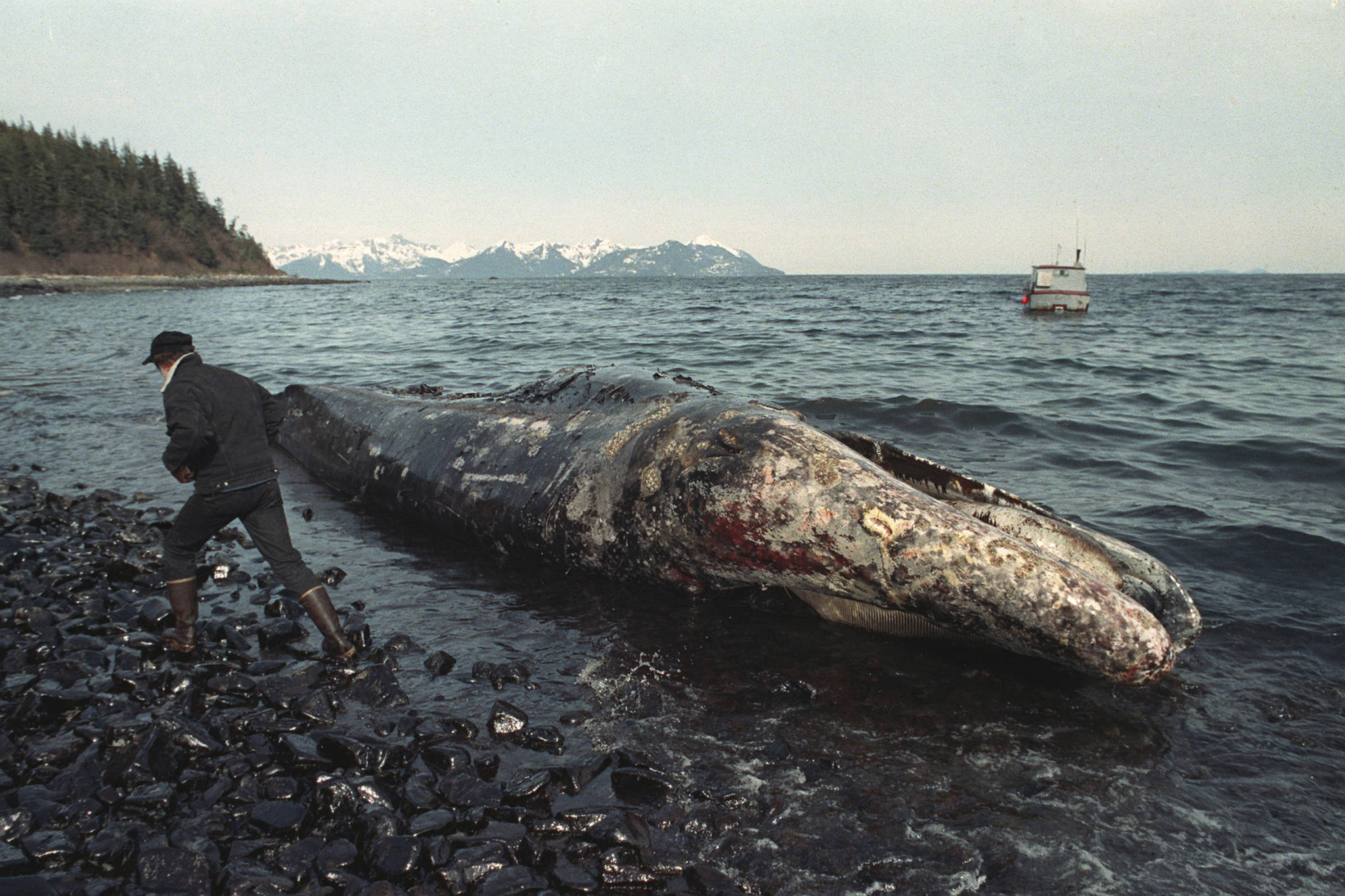
Thirty years ago on March 24, the Exxon Valdez oil tanker disastrously hit Bligh Reef in Prince William Sound, disgorging 11 million gallons of oil over 1,300 miles of coastline, of which 200 miles were heavily or moderately oiled. It is considered to be one of the most devastating human-caused environmental disasters in the world.
Today, under Gov. Mike Dunleavy’s budget, our ship of state, and subsequently our economy, is heading toward a “fiscal Bligh Reef.” How disastrous this collision will become is now up to the Alaska Legislature. Fortunately, like the Exxon Valdez, this shipwreck is preventable.
At the time of the spill, I served on the Executive Committee of United Fishermen of Alaska and remember the visceral outrage when fishing boats loaded with oil-absorbent booms were told by Exxon managers to “stand by” all because their oil skimmers were in transit. A full day of calm water was wasted. Fishermen had to watch the oil spread unchecked.
[Exxon Valdez oil spill inflicted lasting wounds]
Today, with numerous demonstrations on the Capitol steps, the outrage over Dunleavy’s budget feels equally palpable.
When the governor cripples essential infrastructure like the Alaska Marine Highway System, guts the university system with a 40 percent cut, eliminates the power cost equalization payment for rural Alaska and eliminates 16,924 full-time jobs with benefits, the state’s economy becomes fully exposed to danger ahead. Respected economists at the Institute of Social and Economic Research estimate that job losses and budget cuts proposed by the governor’s budget could extend the state’s current economic recession.
Who is at the budget helm? Just like the absent Captain Joe Hazelwood, Dunleavy has a third mate in charge, Donna Arduin, director of Office of Management and Budget. She is a hired gun known for hacking apart state budgets. But unlike Captain Hazelwood, Dunleavy isn’t turning over the helm due to possible influence of alcohol. Instead, the governor is under the influence of a simple, ultra-conservative ideology — government is a burden and taxes are evil.
[State budget uncertainty hangs over hospital]
Asked to shed light on the budget, David Teal, the longstanding head of the nonpartisan Legislative Finance Division, surmised, “Maybe there’s some hope on the governor’s part that you’ll just throw up your hands and say, ‘We don’t have time to evaluate this.’ Or maybe, creating chaos is just a clever way to force a conversation that needs to happen.”
Creating chaos, intentionally or not, is akin to the third mate not looking at his radar. Did you know that Exxon’s management chose not to repair Exxon Valdez’s broken specialized Collision Avoidance Radar for more than a year before the disaster? It was just “too expensive” to fix. Instead of looking forward, instead of investing in community and safety, Exxon focused on its bottom line, cutting very costly corners. This is where overriding corporate interests got us 30 years ago.
Dunleavy not only lacks an economic collision radar — he is creating the hazardous fiscal reef. The legislature must step up. Their first course adjustment should be to eliminate the $1.96 billion (Fiscal Year 2020) oil tax credit.
[Opinion: A message to the elders affected by Gov. Dunleavy’s budget]
Former Fairbanks Sen. Joe Paskvan explains in a recent op-ed, “Alaska should stop giving costly oil tax credits,” that “oil credits obligate Alaska to pay the oil industry billions of dollars without a reciprocal return on Alaska’s investment expenditure. Alaska has not received its Senate Bill 21 promise. There has been no flood of oilfield workers to Alaska’s North Slope, and Alaska’s treasury is not replenished by increased oil production. All you need to remember is the SB 21 promise in 2014 of one million barrels per day oil production; this promise to Alaskans was not kept.”
Neither was Exxon’s promise kept to make Alaska fishermen “financially whole” after the Exxon Valdez disaster.
Thirty years after the spill, the herring population in Prince William Sound has yet to recover. Thirty years later, Dunleavy submits a budget that holds the oil and gas industry harmless while slashing K-12 education. Dunleavy’s budget is poised to destroy not just our schools, but Alaska’s chance of an economic recovery. It is poised like a financial crash of the Exxon Valdez.
Now the legislature must reassess oil tax credits, stand up for communities and make vital course corrections while we still can.
• Kate Troll is a former Juneau Assembly member with 22 years experience in climate and energy, fisheries and coastal management policy. She is the author of “The Great Unconformity: Reflections on Hope in an Imperiled World.” My Turns and Letters to the Editor represent the view of the author, not the view of the Juneau Empire.

Kate Troll (Courtesy Photo)
