
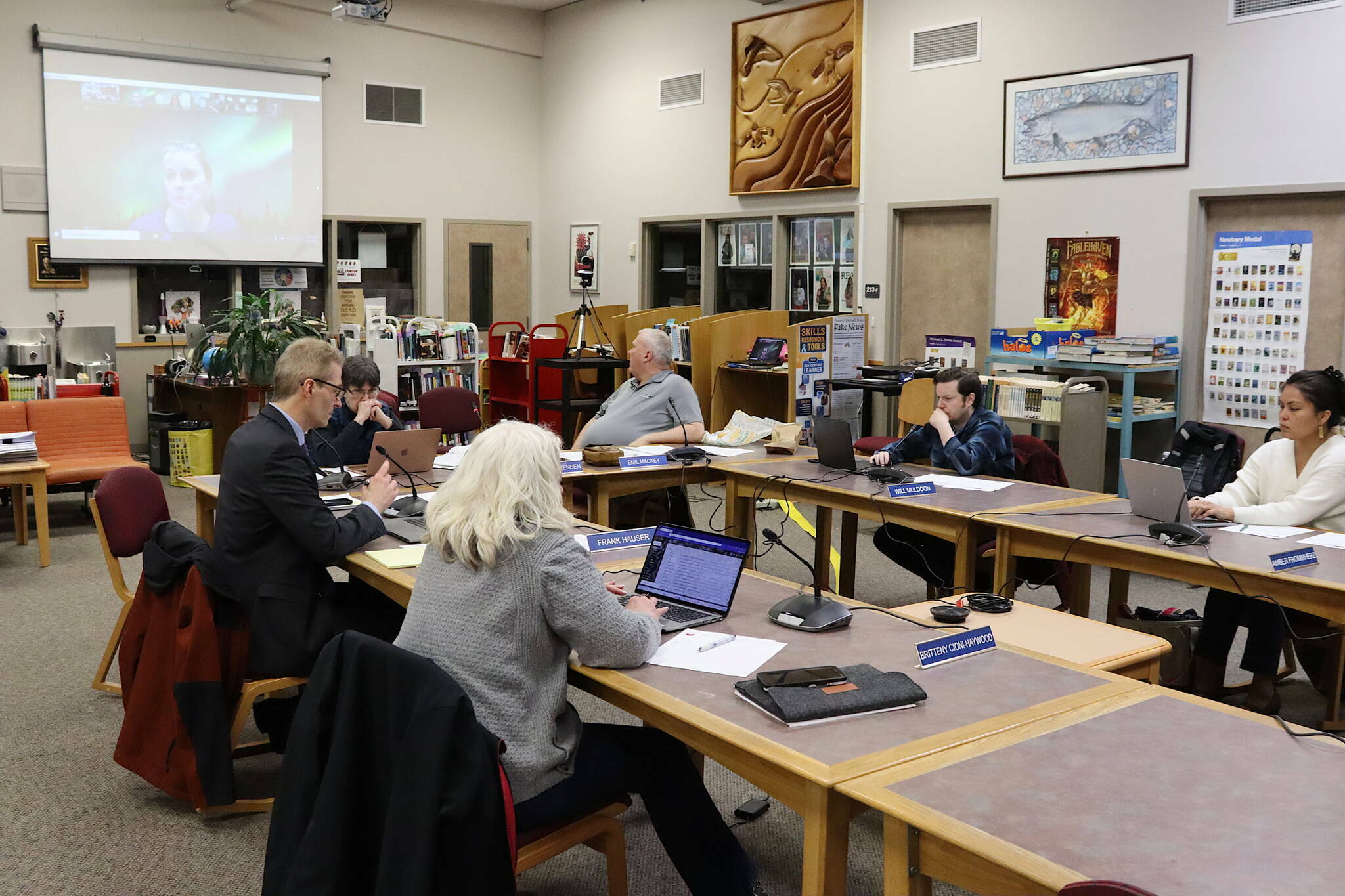
The ink was hardly dry on the Juneau School District (JSD) FY 2025 budget passed last month before a local group filed petitions to recall the school board president, Deedie Sorensen, and vice president, Emil Mackey.
Petition supporters have 60 days under state statute to secure enough signatures to force a recall vote.
The petitions chronicle a litany of grievances stemming from the recall supporters’ inability to convince the board to keep both high schools open in the face of declining student counts and significant budget deficits.
The audacity and unsupported accusations of the petitions are eye-opening. Rob Palmer, Juneau’s city attorney, ruled that of the 15 separate charges (seven for Sorenson and eight for Mackey), 13 were legally insufficient and were thrown out.
The sole remaining charge for each is identical: “Failure to understand the FY24 budget and accounting errors resulting in $7.9M deficit and taxpayer loan from CBJ.” Ironically, the FY24 budget is unrelated to JSD school closures and was crafted and recommended by previous Superintendent Bridget Weiss and unanimously approved by the board in 2023.
Palmer’s legal opinion notes that “regarding [legal] sufficiency, it does not matter if the petition’s statement contains untrue or mischaracterized facts. It does not matter if the petition’s statement omits facts…”
Although the board voted 5-2 to approve the school consolidation plan, and unanimously to approve both the 2024 and 2025 budgets, the recall group targets only two board members for recall. This alone is reason for potential signers to reject the petition. It’s clear the group’s effort isn’t about better schools but, rather, about shifting blame.
For years, previous school administrators and school board leadership overlooked their own demographic projections and budgeted for unrealistic student populations.
Several past board members and school officials won’t have to answer questions about why the school district is in this predicament.
Bridget Weiss, JSD’s superintendent for five years, left in 2023. In a 2018 Juneau Empire article, Weiss stated she was “more optimistic for the future, saying that if Juneau’s economy can provide jobs and be attractive to young families, enrollment could turn around” even though evidence pointed to the opposite occurring.
Brian Holst, currently director of the Juneau Economic Development Council, served nine years on the board and five as president, leaving in November 2023. Paul Kelly served three years on the school board, two of those years in a leadership role, departing in 2021 to run successfully for the Juneau Assembly last year.
They all left the party before the tough decisions had to be made. The current school board was left to clean up the mess.
Deedie Sorensen and Emil Mackey had the courage to speak up, no longer allowing the board to ignore Juneau’s student population decline that is primarily responsible for the district’s deteriorating financial condition. Sorensen and Mackey consistently and rationally advocated for a budget that prioritized people and programs over buildings, and, in doing so, convinced a majority of the board to do the same.
Yet the petitioners blame those two board members for necessary school closings caused by a financial debacle that has been brewing for years.
That is some kind of twisted logic.
What the petitioners and their supporters won’t tell you is that the school district has been living on borrowed time. Maintaining the status quo or taking half-measures isn’t an option. The board’s own demographic projections envision losing another 1,200 students over the next 10 years.
Within a short time an elementary school (or two) will likely need to be closed. In two years the district must begin repaying the $4.1 million loan included in the financial rescue package approved by the CBJ Assembly. With Juneau’s dwindling student population, the district’s structural deficit won’t be cured without more cuts and closures, even if the Legislature passes increased education funding for school districts.
But petition boosters don’t want you to know that. They want you to shoot the messengers.
Before starting a war, maybe the people behind this recall effort will have the courage to look in the mirror and, like Pogo, realize that “we have met the enemy, and he is us.”
• After retiring as the senior vice president in charge of business banking for KeyBank in Alaska, Win Gruening became a regular Opinion Page columnist for the Juneau Empire. He was born and raised in Juneau and graduated from the U.S. Air Force Academy in 1970. He is involved in various local and statewide organizations. Columns, My Turns and Letters to the Editor represent the view of the author, not the view of the Juneau Empire. Have something to say? Here’s how to submit a My Turn or letter.
