
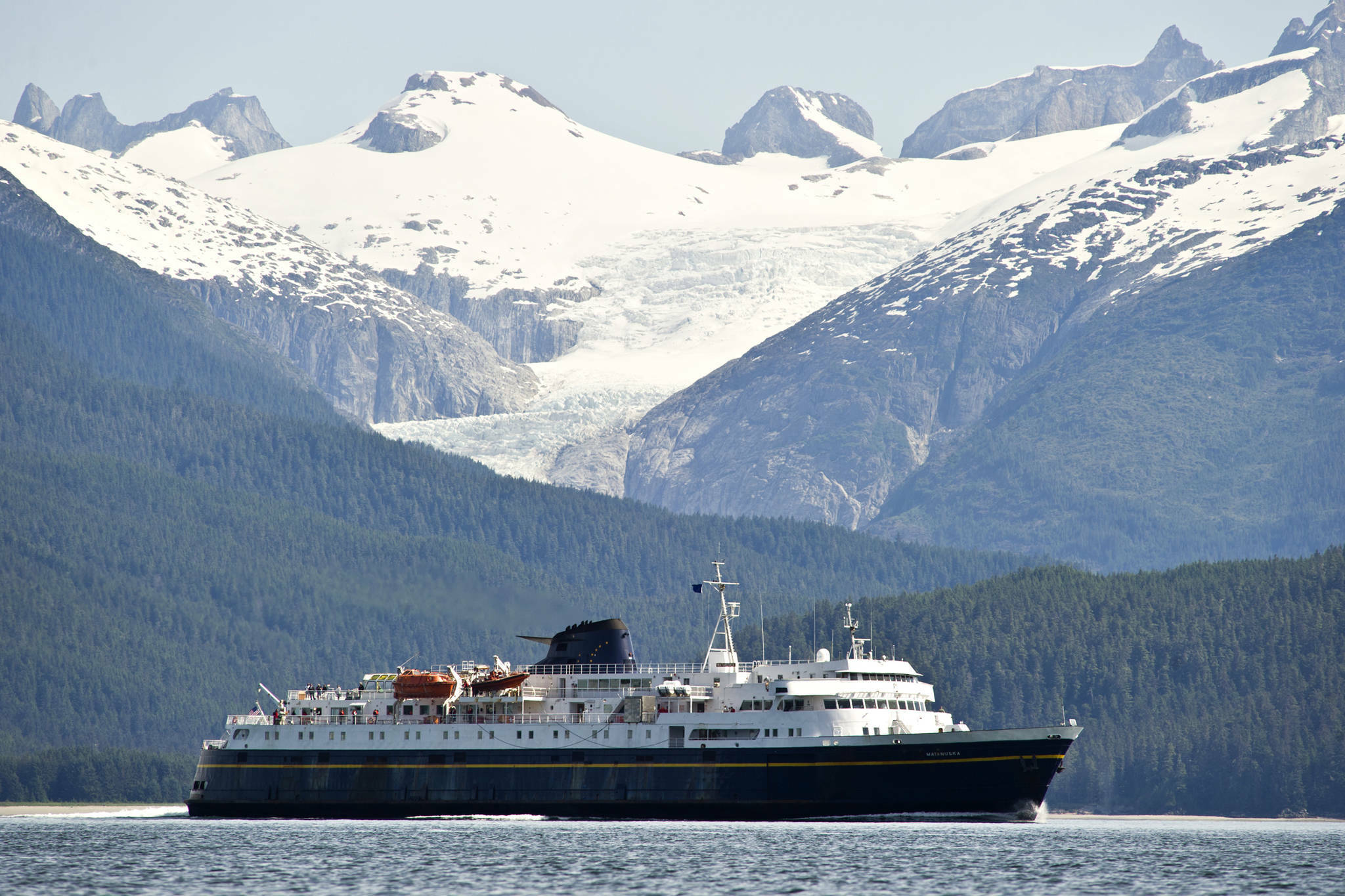
Last week, the Department of Transportation and Public Facilities awarded a $28.5 million contract to design and build infrastructure to support a new ferry terminal at Cascade Point. Gov. Mike Dunleavy wants us to think he’s doing it to improve ferry service between Juneau, Haines and Skagway.
But the real winners will be Goldbelt, Inc. and Grande Portage Resources Ltd.
When Dunleavy latched onto this idea six years ago, the first order of business should have been to determine the economic viability of such a project. Members of the Alaska Marine Highway Operations Board have been asking DOT officials for that for more than three years.
During a December 2022 board meeting, then-Deputy Commission Rob Carpenter told the board “the market based viability is a hundred percent there, that’s been proven.”
Katherine Keith, who replaced Carpenter as deputy commissioner a month later, explained that a working group in Ketchikan spent a few days running “numbers and scenarios in all sorts of ways” and determined the project made “a lot of economic sense.”
They’ve never provided a single document to back up either of those or similar statements. Instead, it seems they’ve distorted a tidbit of cherry-picked information from two reports commissioned by Dunleavy.
One is the 2020 AMHS Reshaping Work Group Report to the Governor.
During a July 2022 meeting, DOT Commissioner Ryan Anderson referred to it as part of “a body of work that folks have gone through over the years” that AMHOB members should respect.
In DOT’s recent press release about the project, they claimed it “identified Cascade Point as a promising solution for modernizing operations and boosting service reliability.”
There’s no truth to that statement at all.
The Reshaping Work Group didn’t have the time or the expertise to draw such a conclusion about Cascade Point. They did little more than accept the following recommendation from a 2020 Northern Economics report titled Reshaping the Alaska Marine Highway System: “Consider additional infrastructure to reduce operational costs” at Cascade Point and two other locations.
It’s worth noting here that Wanetta Ayers was part of the Reshaping Work Group. She is currently the Chair of AMHOB. And as a member of that board, she’s been a very vocal critic of DOT’s failure to determine the economic viability of the project.
There’s a reason DOT didn’t bother with that work.
Think back six years to when Dunleavy tried to cut about two thirds of the AMHS budget. He followed that up by commissioning the first Reshaping Study. Half a dozen of the alternatives Northern Economics was asked to evaluate involved privatizing part or all of the system. None of them were feasible. But Cascade Point offered the chance for him to showcase the closest thing — a public/private partnership.
Goldbelt, an Alaska Native corporation headquartered in Juneau, owns the property. In 2023, they signed a Memorandum of Understanding with the state to develop the site for shared use. They’d get a long-term, dependable lease out of the deal that would likely include a providing bus service to transport walk-on passengers to and from town. And the associated road improvements could facilitate other development on their 1,400-acre site.
Last September, Grande Portage Resources signed a letter of intent with Goldbelt to explore the potential development of an ore terminal at Cascade Point. They plan to mine gold at the Herbert Glacier site they began exploring in 2021.
“We are extremely pleased to see the State of Alaska advancing the Cascade Point Passenger Ferry Terminal towards construction,” their president and CEO said in a May press release. That’s because if the state doesn’t develop the site for a ferry terminal, they’d have to invest the time and money to build the new access road and bridge and widen the 9 miles of substandard road to the south.
In other words, by moving forward with plans to build a building a ferry terminal at Cascade Point, the Dunleavy administration is guaranteeing Goldbelt with a reliable source of new revenue from property they’ve wanted to develop for more than 20 years. And providing a Canada-based gold mining company with a sweet taxpayer subsidy.
And that’s what Dunleavy and his DOT commissioners have been trying to hide from members of the AMHOB and all Alaskans.
• Rich Moniak is a Juneau resident and retired civil engineer with more than 25 years of experience working in the public sector. Columns, My Turns and Letters to the Editor represent the view of the author, not the view of the Juneau Empire. Have something to say? Here’s how to submit a My Turn or letter.
