
In August of 2022, the City and Borough of Juneau (CBJ) Assembly passed Resolution 2999 accepting the donation of the Telephone Hill property from the State of Alaska.
The land was finally transferred to CBJ this March after the Assembly appropriated $100,000 for a study to prepare a re-development master plan and implementation strategy for the property. The first public engagement meeting was held this month and attracted a large crowd. Additional opportunities for public comment will be available in the coming months.
The Telephone Hill property covers approximately 4.2 acres in the center of downtown Juneau. More than half of the property could potentially be re-developed into a downtown hub with mixed uses of green/public gathering space, multi-family housing, or even some commercial use.
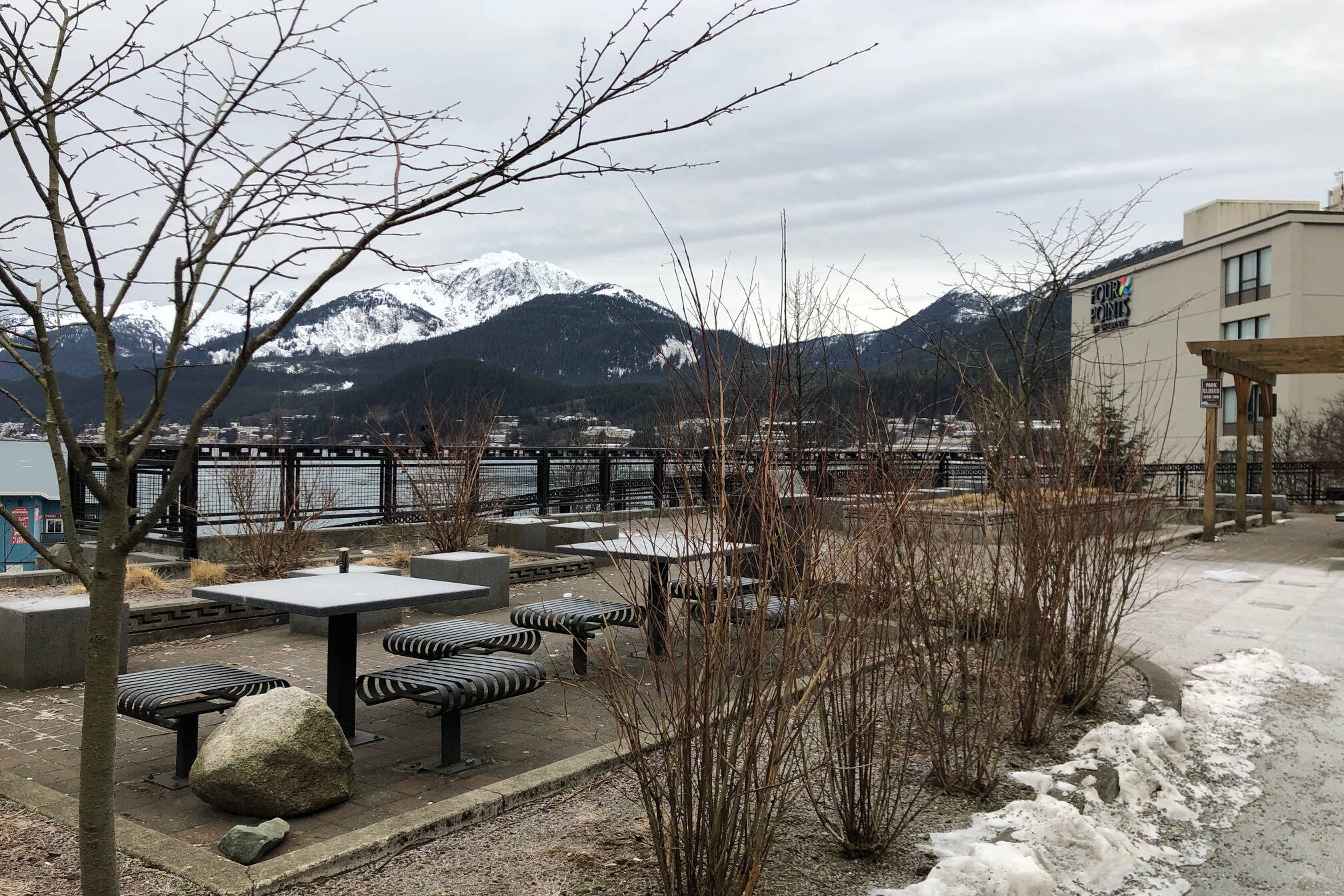
Currently less than half of the property is utilized by the Downtown Transit Center and parking garage, a pocket-size park and trail, and a parking lot. The remaining 2.5 acres are occupied by four single-family homes, two duplexes and a small five-unit apartment building, all with renters on month-to-month leases.
Understandably, the tenants living there are unhappy with the prospect of vacating their residences. But they have been living on borrowed time for decades, ever since the state purchased the property in 1984 for $4.6 million, $2 million of which was contributed by CBJ. The 1984 agreement provided for compensation to the city if the state didn’t develop the property within 10 years. That never happened.
For almost 40 years, the tenants have managed to hold off any expiration of their leases.
It hasn’t escaped the attention of city leaders that after millions of dollars of investment, there hasn’t been a commensurate return to the city. After all, should taxpayers be supporting a handful of renters who currently live on the last sizeable piece of prime real estate in the city? Unlike a conventional rental arrangement where a private property owner would be paying property taxes, this property is tax-exempt.
According to the city, under the state leases inherited by CBJ, rent collected from all 13 residences only averages $1,113 per month per unit and tenants aren’t responsible for most utilities. This revenue pales in comparison to forgone real estate taxes, fuel oil, property management fees, maintenance expenses and CBJ’s liability as a landlord.
Increasing housing in the downtown core seems to be a potential use most prominently mentioned. Selling a portion of the property to allow for a multi-family housing project would help ease the housing crunch in the city and lower overall housing costs. Preserving some green space, and the existing trail and park, also seem high on everyone’s list.
However, as long as renters occupy the property the effort will be continually challenged as cold-hearted and dismissive of the neighborhood’s historical locale. It’s been pointed out that Telephone Hill is one of the “oldest historic neighborhoods” in the city. It once housed the district courthouse, the city jail and Juneau’s first telephone company, in addition to private homes.
On the other hand, the courthouse and jail are long gone, and the remaining structures have been modified extensively and don’t qualify for historic recognition. Instead of preserving old out-of-code structures, the area’s history could be memorialized with suitable signage and public art.
The study process and implementation will take some time, but notifying tenants of lease expirations shouldn’t be delayed. The Assembly can consider a reasonable termination date that will allow tenants sufficient time to find alternative housing.
Whatever the Assembly decides, preservation of the property in its current form is not an appropriate option. The tenants may feel that is heartless. But good public policy suggests a municipally-owned asset should be managed for its highest and best use. The CBJ should not be in the business of renting tax-exempt homes to private individuals when Juneau property taxpayers are burdened with ever-increasing taxes on the homes and businesses they own.
As it is now, the property primarily benefits a few fortunate individuals with little benefit for everyone else.
The CBJ Assembly deserves credit for initiating this long-overdue process.
• After retiring as the senior vice president in charge of business banking for KeyBank in Alaska, Win Gruening became a regular Opinion Page columnist for the Juneau Empire. He was born and raised in Juneau and graduated from the U.S. Air Force Academy in 1970. He is involved in various local and statewide organizations. Columns, My Turns and Letters to the Editor represent the view of the author, not the view of the Juneau Empire.
