
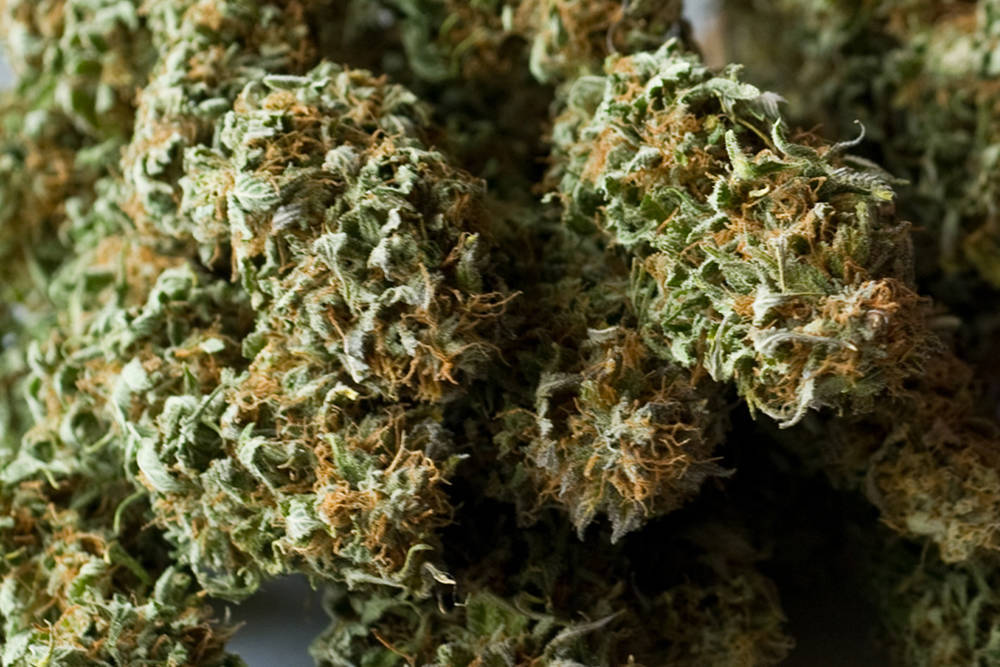
The Alaska Marijuana Control Board is considering proposed regulations to allow retail marijuana establishments to add “marijuana consumption areas” where customers could smoke, vape, eat or drink cannabis products on the premises. Public comment ended Nov. 1, and the board will host a public hearing Dec. 19 on the proposed regulations.
The question at hand isn’t whether retail recreational marijuana use should be legal. It became legal in Alaska in 2015. Rather, the concern is whether the proposed regulations will compromise efforts to keep legal marijuana use as safe as possible. Current scientific data point to two specific health concerns that Alaskans should carefully consider before permitting onsite (public) consumption — the risks from driving while impaired and health effects from secondhand smoke exposure.
Delta-9-tetrahydrocannabinol (THC), the primary psychoactive chemical in marijuana, impairs reaction time, hand-eye coordination and perception of time and distance, all of which increases the risk of a motor vehicle crash. While THC affects different people differently, the tendency to drift or weave on the road is a common impairment problem for drivers under the influence of marijuana. Unfortunately, the combined use of marijuana and alcohol compounds that impairment.
The variety of ways marijuana can be consumed also complicates the ability for servers and customers to determine when “enough is enough.” Impairment following consumption of marijuana edibles may be delayed and can last several hours. A recent, well-designed study by Johns Hopkins University shows that vaped cannabis products lead to more pronounced impairment of cognitive and psychomotor function than equal doses of THC consumed by smoking. Blood THC concentrations do not directly correlate with the user’s degree of impairment, and a person may feel safe to drive after a few hours even though impairment can last much longer than a person feels “high.”
Another recent study examined fatal crashes over a 25-year period that occurred between 4:20 p.m. and 11:59 p.m. on April 20, a well-known day of celebrating marijuana. The study found an increased risk of fatal traffic crashes when compared to the identical time on other days.
The National Academies of Science, Engineering and Medicine, in a 2017 report, concluded there is “substantial evidence of the statistical association between cannabis use and increased risk of motor vehicle crashes.”
The proposed regulation changes, if enacted, can reasonably be expected to result in increased public consumption of cannabis products, which in turn could lead to increased driving under the influence, creating a significant area of public health and law enforcement concern.
Exposing others to secondhand smoke is the second health hazard. In 2006, the U.S. Surgeon General concluded that there is no safe level of secondhand tobacco smoke, and this year, Alaska passed a smokefree workplace law, prohibiting smoking in enclosed public places and workplaces. More study is needed but recent scientific studies suggest secondhand marijuana smoke may pose health risks similar to those posed by tobacco smoke. A recent laboratory study published in the Journal of the American Heart Association concluded that “secondhand smoke can exert similar adverse cardiovascular effects regardless of whether it is from tobacco or marijuana.”
Like alcohol, marijuana can be dangerous and addictive, but it can also be used responsibly, without harm to others, by many non-pregnant adults. Medicinal use of cannabis may be beneficial in the treatment some health conditions. However, based on the concerns outlined above, for the health and safety of Alaskans, we strongly urge the board not allow smoked, vaporized, aerosolized and edible cannabis consumption in retail establishments or other public places.
• Adam Crum, M.S.P.H., is commissioner of the Alaska Department of Health and Social Services. Dr. Jay Butler, M.D., is former DHSS commissioner and chief medical officer.
• Adam Crum, M.S.P.H., is Commissioner of the Alaska Department of Health and Social Services. Dr. Jay Butler, M.D., is Former DHSS Commissioner and Chief Medical Officer. My Turns and Letters to the Editor represent the view of the author, not the view of the Juneau Empire.
