
As the extent of the financial difficulties facing the Juneau School District (JSD) unfolds, it’s clear that their situation did not develop overnight. For years, previous school administrators and Board of Education leadership ignored their own demographic projections and painted an unrealistic picture of future student populations.
Flat funding compounded the problem, but accounting mistakes, poor oversight and lack of planning are what got us here. Wasting time impugning the Legislature is counterproductive and blame-shifting.
Regardless, the current board is left to grapple with multimillion-dollar deficits and further declining school enrollments.
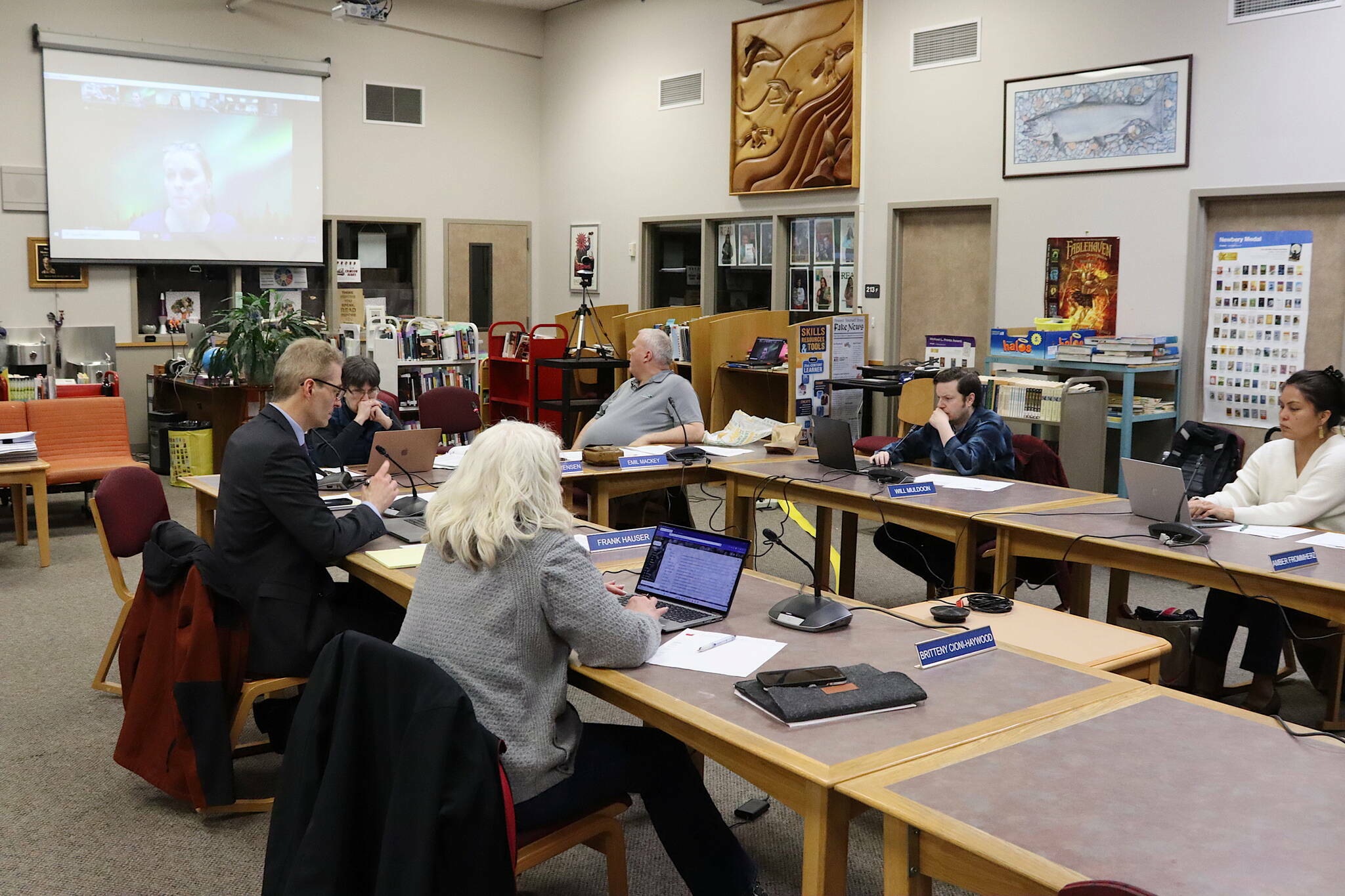
During the Jan. 23 JSD Board of Education work session, Superintendent Frank Hauser revealed that revisions to the budget reduced the total FY23 and FY24 deficit of $9.5 million to about $8 million. This still leaves the district with a combined shortfall exceeding 10% of their annual operating budget with future deficits projected at over $5 million per year.
The board is now considering a number of options.
• Asking CBJ for a loan to zero out the current deficit and balance its budget by June 30.
• Asking CBJ to subsidize some “shared services” in the future such as building maintenance, utilities, property insurance that presumably are not attributable to classroom instruction.
• Making school instructional changes that include a higher pupil-teacher ratio (PTR) or a four-day school week.
• Implementing various school consolidation models by combining and closing schools.
School instructional changes were only discussed briefly, but must be considered in conjunction with whatever other short-term and long-term actions are taken. With almost 90% of JSD expenses comprised of salaries and benefits this will need to be addressed.
The school consolidation models represent changes that would be the most impactful to students. The principal elements of each of the models are:
• Model 1: Seventh- and eighth-grade students at Floyd Dryden Middle School (FDMS) and Dzantik’i Heeni Middle School (DHMS) would be combined at DHMS. FDMS could be re-purposed. Sixth-grade students would be kept at existing neighborhood elementary schools (K-6).
• Model 2: Implement Model 1 plus pairing elementary schools into Grade K-3 and Grade 4-6 student bodies.
• Model 3: Above changes but combining high school students in grades 10-12 at Juneau-Douglas High School: Yadaa.at Kalé and grades 7, 8 and 9 at Thunder Mountain High School. FDMS/DHMS would be repurposed.
• Two additional models under consideration not yet finalized are variations on the above. Additional changes could be forthcoming based on community input.
Superintendent Hauser correctly stated the obvious, “Time is not on our side.” But making irreversible decisions to reduce expenses now won’t be beneficial in the long term. Therefore, Hauser recommended the board consider the “middle ground” Model #2 proposal. This concentrates grades K-3 into three separate elementary schools, allowing for a focused and efficient implementation of the Alaska Reads Act.
Furthermore, postponing the disposition of the high schools until after reorganization of the elementary and middle schools provides for a phased orderly transition and perhaps nudges city leaders to consider more realistic options for their desired combined performing arts/civic center as well as a new city hall and new city museum.
There are many moving parts to this discussion. But the financial and demographic numbers mean we cannot maintain the status quo. School and city officials should be looking at the big picture on how proposed changes fit into community needs (and wants) and how school facilities owned by the city can be re-purposed to everyone’s benefit.
In a Jan. 10 Juneau Empire My Turn, School Board President Deedie Sorensen summed up the community dilemma quite succinctly: “There can be no more invisible budget tweaks that no one notices. Student enrollment continues to decline. The city needs more real estate, the district needs less.”
She further commented that JSD has been researching ways to improve educational delivery and student outcomes for more than a year, but they must be affordable.
The current budget crisis provides that opportunity, at least for our elementary and sixth-grade students. Students, parents, and teachers will adapt if changes are planned and communicated in a timely manner.
Community members can help our school board and city leaders by supporting and engaging in the process.
• After retiring as the senior vice president in charge of business banking for KeyBank in Alaska, Win Gruening became a regular Opinion Page columnist for the Juneau Empire. He was born and raised in Juneau and graduated from the U.S. Air Force Academy in 1970. He is involved in various local and statewide organizations. Columns, My Turns and Letters to the Editor represent the view of the author, not the view of the Juneau Empire.
