
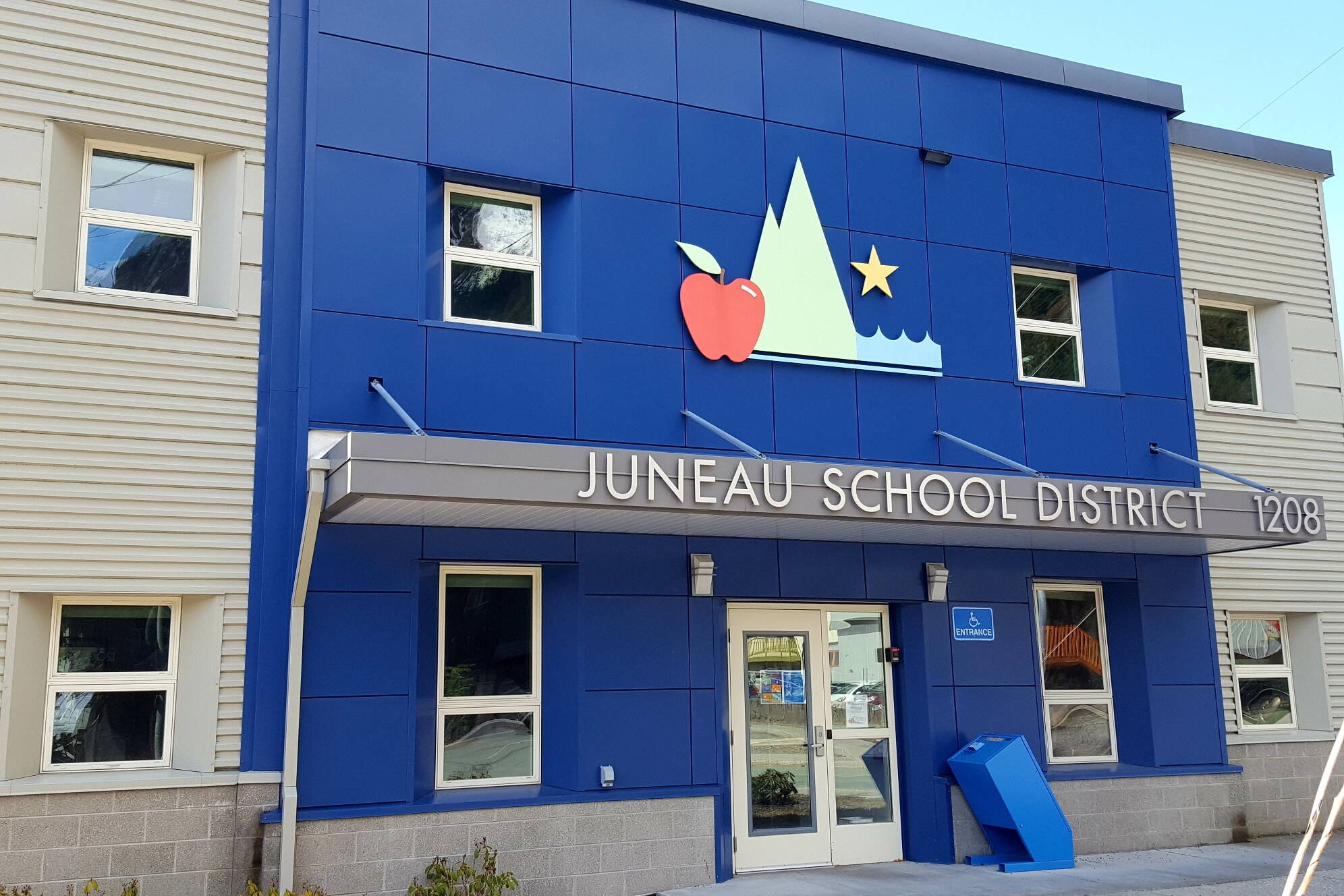
After a marathon public hearing last week, the Juneau School District (JSD) Board of Education voted 5-2 to combine and close several schools. The preliminary plan envisions consolidating high school grades 9-12 at Juneau-Douglas High School: Yadaa.at Kalé (JDHS) and middle school grades 7-8 at Thunder Mountain High School (TMHS). Sixth graders will be housed in neighborhood elementary schools.
Floyd Dryden Middle School, Marie Drake, and the district office building would be closed and released back to the city. Optional and alternative programs would be located in the remaining facilities.
This was an important and long overdue first step to resolving JSD financial challenges. The five courageous board members approving the plan deserve credit for their refusal to kick the can down the road any longer.
With projected savings and a possible increase in state funding, the district has whittled down its structural deficit considerably, at least for next year.
But the district is not out of the woods yet.
The FY25 school district deficit, originally estimated to be over $11 million, could theoretically fall to $1.5 million, if an increase in state funding and all projected changes occur as planned.
That’s not guaranteed.
Baked into the numbers is a pending $680 increase in the Base Student Allocation for state funding awaiting passage in the Legislature and requiring the Governor’s signature. That alone accounts for $5.2 million of the district’s deficit reduction.
It also includes $1.65 million contributed by the city to subsidize non-instructional costs (building utilities and maintenance) for next year. After scheduled public hearings, that appropriation awaits adoption at the city’s regular Assembly meeting on March 4.
Even if all this comes to pass, additional revenue and/or cuts in future years will be necessary beyond those needed to eliminate the remaining $1.5 million shortfall.
The city will also need to commit to continue paying some district non-instructional costs since the current subsidy is for next year only.
The district budget is not static. Regular merit and step salary increases for personnel can amount to millions of dollars. Inflation will increase other costs as well.
But the elephant in the room is the continued projected decline in the student population. This will lead directly to lower state funding every year.
Based on current enrollment in grades 5-8 and adjusting for attrition, total high school enrollment for grades 9-12 in four years will be reduced by hundreds of students and will be well below building capacity for either JDHS or TMHS.
The district’s 2022 demographic study estimated that Juneau would lose another 1,200 students in the school system by 2032.
This overriding fact dictates that school board decisions must be based on the long term, not just what public pressure demands today.
Much of the testimony at the public hearing centered around Career & Technical Education (CTE) classroom space. If Juneau is serious about attracting and retaining students and providing them with tools to earn a living, it’s incumbent on elected officials to explore how this capacity can be expanded.
A recent national study tracking more than ten million people who entered the job market over the past decade suggests that 52% of graduates are underemployed — in jobs where their credentials are not needed or underutilized. Providing and retaining students with CTE training and skills needed for a wide variety of careers that don’t require a traditional college degree should be a priority for our community.
The vision to accomplish that involves more than shop classes and other courses now offered at the downtown high school. It may mean, in fact, investing in a 21st-century state-of-the-art facility in the valley that could become a regional hub for CTE curricula. This facility could offer programs in aviation, culinary arts, veterinary assisting, cosmetology, hospitality, healthcare technology or any of a myriad of fields that are needed today, especially in Juneau.
I’m betting voters would look kindly on approving a bond issue for a facility this essential instead of flashy arts and culture facilities or new city offices.
It’s easier to cling to the old ways but where has that gotten us?
It’s past time to do things differently in the future.
• After retiring as the senior vice president in charge of business banking for KeyBank in Alaska, Win Gruening became a regular Opinion Page columnist for the Juneau Empire. He was born and raised in Juneau and graduated from the U.S. Air Force Academy in 1970. He is involved in various local and statewide organizations. Columns, My Turns and Letters to the Editor represent the view of the author, not the view of the Juneau Empire. Have something to say? Here’s how to submit a My Turn or letter.
