
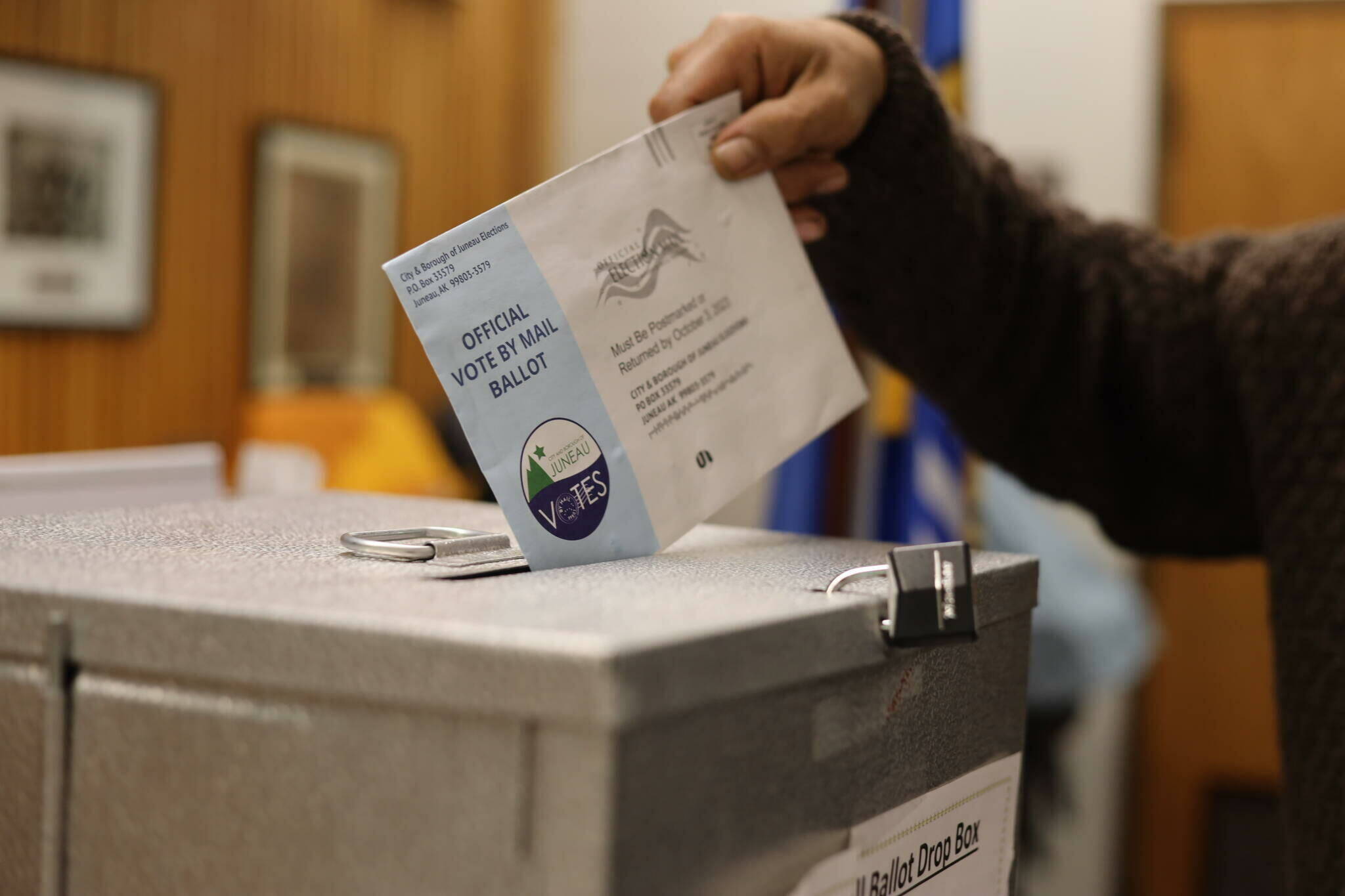
Although I defended voting by-mail a few weeks ago, Win Gruening is right in calling for the CBJ Assembly to take a second look at using it here. Mailing ballots to every registered voter added costs, but did little or nothing to improve the voting process.
But nostalgia for in-person voting on Election Day misses the mark.
“The goal for every member of Congress, every state legislature, and every election official should be simple” the managing director of the Brennan Center for Justice wrote several months before the 2020 general election. They should “ensure that anyone who has the right to vote can exercise that right as simply and safely as possible. This shouldn’t be a partisan issue but a patriotic duty. Vote by mail is just one option among many to accomplish that goal.”
Even with the pandemic behind us, every point made in that statement is valid today. And voting by mail being “just one option” means voters should have the choice to vote on Election Day too.
Voting early in person is another option that’s worked fine in Alaska for years. It especially helps people who work on Election Day. Another benefit is it reduces the time voters have to wait in line on Election Day.
However, like voting by mail, early voting complicates the timing of determining the election outcome. In Alaska officials can’t begin counting absentee and mail-in ballots, or early ballots cast less than five days before Election Day, until seven days after Election Day. That contributes to delays in knowing and certifying the results.
But in almost all cases those voting methods aren’t the main reason why the outcome of some races isn’t known for weeks. It’s a function of how close they turn out to be.
For example, Republican Bart LeBon won the District 1 House race in 2018 by a single vote. That was determined in December after the mandatory recount was completed. Then it took another month for the state Supreme Court to uphold his victory.
It was the U.S. Supreme Court that was asked to resolve the major dispute of the 2000 presidential election. The Electoral College results hinged on the state of Florida. Of the nearly six million votes cast there, George W. Bush led Al Gore by only 1,784. Court battles erupted over the Gore campaign’s request to conduct manual recounts in four counties. All that led to a month-long wait to learn that Bush would be our next president.
But that race was expected to be close. So no one should have been surprised that Election Day didn’t produce a conclusive result.
That was true for the 2020 presidential election too, especially because everyone understood voting by mail would be so prevalent. And because pandemic mitigation measures had been so thoroughly politicized, election experts across the country correctly anticipated that far more registered Democrats would cast their ballots by mail than Republicans.
First consider what happened in Texas and Ohio where state election laws allowed officials to start counting mail-in ballots before Election Day. Reporting those tabulations early showed Joe Biden with comfortable, but surprising leads. As the count of in-person ballots cast that day progressed, Donald Trump grabbed the lead. Not long after midnight, the networks projected he’d win both states.
The opposite scenario played out in Georgia, Michigan, Pennsylvania and Wisconsin where election officials had to wait until Election Day to start counting mail-in ballots. Since the majority of the ballots cast that day were counted first, it created the illusion that Trump had insurmountable leads.
As the counting of mail-in ballots progressed, Biden steadily gained ground and eventually passed Trump. By 6 p.m. the following day, all the networks projected he’d win Wisconsin and Michigan. But it wasn’t until Saturday that they projected he’d win Pennsylvania, which gave him enough Electoral College votes to win the election.
At that point the results in Georgia no longer mattered.
We need to retire the idea that elections results should be known on Election Day or by the morning after. Because even at the local level they’re complex undertakings that warrant our collective patience. And we’d be better off working together on that than responding to the frustrations and anxieties animated by our individual impatience.
• Rich Moniak is a Juneau resident and retired civil engineer with more than 25 years of experience working in the public sector. Columns, My Turns and Letters to the Editor represent the view of the author, not the view of the Juneau Empire. Have something to say? Here’s how to submit a My Turn or letter.
