
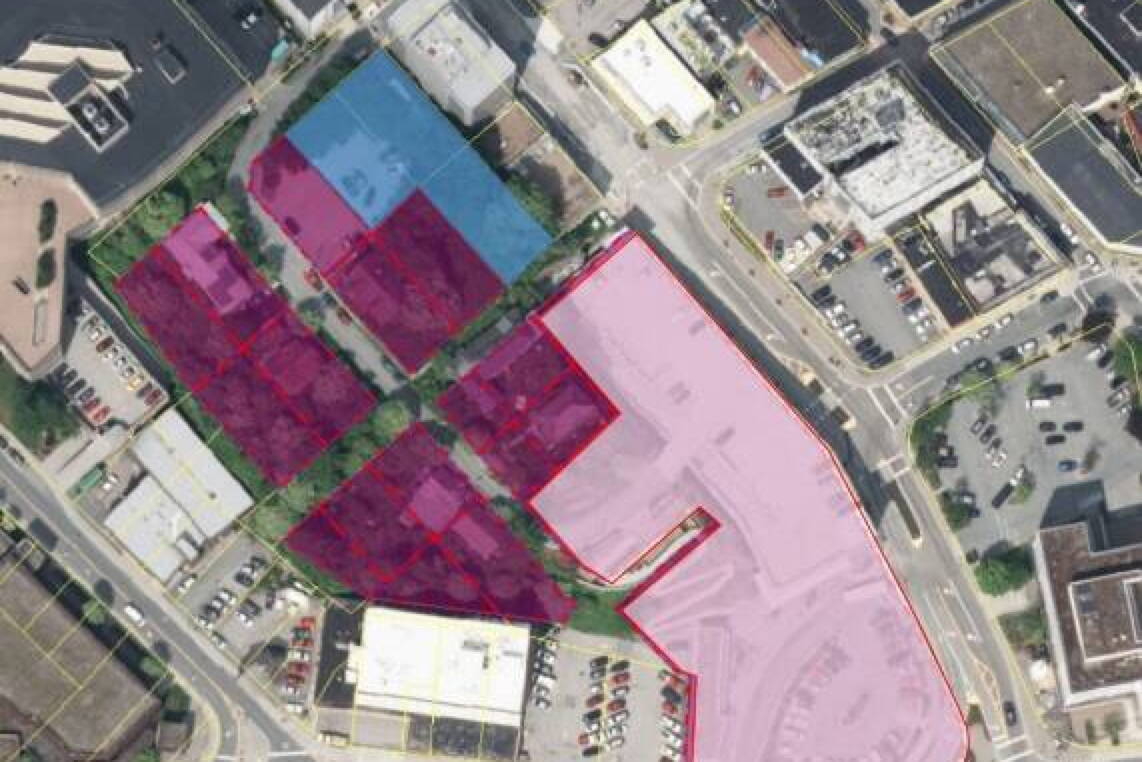
I can empathize with the tenants on Telephone Hill who will be evicted if their neighborhood is redeveloped. Long ago, I was asked to vacate a condominium near Auke Bay when the owner decided to move back in. A few years later, a house overlooking the wetlands that I’d been renting was sold. On both occasions, I had barely a month to find a new place to live.
However, I’m not at all impressed by the argument that the buildings there should be preserved for their historical value. Even if they retained their original form, they’d still be little more than a backdrop to the collective experience of Juneau’s pre-statehood residents.
Currently, the Telephone Hill neighborhood is an oasis that reminds me of the Old South Meeting House in Boston. That church was built almost four centuries ago. Today, its prominent steeple is dominated by large apartment buildings, which in turn are dwarfed by skyscrapers rising thirty or more stories.
Its architecture certainly reflects the historical period in which it was built, but there are plenty of others such as those in the greater Boston area. What makes it and other ordinary buildings historically significant are the people and organizations who used them, and the events which occur in and around them.
In the 1770s, notable congregants of the Meeting House included Ben Franklin, Samuel Adams and William Dawes. During a Sons of Liberty meeting there to discuss taxes imposed by the Townsend Act, the idea of dumping tea in Boston Harbor was conceived. That and other stories related to the nation’s founding are what justify the historical preservation of the church.
On Walden Pond in Concord, Mass., there’s a replica of Henry David Thoreau’s cabin. It was built on the other side of the pond from the original cabin a century after he died. While it offers a small, visual representation of how he lived, it’s his observations of a simple life on Walden Pond and other major literary works that make everything else historically significant.
Larry Hurlock is a good friend of mine who has his own pond to observe. It’s the largest in the Duck Creek watershed. He’s living in the home his family built after moving to Juneau in 1950. They once owned about 80 acres along the base of Thunder Mountain. For many years their chicken farm produced about half the eggs consumed in Juneau.
The Mendenhall Valley was sparsely settled back then. The school Larry and his brothers attended was downtown. As he tells it, there weren’t any other children the school bus picked up between the upper Mendenhall River Bridge and their home at the southeast corner of the valley.
Since then, the Hurlock’s donated much of their property to the Catholic Church and the high school construction program. And although that’s notable local history, it doesn’t justify preserving a 70-year-old house on a 6.6-acre lot at the edge of what now resembles a typical American suburb.
But Larry is a character in a larger historical narrative worth recording for posterity. The town he grew up in not only lacked the modern conveniences that we take for granted today. Compared to most rural communities down south, the means of travel, communications and the shipment of goods were remarkably inferior. Juneau was truly a place on the last frontier.
The families who lived on Telephone Hill and every other downtown neighborhood are all part of the story. They matter much more than the buildings from that era. Because like a good book, nothing is lost by asking the reader to imagine the scenes they wandered across.
If the Telephone Hill homes were associated with historical events or figures, then the decision to preserve them would have been made long ago. But as Win Gruening pointed out, “the remaining structures have been modified extensively and don’t qualify for historic recognition.” Redevelopment could retain the neighborhood’s oasis quality. And its “history could be memorialized with suitable signage and public art.”
That method of preserving history is one of the most misunderstood elements of the National Historic Preservation Act. It’s not just a means of mitigating the demolition or drastic alteration of historically significant structures. It reminds us that the foremost elements of history are the human beings who once graced the stage of life.
• Rich Moniak is a Juneau resident and retired civil engineer with more than 25 years of experience working in the public sector. Columns, My Turns and Letters to the Editor represent the view of the author, not the view of the Juneau Empire. Have something to say? Here’s how to submit a My Turn or letter.
