
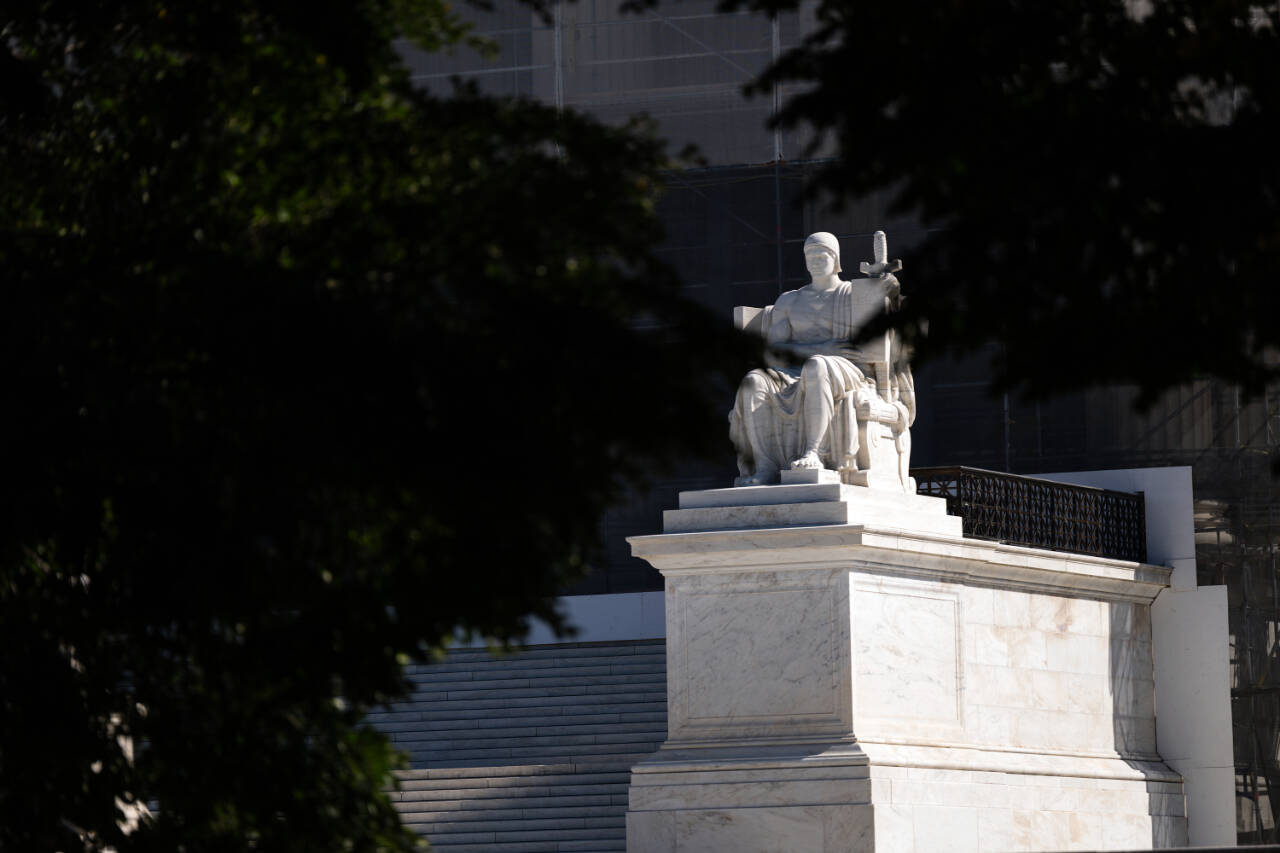
The Supreme Court of the United States was once revered as the guardian of liberty and the final bulwark against tyranny. Today, it has become an instrument of creeping authoritarianism. At the center of this transformation is the Court’s growing use of the “shadow docket,” the practice of issuing major rulings without full briefing, oral argument, or public explanation. What was once rare and reserved for emergencies has become a method for reshaping American law in secret, without transparency or accountability.
This Republican controlled Court has repeatedly used the shadow docket to favor Donald Trump and his authoritarian ambitions. During his presidency, the justices granted him sweeping power to ban Muslims from entering the United States. They shielded him from accountability and prosecution by allowing disputes over subpoenas and records to linger unresolved. More recently, they have accelerated decisions that advance Trump’s claims of immunity and executive power while delaying cases that could limit his authority. The shadow docket is no procedural quirk; it is a mechanism for constructing dictatorship.
Many of these rulings conflict with the Constitution’s guarantees of due process, equal protection, and checks on executive authority. Yet the Court has intervened in elections, allowed gerrymandered districts to stand, and permitted states to erode voting rights without full hearings. It has enabled laws that strip women of reproductive freedom. By abandoning deliberation, the Court undermines its legitimacy and violates the separation of powers that anchors the Republic.
The shadow docket paves the way for authoritarianism. When courts rubber-stamp executive power or weaken voting rights, citizens lose the ability to restrain leaders through democratic means. When courts grant sweeping privileges to one man and his allies, they elevate him above the law. That is dictatorship by definition. The danger is compounded when decisions are issued without explanation. Citizens are left in the dark, unsure not only what the law is but who truly governs them.
The fingerprints of ideology are unmistakable. Six Republican-appointed justices, all linked to the Federalist Society, form a controlling supermajority. They have aligned themselves with the radical goals of the Heritage Foundation’s Project 2025, an authoritarian blueprint for a second Trump presidency. Its plan is to dismantle the federal civil service, erase checks on executive power, and concentrate authority in the Oval Office. The Court now functions as the enforcement arm of this agenda, using shadow rulings to clear legal obstacles. This is not conservative jurisprudence. It is partisan engineering of a system where elections matter less, institutions weaken, and one faction rules indefinitely.
Comparisons to earlier Courts are revealing. The Warren Court expanded civil rights through careful reasoning and open deliberation. Even the conservative Burger and Rehnquist Courts respected institutional norms and refrained from remaking society by emergency decree. In contrast, the Roberts Court, dominated by Trump appointees, disregards precedent and process. It acts not as a deliberative body but as a shadow legislature operating in secrecy. No Court in modern history has wielded power with such disregard for transparency or the democratic fabric of the nation.
The mainstream media has largely failed to sound the alarm. Coverage of the shadow docket is buried in legal columns, treated as technical detail rather than front-page news about the erosion of democratic governance. By normalizing these rulings or framing them as partisan squabbles, journalists leave the public unaware of the scale of the crisis. Democracy dies not only in darkness but in silence, and the silence of the press is complicity.
What can citizens do in the face of such judicial arrogance? First, they must demand accountability from elected representatives, who have the power to regulate the Court’s jurisdiction, enforce ethics rules, and expand its membership. Congress has a constitutional duty to curb judicial overreach. Second, voters must recognize that the balance of the Court is now a central issue in every election. Finally, civic organizations, educators, and media must expose the shadow docket, explaining its corrosive impact and mobilizing pressure for reform or banishment.
The survival of American democracy now depends on its citizens. The Supreme Court, once the guardian of liberty, has become its saboteur, wielding secrecy as a weapon of unchecked power. Each unexplained ruling strengthens the foundations of authoritarian rule. The media must make this threat visible, not as an occasional headline but as a daily imperative.
Front-page coverage should confront the nation with the truth about a Court that has abandoned integrity. It is no longer a respected institution of justice but an adversary of democracy and the people it was meant to serve, creating a dictator in the shadows.
Van Abbott is a long time resident of Alaska and regular opinion writer for the Juneau Empire. He has held management positions in government organizations in Ketchikan, Fairbanks, and Anchorage. He served in the Peace Corps in the late sixties as a teacher.
