Opinion: Court rulings on mistreatment of psychiatric patients need more state follow-up
Published 5:50 am Wednesday, November 5, 2025
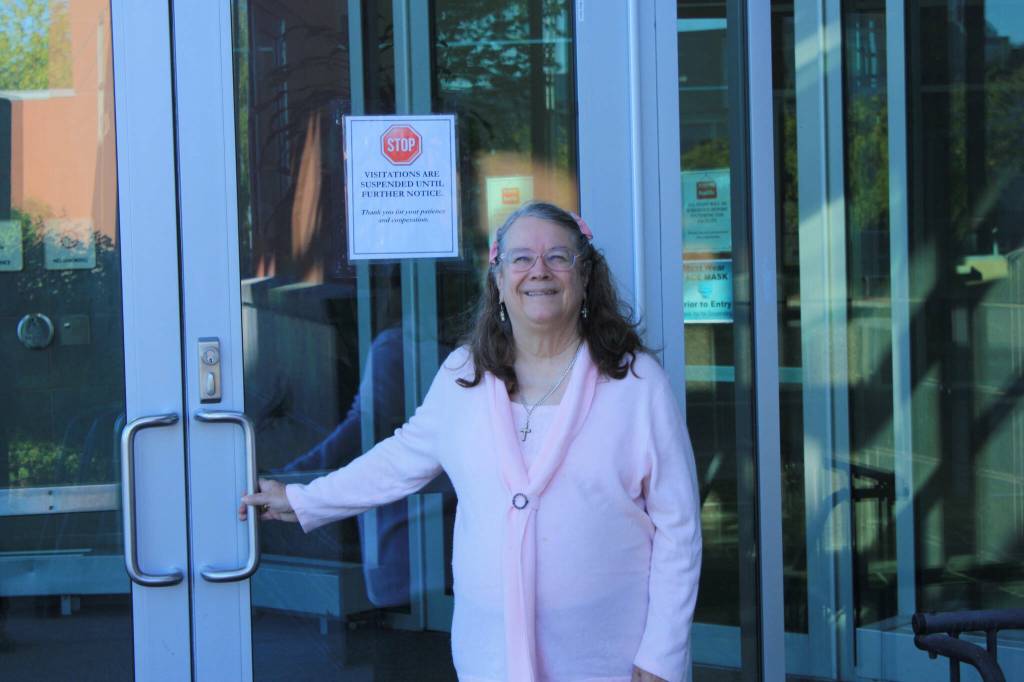
By Faith J. Myers
Next year will be the twentieth anniversary of “Myers v. Alaska Psychiatric Institute,” a successful lawsuit against the state. Michael Perlin, who has been described as the Dean of Mental Health Law, wrote that “Myers v. API” is the most important state Supreme Court decision on forced drugging in 20 years.
As the appellant of the case, the Alaska Supreme Court ruled in my favor in 2006. But in practical terms, did the court victory provide the needed patient protection? In short, I believe the answer is no.
In 2003, I underwent a civil commitment procedure that put me in the state-run Alaska Psychiatric Institute as a patient. Alaska statutes stated that if I were found incompetent to decide whether to take the psych drugs, the doctors at API were allowed to drug me any way they wanted. My attorney, James Gottstein, asserted this was unconstitutional and that API doctors should have to prove that the drugs were in my best interest and that there were no less intrusive alternatives available. In 2006, the Alaska Supreme Court agreed.
Because of the Myers decision, today, when a person is being civilly committed to a locked psychiatric facility, state employees must testify under oath in court that there is no less intrusive alternative treatment available. The Alaska Supreme Court in its decision did not require the state to adopt best practice when caring for and treating people with a mental illness. In my opinion, the state has only been required to change its paperwork and not actually improve care for people with a mental illness.
I believe I paid a price for opposing the state and API doctors in court. I received few or no opportunities to go into the fenced-in courtyard, the gym, the cafeteria, or attend religious services. Basically, I was locked in a unit for 5 months. The state spent tens of thousands of dollars in defending themselves in “Myers v. API,” but I believe the case ended up costing me more in institutional mistreatment.
In “Myers v. API,” The Alaska Supreme Court stated that because there was no independent oversight of the drugging of civilly committed psychiatric patients in locked facilities, patients would likely be mistreated. In support of its decision, the court stated that psychiatric facilities tended to operate for their own convenience and economy which can manifest itself into patient abuse.
In much of the Lower 48, it is a more common practice that when the courts have ruled there is ongoing mistreatment of psychiatric patients in locked psychiatric facilities, legislators create meaningful laws and regulations to protect the patients, based on court decisions. This is not happening in Alaska.
The Disability Law Center sued the Department of Health and Social Services in 2019 to stop psychiatric patients from being held for long periods in jails waiting to be sent to API. Much like in “Myers v. API,” the suit was successful, but was not accompanied by meaningful enforcement from the courts or the legislature.
Winning appeals and achieving settlements in court to protect psychiatric patients must be supported by meaningful enforcement. The lack of enforcement has catastrophic consequences for patients and society. In 2023, Gottstein and I, along with several world-renowned mental health experts, wrote a white paper, “On Improving Patient Outcomes, Addressing Treatment Caused Trauma & Injuries, Enhancing Patient Rights, and Grievance Procedures.”
We reported that locking people up and drugging them against their will reduce the recovery rate from a possible 80% to 5%. It also reduces a person’s lifespan by an average of 20-25 years. The paper also documents the sorts of approaches to institutional patient treatment that do work — such as the Soteria-House study — which used to be supported by the Alaska Mental Health Trust Authority.
Many states, such as Maine and South Carolina, have done research on institutional patient trauma in locked psychiatric facilities and how to reduce it.
The state of Alaska and the Mental Health Trust Authority have not spent the money needed to determine what causes institutional patient trauma and how to reduce it in psychiatric facilities like API — they should.
Faith J. Myers is the author of the book, “Going Crazy in Alaska: A History of Alaska’s treatment of psychiatric patients.” She has spent over 7 months in locked psychiatric facilities in Alaska.