
Businesses routinely make decisions about whether to invest in new facilities, new technology and/or new employees. Typically these decisions are driven by long-term forecasts of growth and increased demand for the business’s products or services. Investment decisions can also be based on declining demand or by adopting new technologies and processes, triggering the need to cut expenses. The important aspect of a sound decision-making process is that it flows in both directions, based on the expectation of increasing revenues, decreasing expenses and reducing risk.
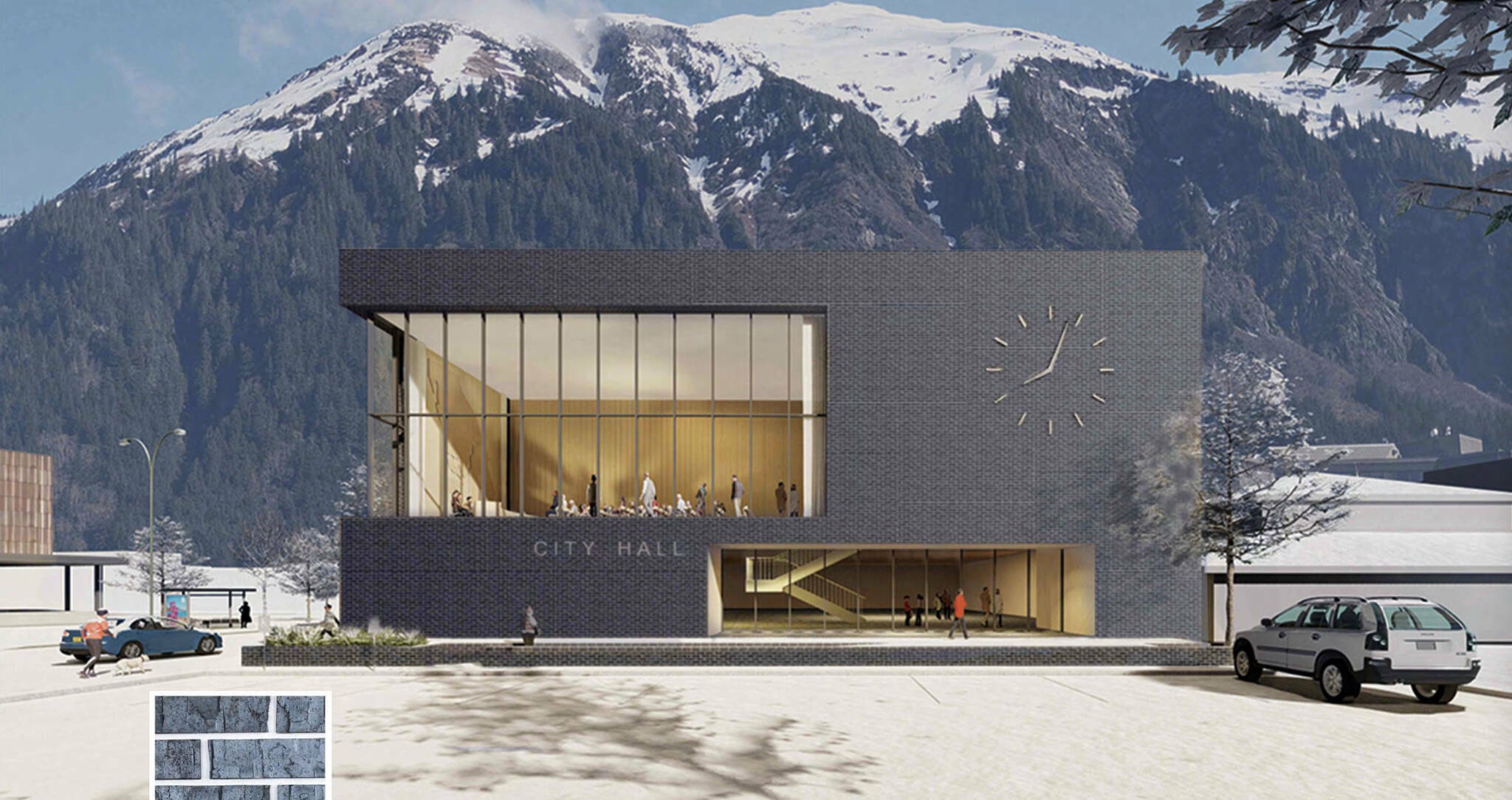
As a proposal for a new City Hall is once again front and center for consideration by the voters of Juneau, we find ourselves without a robust and objective analysis. Just last year, the voters rejected a $35 million bond issue for the construction of a new facility. According to the city’s website dedicated to this project “significant changes in the last year to both the economics and operational conditions of CBJ’s owned, rented, and proposed city hall facilities have brought the organization to a crossroads.”
On its website dedicated to the new City Hall (https://juneau.org/engineering-public-works/new-city hall) the city posits the question, “What has changed?” and responds with the answer “Quite a lot.” They explain that rental market changes, degrading condition of CBJ-owned facilities, and a lower bond amount all account for the bond ordinance and ballot measure coming so quickly after voters turned down the last proposal.
The city currently has 50 employees located in the Marine Way building and 30 employees located in the Municipal Way building. The Marine Way building is in poor condition, suffering from leaks, poor plumbing and poor heating. The owner of Municipal Way has sold the building, requiring staff to be relocated in five years by June 2028. None of this information is either a change or an imminent disaster. Sound business planning would use the time to allow for a deep dive into the core functions of these 80 employees and how best to provide the most efficient, cost-effective production of city services.
The market changes referenced by the city concern the sale of commercial property and not the rental market. Ricker Real Estate Consulting was asked to provide an analysis for the acquisition of a new building that could house all employees, provide sufficient meeting space along with parking and be available within a 12-month timeframe. Most parcels meeting the square footage and parking requirements had leases that need to be honored, and would not be available for CBJ staff until 2028. The Ricker analysis also clearly states that leases have softened considerably, and landlords are looking to offer longer, more attractive terms. The city might have many more options on the rental front than previously thought.
We also must ask why City Hall has accumulated more than $14 million in deferred maintenance with buildings in poor condition. Damage of the kind cited occurs over a long period of neglect. It does not happen overnight. The city needs to assure voters that any new building will be properly taken care of with the set aside of reserves needed to preserve CBJ-owned assets.
Finally, the CBJ states the amount of debt needed has been reduced. The city has set aside additional funds totaling $16 million which has lowered the amount of debt that needs to be borrowed. In October 2022, the ballot information indicated that the $35 million in bonds would require a property tax levy of $29.60 per $100,000 of assessed value assuming that the overall bond tax levy will be reduced from $42.62 per $100,000 due to operational savings. This information has not yet been provided on the current proposal, but one could infer that a smaller issuance would require a smaller debt service and thus less than $29.60 per $100,000 of assessed value bond tax levy.
However, according to CBJ’s posted information a third-party report prepared by Rain Coast Data states that the city “would result in immediate operational cost savings as soon as the proposed 25-year bond is paid off.” The website goes on to state that the “analysis assumes a nearly 50% increase in O&M from the current to a new city hall due to the larger consolidated building.” Does this mean we can expect an overall bond tax levy much closer to the current $42.62, or even higher, given there are no operational savings for 25 years and in fact the operational costs will be higher?
There are very real business needs for the city to analyze with regard to office space. We need to think about how best to meet the needs of Juneau residents while also considering the work requirements of its staff today and in the future; the potential for increasing or decreasing various function areas creating a need for flexible space; the role of technology that recognizes how public services are conducted today and in the future; and the various costs and risks associated with each of these options. Not all buildings are built to suit every business and the same is true for City Hall.
Clearly this is not the time for a bond issue. The city owes it to taxpayers to provide clean, management analyses that demonstrate the productivity increases resulting from a new building. We should also expect a reduction in expenses by making sure any building – built, rented or purchased – reduces operating and maintenance expenses. Finally, the city needs to take a hard look at every physical asset it currently owns and determine which assets could be sold, repurposed, or leased.
As we’ve heard often in the past year, the city will be in business forever. We have time for CBJ to provide a rigorous business case that examines the costs, benefits, and potential risks of all options without creating a false sense of urgency.
• Angela Rodell served as commissioner of the Alaska Department of Revenue from 2013-2014 and CEO of the Alaska Permanent Fund Corp. from 2015-2021.
