
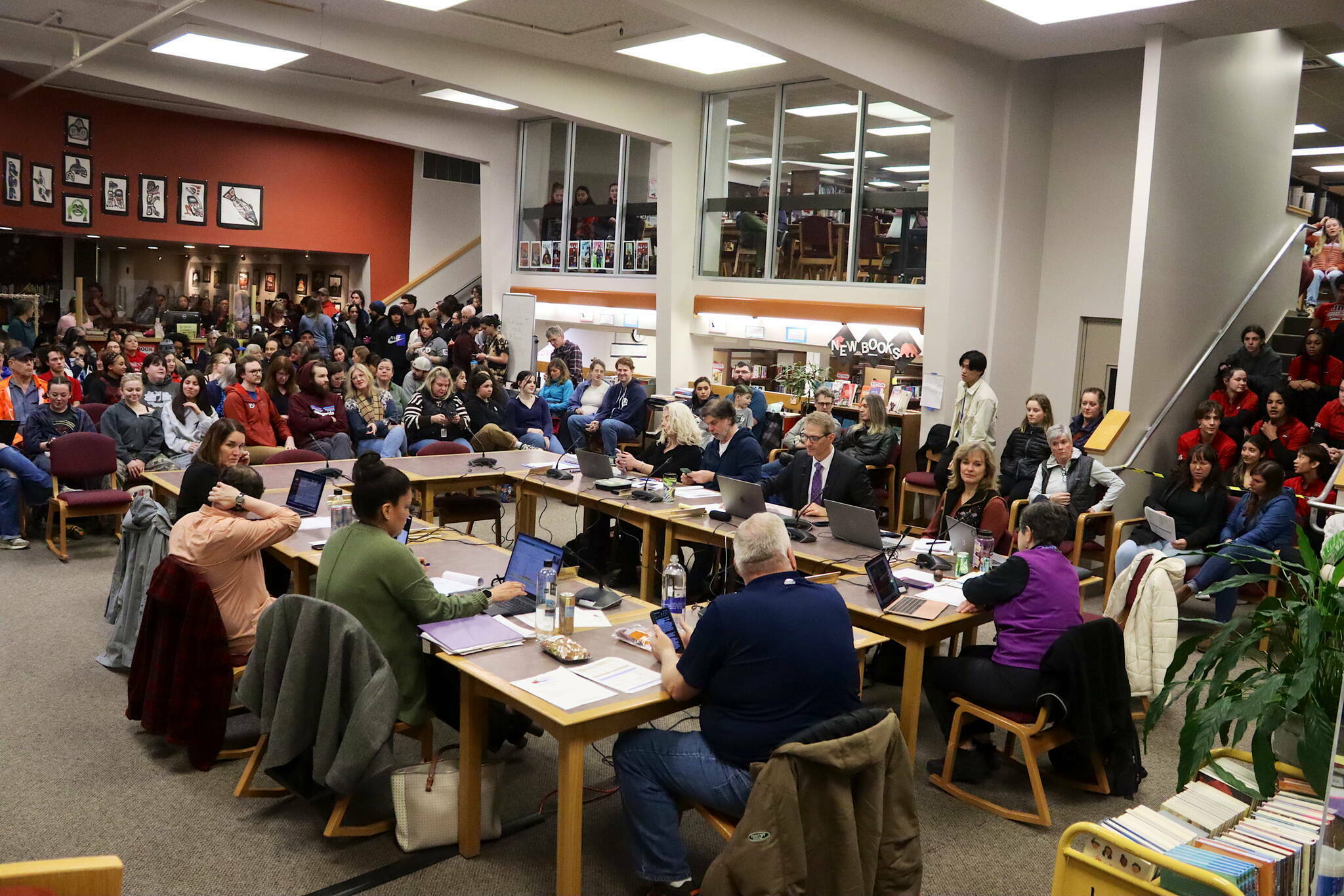
Community Advocates for Responsible Education (CARE) is a nonprofit focused on ensuring all students have access to a quality education. Families must choose between private, public, homeschool, dual enrollment, or an online learning platform to best meet their individual child(ren)’s educational needs.
CARE’s transparent approach to community engagement provides an environment that fosters involvement in local and state educational issues impacting students ensuring all students in Juneau have access to the best education of their choice. Locally, CARE is focused on the actions of the Juneau School Board, the three correspondence programs in the community, and their impacts on education.
Given the current ruling on correspondence programs, more homeschool families will likely transition into one of the many public-school options the district offers: neighborhood elementary schools and consolidated middle and high schools, Montessori Borealis, JCCS, Yaagkowse and HomeBRIDGE. If more families opt-in to public school or enroll in the district’s correspondence program due to overcrowding at the consolidated high school, the current adopted consolidation model, despite being cautioned of the incoming 190 Coast Guard families, lacks a contingency for enrollment increases; something alternate consolidation models would have more easily accommodated. Instead, the board chose to consolidate the largest student population in the district to a single campus, maxing the facility capacity, and reducing the financial benefit of the multiplier* thus locking the district into a flawed re-configuration for the next seven years.
In the rush to meet “deadlines” that were never met (i.e. insistence on RIFing teachers in March, but waiting until May), the board adopted an unpopular consolidation model, not a plan. A consolidation plan consists of all expenses, projected short and long-term savings, identified impacts on students and teachers, and importantly, all costs associated with consolidation efforts for all models. Rather than presenting the true costs associated with consolidation, these hidden costs have been missing and glossed over this entire process.
Despite multiple requests via public testimony and email, these are the costs that neither the board nor the district wants to discuss. These are the numbers that can’t be quantified for years to come: changes in graduation and/or drop out rates especially for SPED, Alaska Native and at-risk students, reduced access to sports opportunities due to restrictions by the state limiting the amount of non-instructional funds the district can request, an increase to the mill rate as a direct result school closures, the loss of local business due to fewer teams traveling to Juneau for sports and a closed middle school campus in the valley. All of these costs, and others, should have been factored into the decision-making process.
CARE was formed to provide community members an avenue to advocate for doing what is best for all students. CARE is the voice for those who do not feel comfortable or safe speaking out: students, parents of SPED students, para-professionals, teachers, friends of teachers/administrators, and community members afraid of being doxed for wanting to hold the board accountable for their (in)actions.
Many other districts across the state are facing similar funding issues, yet instead of rushing into a radical consolidation model, they are taking a measured approach of a year or more to evaluate all options to provide a smooth transition and not create unnecessary harm and debris to their communities. With the proposed one-time increase to the BSA, the board has a prime opportunity to reconsider their decision to adopt a highly controversial consolidation model and push pause to properly evaluate all the costs of the consolidation on students, teachers, the community, and the budget. The one-time additional funding in this year’s state budget allows the board to reconsider the model they adopted and look more closely at different consolidation models that take into account all the hidden costs. By taking the time to select a model that does the least harm or taking a year to develop a plan, the board will not be kicking the can down the road like they did for the last seven years, but instead will be doing what they signed up to do — put students first.
Visit www.savejuneauschools.com to learn more about what you can do.
• Shannon Kelly is vice chair of Community Advocates for Responsible Education.
