
House Bill 172 was signed into law July 15, 2022. State law CH 41 SLA 2022 came about because of a successful lawsuit by the Disability Law Center and others. State agencies unsuccessfully argued in court that the state had a right to hold psychiatric patients in jail while waiting for a bed to open in a psychiatric facility.
HB 172 had a requirement that a report must be sent to the Legislature in October outlining ways to improve psychiatric patient rights, care and outcomes. The Department of Health and the Department of Family and Community Services are the first two organizations listed as authors of the report along with the Mental Health Trust Authority. The 47-page draft report is now available on the state website http://notice.alaska.gov/212567 for public review and comment until Oct. 6.
In my opinion, the report that will be sent to the Legislature in October by the Department of Health and others will be incomplete because there was no larger conversation with psychiatric patients or an attempt to gain necessary statistics—number of people that rotate in and out of locked psychiatric facilities or units each year; number and type of patient complaints and injuries; and are the patients and advocates satisfied with the current grievance and appeal process. Without that information being added to the report, it will be difficult for the Legislature to reach any conclusion on needed improvements in psychiatric patient rights.
The report to the Legislature leaves the reader to believe that any person locked in a psychiatric facility or unit is protected by the psychiatric patient grievance law AS47.30.847. According to state agencies, the law only applies to five facilities. Less than half of the people locked in psychiatric facilities or units are protected by a state grievance law. Federal laws and hospital certification regulations do little or nothing to protect psychiatric patients in the grievance or appeal process. Alaska is one of the few states that has not written a state grievance law to protect all psychiatric patients in locked facilities or units.
Many of the worst examples of psychiatric patient rights and care in the 1880’s was adopted by the Alaska Legislature starting in the 1980’s. The psychiatric patient grievance law AS47.30.847 states that managers of psychiatric facilities write the patient grievance and appeal process. The Department of Family and Community Services has stated that the managers of psychiatric facilities will act as the impartial body to rule on a patient’s complaint. At the Alaska Psychiatric Institute, the CEO is designated the impartial body! And, as of now, psychiatric patients have never explicitly been given the right by state law or regulation to file a grievance at the time of their choosing.
Between 1981 and 1984, eleven rights were given to people locked in psychiatric facilities, state law AS47.30.840. There is no enforcement mechanism in the law. And there is no independent oversight that advises managers of facilities if they are correctly following the law and if patients are well-treated. As of now, locked psychiatric facilities or units that detain people for evaluation or treatment operate with many of the powers and duties of the state, with insufficient state oversight and standards of patient care.
Managers of psychiatric facilities have always wanted to keep secret what happens to patients within the walls of the institutions. Over a hundred years ago, Dr. Dent testified to a New York grand jury that he had no means by which to tell if the psychiatric nurses were cruel to the patients. Today, every psychiatric facility or unit is required by regulations to keep statistics of the number and type of psychiatric patient complaints, injuries and what could be classified as traumatic events. In the report to the Legislature, providers of psychiatric patient care bristle at the idea of sharing statistics with the Legislature and the general public. To me it is vital to producing good psychiatric patient policies for the Legislature and the general public to have those statistics.
It has been my experience that psychiatric patients locked in facilities or units are mistreated in the grievance and appeal process because of the antiquated state patient grievance law AS47.30.847. Over the last 15 years there have been two attempts in the Legislature to improve the grievance rights for psychiatric patients. To my knowledge, every provider of psychiatric patient care testified against legislatively improving the grievance and appeal rights for people locked in facilities. And that included the Department of Health and Social Services.
I estimate there are 10,000 people that rotate in and out of locked psychiatric facilities or units every year. The level of disability of acute care psychiatric patients is underestimated by the Legislature and the general public. Some patients have a developmental or intellectual disability along with a mental illness. In 2024, the Legislature must provide more independent assistance and protections for people locked in psychiatric facilities or units.
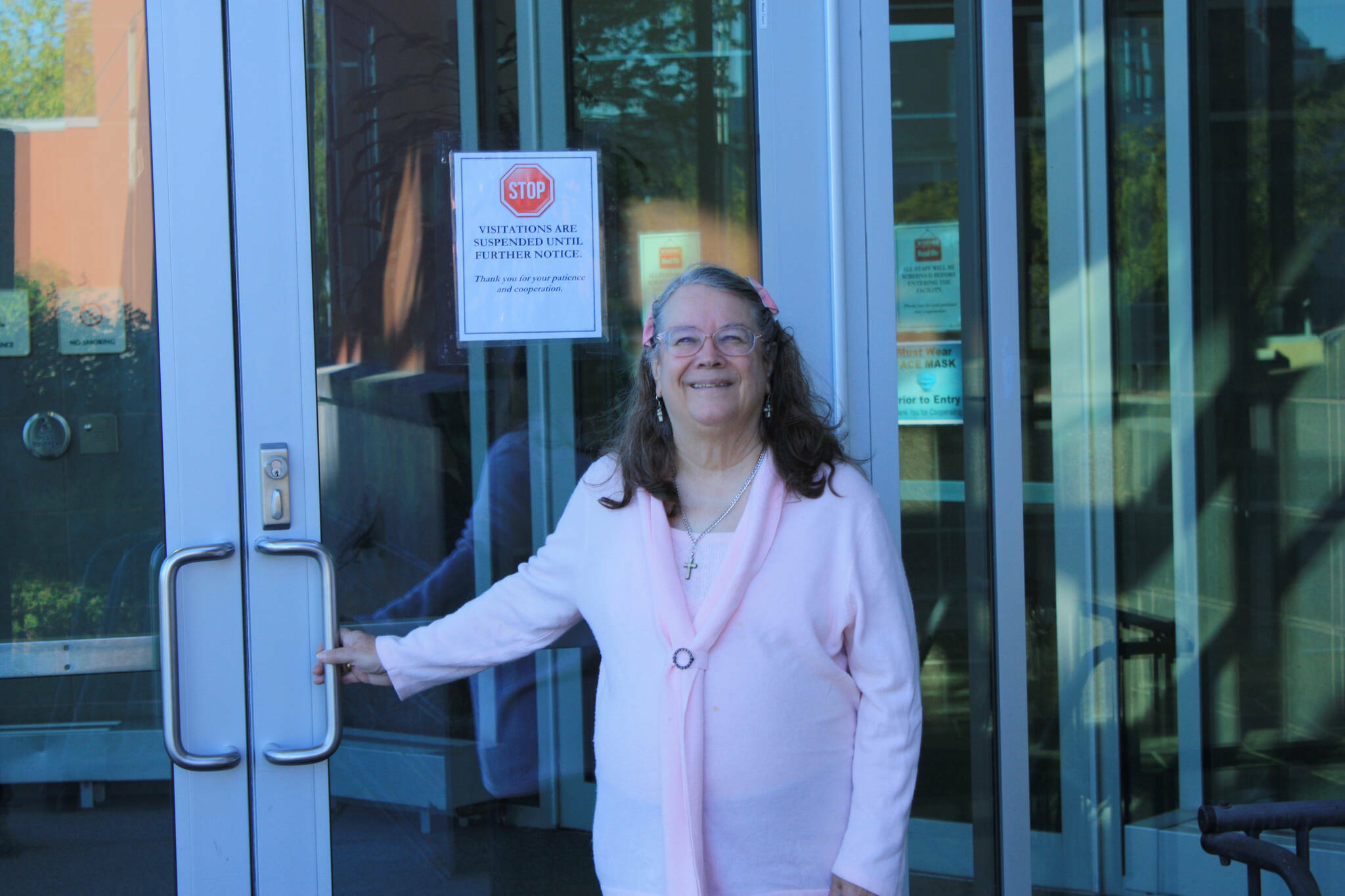
• Faith Myers is an Anchorage resident who has spent more than seven months in psychiatric facilities in Alaska. She is a co-author of a white paper that addresses the requirements of the HB172 report, including what has succeeded in mental health care worldwide. The document can be viewed at https://psychrights.org/whitepaper.pdf.
