
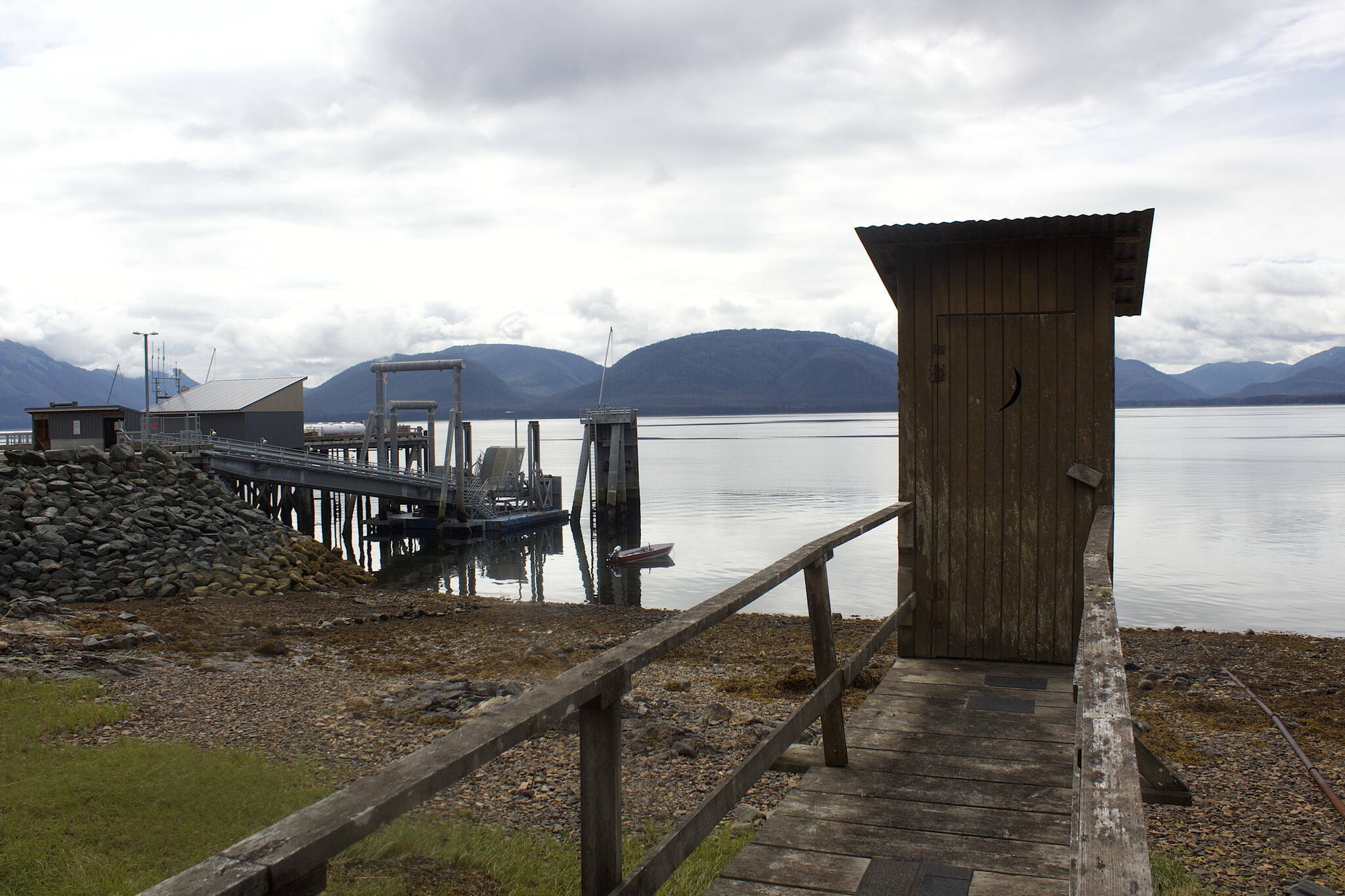
An aging outhouse overlooks Tenakee Inlet. (Mark Sabbatini / Juneau Empire File)

An aging outhouse overlooks Tenakee Inlet. (Mark Sabbatini / Juneau Empire File)

My Turn: Murkowski’s bill will dramatically change map of public land in Southeast Alaska

There has been very little reporting on federal legislation that would greatly impact Southeast Alaska. Sponsored by Sen. Lisa Murkowski, Senate Bill 1889, and the companion legislation in the House of Representatives would distribute 23,040 acres to each of five new village corporations.

The lands that I am most familiar with are in Tenakee Inlet where the proposal cherry picks the most popular hunting and recreation areas in the Inlet bays, including Seal and Corner Bays and the portage to Port Fredrick at the head of the inlet.

Nearby selections of the Haines landless group include popular recreation areas close to Juneau, including Homeshore and Couverton. As a long-time resident of this region and a property owner in Juneau and Tenakee, I wish to share my concerns.

The 1971 Alaska Native Claims Settlement Act (ANCSA) was intended to resolve long-standing issues surrounding aboriginal land claims in Alaska. A total of 44 million acres were approved for selection and $960,000,000 was granted for the formation of village and regional Native Corporations. Individuals from communities that were not eligible for village corporation status were granted additional shares in the regional corporation. The language in the legislation stated that ANCSA would resolve once and for all future Native land claims.

If S.1889 were to become law, dozens of northern communities which did not meet the statutory requirements for village corporation status at the time of ANCSA passage, would likely pursue commensurate compensation given to the five ‘landless’ communities, opening a perpetual cycle of public land transfer.

In Tenakee, at the time of ANCSA passage, there was not sufficient Native population to qualify for village corporation status. Individuals who did not identify with a larger village such as Hoonah were given additional at-large shares to compensate for not meeting the requirements. The ineligibility determination for village status was informed and intentional.

We have been told that public access to the popular recreational areas will remain, however the wording in S.1889 is ambiguous on this point, allowing for “reasonable restrictions.” We would be naive to believe that the long-term result would be continued public access. Across Chatham Straits from Tenakee, the logged-out areas owned by Sitka corporation Shee Atiká were shut off to public access. It is my understanding that these lands have since reverted back to the federal government after generous tax subsidies.

S.1889 is before the Senate and Natural Resources Committee. I urge the public to stay informed. If S.1889 becomes law, the map of public ownership will dramatically change.

• Juan Munoz is a small business owner who was born and raised in Juneau.

More in Opinion

Web
Have something to say?

Here’s how to add your voice to the conversation.

A sign reading, "Help Save These Historic Homes" is posted in front of a residence on Telephone Hill on Friday Nov. 21, 2025. (Mari Kanagy / Juneau Empire)
OPINION: The Telephone Hill cost is staggering

The Assembly approved $5.5 million to raze Telephone Hill as part of… Continue reading

Win Gruening (courtesy)
OPINION: Eaglecrest’s opportunity to achieve financial independence, if the city allows it

It’s a well-known saying that “timing is everything.” Certainly, this applies to… Continue reading

Gov. Mike Dunleavy gestures during his State of the State address on Jan. 22, 2026. (Photo by Corinne Smith/Alaska Beacon)
OPINION: It’s time to end Alaska’s fiscal experiment

For decades, Alaska has operated under a fiscal and budgeting system unlike… Continue reading

Atticus Hempel stands in a row of his shared garden. (photo by Ari Romberg)
My Turn: What’s your burger worth?

Atticus Hempel reflects on gardening, fishing, hunting, and foraging for food for in Gustavus.

At the Elvey Building, home of UAF’s Geophysical Institute, Carl Benson, far right, and Val Scullion of the GI business office attend a 2014 retirement party with Glenn Shaw. Photo by Ned Rozell
Alaska Science Forum: Carl Benson embodied the far North

Carl Benson’s last winter on Earth featured 32 consecutive days during which… Continue reading

Van Abbott is a long-time resident of Alaska and California. He has held financial management positions in government and private organizations, and is now a full-time opinion writer. He served in the late nineteen-sixties in the Peace Corps as a teacher. (Contributed)
When lying becomes the only qualification

How truth lost its place in the Trump administration.

Jamie Kelter Davis/The New York Times
Masked federal agents arrive to help immigration agents detain immigrants and control protesters in Chicago, June 4, 2025. With the passage of President Trump’s domestic policy law, the Department of Homeland Security is poised to hire thousands of new Immigration and Customs Enforcement (ICE) agents, and double detention space.
OPINION: $85 billion and no answers

How ICE’s expansion threatens law, liberty, and accountability.

Yereth Rosen/Alaska Beacon
The entrance to the Alaska Gasline Development Corp.’s Anchorage office is seen on Aug. 11, 2023. The state-owned AGDC is pushing for a massive project that would ship natural gas south from the North Slope, liquefy it and send it on tankers from Cook Inlet to Asian markets. The AGDC proposal is among many that have been raised since the 1970s to try commercialize the North Slope’s stranded natural gas.
My Turn: Alaskans must proceed with caution on gasline legislation

Alaskans have watched a parade of natural gas pipeline proposals come and… Continue reading

Most Read