
As a professional who has sat at many a negotiating table, I am all for sitting down to address concerns and differences, particularly when the public interest is at stake. In this regard, I agree with Rich Moniak who in a recent column suggested that we should choose a seat at the table with the cruise ship industry.
Another op-ed by Rick Bierman makes the case why partnering with the cruise ship industry may not be in Juneau’s best interest and in so doing he also makes the case why the community needs to be the one shaping the table; the one setting the agenda in consultation. After all, as Mr. Bierman points out, they didn’t bother to consult us on whether or not to boom to 1.6 million visitors.
From my experience when sitting down at the table you want to negotiate from a position of strength as much as possible. It is in this regard that I write to remind the community that not only does the cruise industry fail to consult us, they have a history of being combative.
Although I and my children have worked in the visitor industry, and I generally support and recognize the economic contributions that cruise ships bring, I write to remind the community that this is the same industry that undid a citizen’s initiative on clean water, challenged the cruise ship head tax in court and then sued CBJ over spending tax receipts on the seawalk.
Here is a short refresher. In 2009, three years after the clean water initiative was passed by Alaska voters, the Alaska Cruise Association represented by former State Sen. John Binkley convinced the Alaska Legislature to set up a task force to revisit the rules in the initiative governing wastewater discharge. Then in 2013, unsatisfied with the task force approach, the Cruise Ship Association successfully lobbied the Legislature to change the law giving cruise ships the right to dump wastewater at concentrations many times the water quality criteria into “mixing zones” around the discharge port. The industry argued that cruise ships should be treated no differently than a municipality discharging wastewater. This simplified argument conveniently overlooked the fact that municipalities locate their discharges away from sensitive habitats, have defined mixing zones, and do not cruise by estuaries and other vulnerable habitats.
Then in 2014 the Alaska Department of Environmental Conservation implemented the new law by authorizing a general permit for all large cruise ships. This general permit allows ships to discharge copper (very toxic to salmon) 16 times the level toxic to aquatic life.
The other front that the cruise ship industry challenged Alaska was on the amount and use of cruise ship tax receipts. In 2010 the Alaska Cruise Association filed a federal lawsuit challenging the return value of Alaska’s head tax. They then cut a deal with Gov. Sean Parnell to drop the lawsuit if the State reduced the head tax by 25%. So now instead of each visitor paying $46, they would pay $34.50.
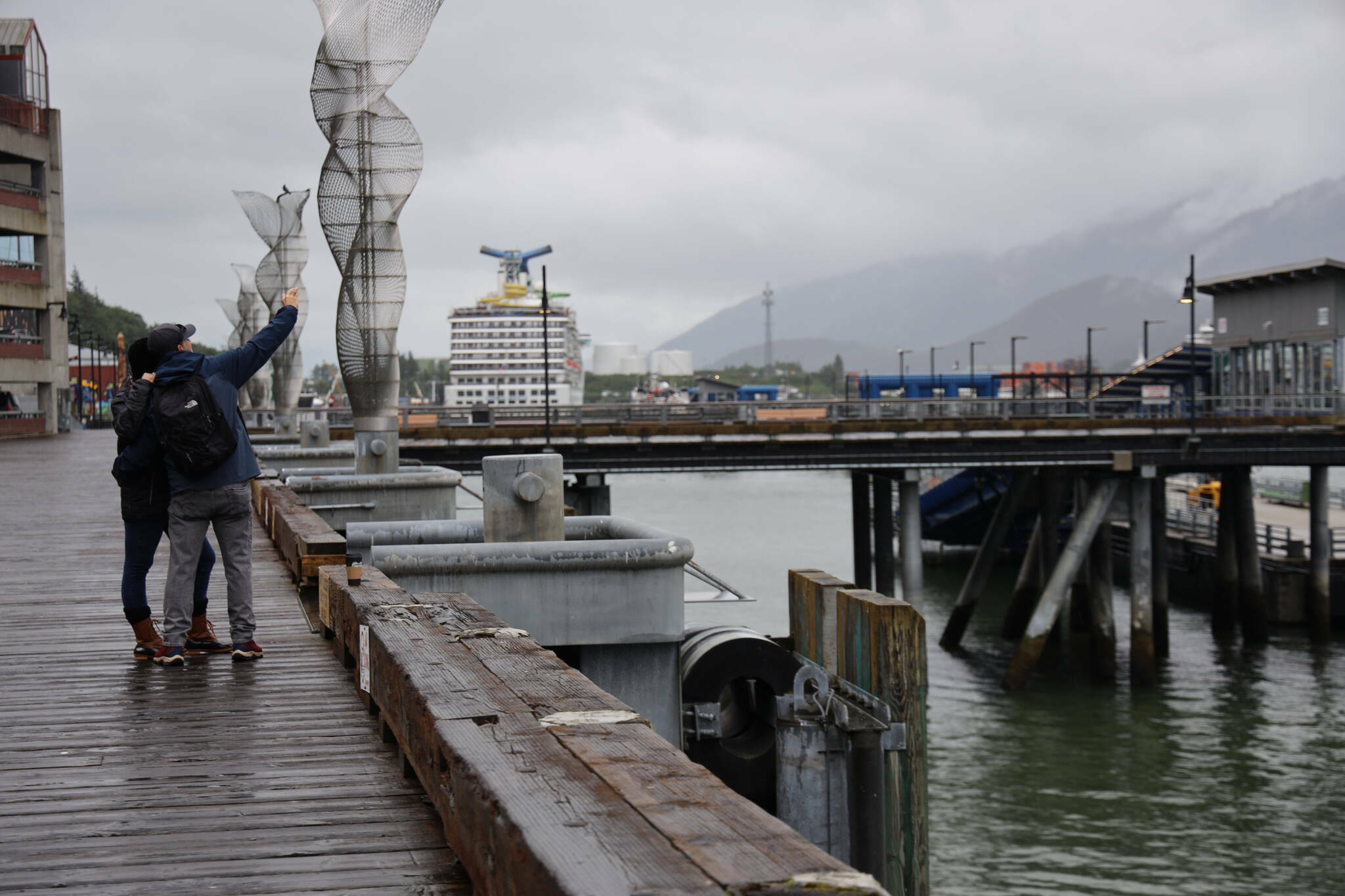
Next, the cruise ship industry set its sights on how the City and Borough of Juneau was using their $8-per-head cruise ship revenue. In 2016, the Alaska Chapter of the Cruise Line International Association brought a federal lawsuit challenging the expenditures of the fee saying those receipts were not for “local vanity projects” such as the seawalk to the Whale Park. The cruise industry claimed that the seawalk was too far away to be used by cruise ship visitors; a claim not borne out by today’s use of the seawalk. Nonetheless, after CBJ spent a half-million in legal fees the judge’s decision upheld the tax’s legality, but significantly narrowed the way the money could be spent; rendering a split decision.
In essence, legislative power plays to undo a citizen’s clean water initiative and repetitive filing of federal lawsuits are not the actions of a willing community partner. To bolster their image the cruise ship industry often points to their Tourism Best Management Practices program. And yes, while this is a nice program to make sure that busses drive in the right-hand lane and cruise ships limit their in-port usage of intercom announcements, it should not erase the industry’s past adversarial posture, nor should it stand in for the systematic changes that must be made to address downtown air pollution, traffic congestion and infringement on Juneau’s quality of life.
Yes, sit at the table, but beware of the power and influence of whom you negotiate with. It will be tough for the community to collectively stand up, but stand up we must because no place remains special by accident. And, besides, keeping Juneau special will keep the visitors coming.
• Kate Troll, a longtime Alaskan, has over 24 years experience in coastal management, fisheries and energy policy and is a former executive director for United Fishermen of Alaska and the Alaska Conservation Voters. She’s been elected to local office twice and written two books and resides in Juneau.
