
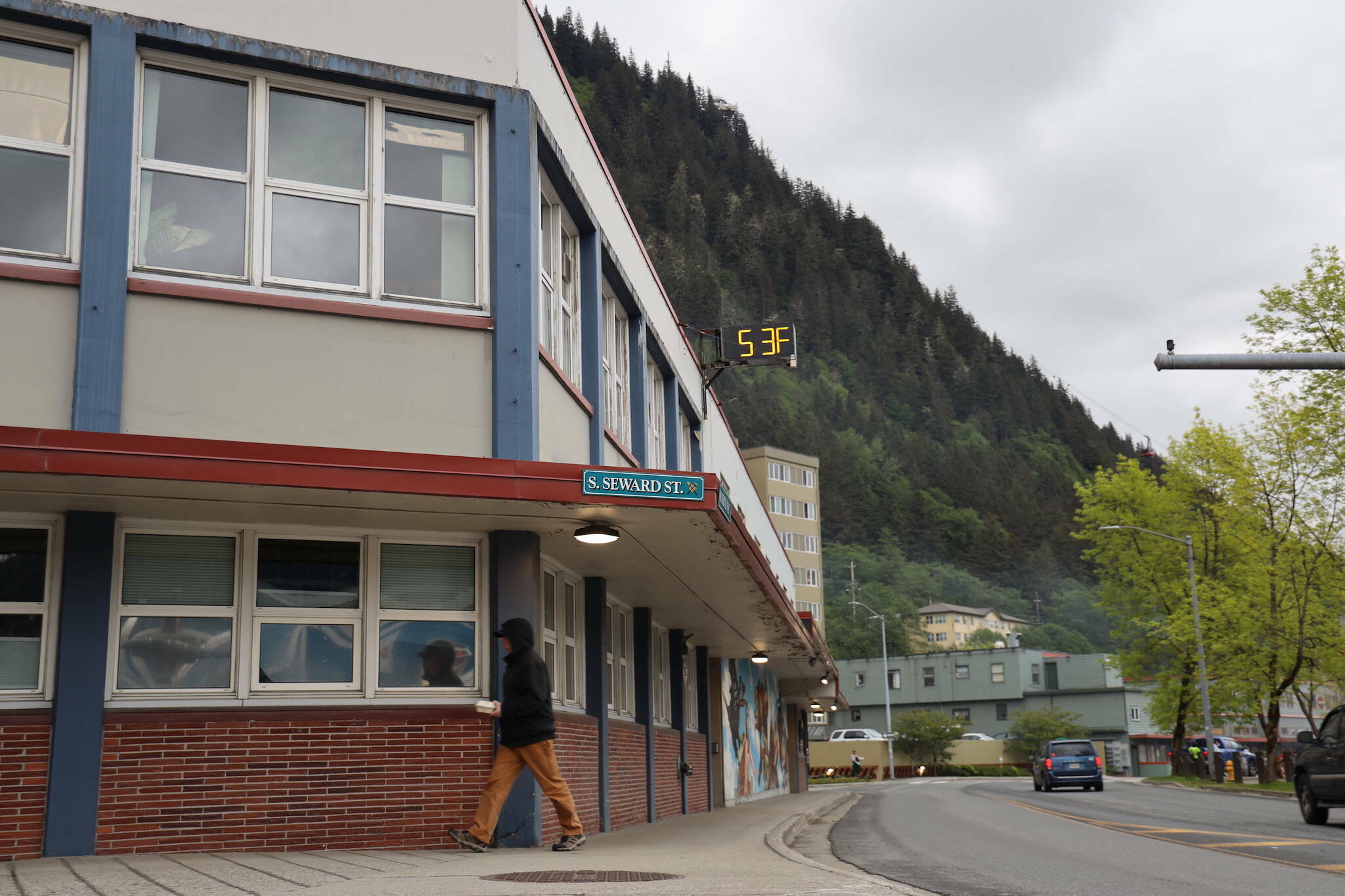
I urge voters to once again turn down the full faith and credit long-term bond ballot measure for a new City Hall. A project requesting the leveraging of all private real estate, residential and commercial, needs to have broad and deep support, but this downtown office building clearly does not have that. Moreover, effectuating a lien immediately after residential property assessments increased so much this year, as commercial property assessments did last year, may be unscrupulous and is afflicted security for bonds. Is it coincidental that CBJ leadership increased assessed values on private property when intending to sell bonds against property taxes – and without reducing the mill rate appropriately?
Didn’t we vote this down less than a year ago? Yes, and I think the best and most concise explanation was given when an AM radio interviewer this past summer asked the then-departing city manager that question. He emphatically answered, “so what?” CBJ leadership undeniably doesn’t care what we think.
That same city manager then sought and obtained money to better educate us this time around, indicating he believes we voted it down because we’re uninformed and/or stupid. One woman told me she voted no only because the ballot didn’t give her an option to vote hell no.
Wherever I go I hear additional voter concerns. Exempting debt payments from the mill rate cap detracts from already flagging Assembly credibility. A public debt issuer should first build a reputation for truthfulness and transparency.
Another concern is that voters are supposed to believe that this project is immune from the inflation that has increased the cost of seemingly all other Alaska public capital projects by 80% or more during the past three to six years. I worry that this city government would run out of bond proceeds when construction is only half complete. Then, believing they have taxpayers over a barrel, the Assembly could say they need to sell completion bonds — possibly doubling the amount of debt. Insidiousness of that sort would be completely in character. Note that long-term interest rates have doubled, but the Assembly is silent about that. (One can hope that the election will bring veracity to the Assembly and raise the overall integrity.)
There are many alternatives to borrowing against the full value of private property. If, as the Assembly claims, eliminating space now rented by city government will meet bond payments then that should be the security for the debt rather than our property taxes — our homes and businesses. State and municipal debt in Alaska has been secured by lease payments, theater tickets, mineral production, fishing license fees, airport landing fees, electricity sales, student loan payments, energy production and governmental enterprise earnings. However, as a CBJ voter I disagree with most debt right now because it allows profligate spending to continue while burdening a future generation with the invoice.
This Assembly makes frequent high-dollar bets and expenditures without asking what voters think. Only when they want to secure bonded indebtedness with our full faith and credit, using the assessed value of our property, do they ask for our opinion and commitment. When we disapprove they ask us again, spending our money to re-educate us. Please vote no on this ballot measure and please vote very carefully on the Assembly races.
• Tom Boutin is a Juneau resident who has served as chief of staff for the Alaska State Bond Committee, the Alaska State Pension Investment Board and the Alaska Retirement Management Board. He also was the CEO of the Alaska Industrial Development and Export Authority, a state-owned bank. In addition, he worked for many years in the forest products industry.
