
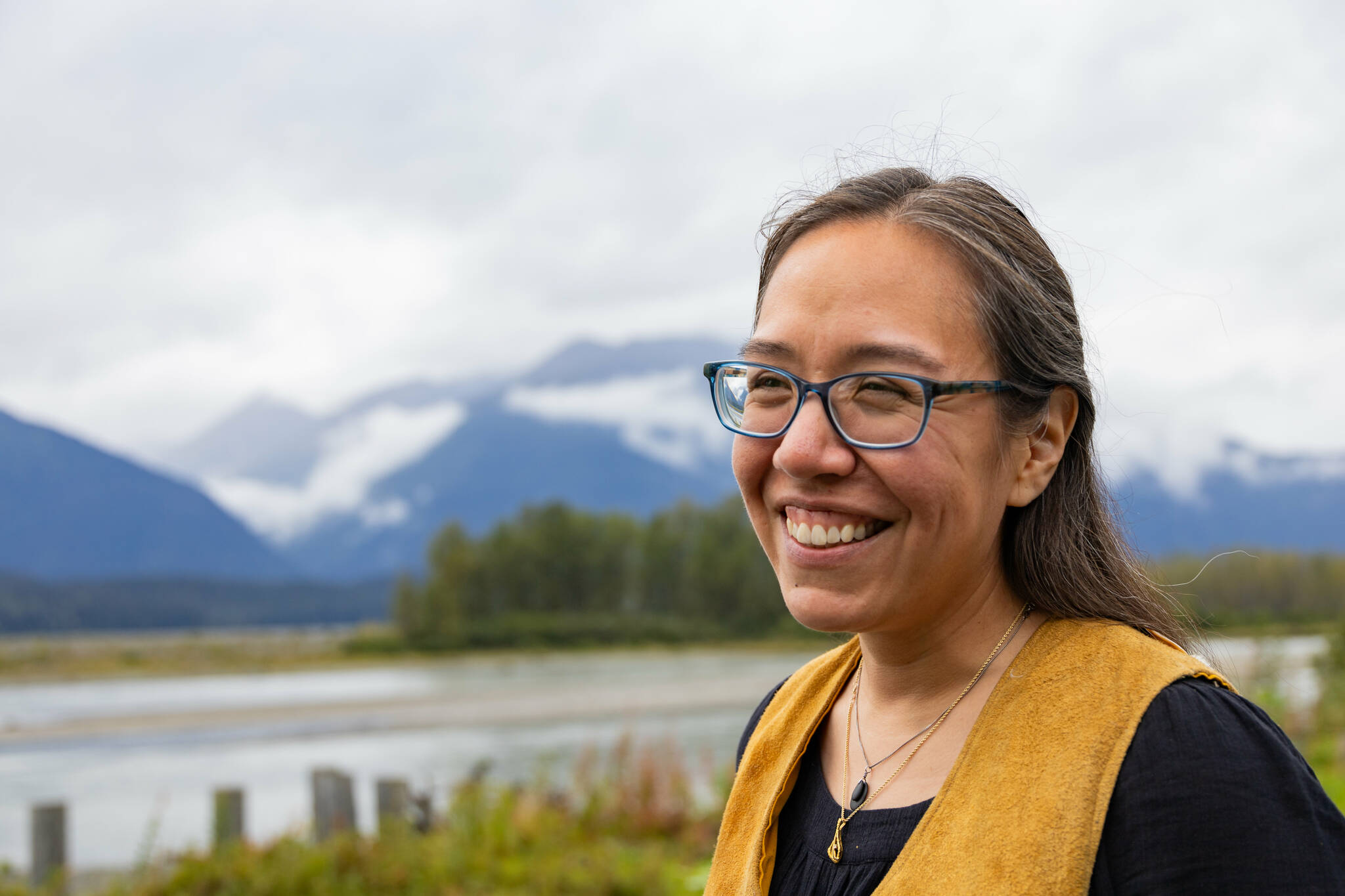
Nestled in the Lynn Canal along the Chilkat River lies the ancestral village of Tlákw Aan (Klukwan), where Chilkat Valley Community Catalyst Katrina Hotch grew up. Hotch’s deep connection to her community shapes every action she makes. After years in Áak’w Kwáan (Juneau), supporting language revitalization and traditional arts at Sealaska Heritage Institute, she returned in 2021, eventually serving as a Sustainable Southeast Partnership (SSP) Community Catalyst hosted with the Jilkaat Kwaan Heritage Center in 2023.
Hotch’s role involves organizing cultural workshops, dances and events at the Jilkaat Kwaan Heritage Center — a space adorned with bold formline art and rich in cultural artifacts and history. She also supports local food sovereignty initiatives, from the community garden to leading seaweed harvesting. Her dedication to cultural preservation and knowledge-sharing reflects her values of honoring ancestors and preparing future generations.

Totem Pole within the past salmon camp location near the Jilkaat Kwaan Heritage Center. (Photo by Ḵaa Yahaayí Shkalneegi Muriel Reid)
We had the pleasure of touring Klukwan with Hotch who gave us insight into her role as a Community Catalyst, as well as her activities as a dedicated community and tribal member.
What drew you to becoming a Community Catalyst? What does your day-to-day look like?
This position allows me the freedom and flexibility in developing programming that serves my community.
On subsistence camp days, I start early. Gathering red ribbon seaweed for example, all depends on the tides and it can be a really early start. But, harvesting together as a community is fun and meaningful — sharing seaweed with people who maybe weren’t able to go out and harvest on their own.
Other days, I’m caring for the community garden and weighing produce harvested there to measure our impact on local food security. Today, I’m planning a meeting for Culture Days — a celebration of culture with a variety of cultural specialists sharing and teaching over two days. We have a small staff, so there is quite a lot of behind the scenes work — advertising, gathering supplies, setup and more.
Can you share a bit more about Culture Days?
Bringing Culture Days back after, after COVID has been important. It restarted last year, and it was pretty small, but people were just happy that it was happening again. Sharing the things that we were taught by our elders is such a gift.
It’s an important way that we meet the community wherever they are at in their personal journey of cultural revitalization. In one formline class, a three-year-old girl came with her mother and was captivated by the class. She followed along with the other students as they drew an eagle. Later on, remembering the formline lesson, the girl used the shape of her palm flat against a whiteboard to draw the curves of an ovoid — inventing her own way to create art that was accessible for her.
What are some values that guide you in your work and how are they exemplified in your work as a Community Catalyst?
We have to consider Haa Shuká, honoring our ancestors and future generations, recognizing that sharing knowledge is a gift and responsibility. For Lingít, Haida, and Tsimshian people, making that recovery from those years of suppression, to share the strength and wealth of knowledge within our culture — celebrate it, tap into it, and live it — is powerful.
That is one of the things that drives a lot of what I do.
Our elders set extremely high standards of excellence. When I was a kid first learning to sew, one of my teachers looked at the back of my button robe and noticed my stitches weren’t even. “If anybody looks at this robe, they’re going to ask you who taught you and you’re going to say it was me. So, take it all out and redo it,” she said. Keeping those standards in my mind, I try to teach and share in a way that if my elders were still here they would be proud!
How does cultural revitalization play into your work and aspirations?
It’s a big part of it. I grew up here and engaged a lot with elders within the community. I didn’t realize at the time that that’s not how everyone grew up. When I moved to Juneau and I was working at Sealaska Heritage, I would receive calls from people who didn’t know they were Lingít until their 20s. They just want to know about who they are. We really need to have more opportunities for all our people to learn our culture and to have safe places to learn.
What are you most excited about in your role?
I’m excited about my new leadership role in our dance group, which gave me a fresh perspective. Before, I was just a dancer and singer. But now, I set practice schedules, goals, and focus on meaningful aspects like pronunciation and cultural significance. I aim to create an environment where everyone can share what they’ve been taught, recognizing that knowledge comes from different perspectives and that multiple truths can coexist. Also acknowledging that everybody is doing the best with what they were taught and that there are so many facets to our culture and nuances within.
This role has also deepened my understanding of how our dance group, representing multiple clans, reflects the diversity of our community. The notion of having a group consisting of multiple clans, is still new for our people. So, I’m also trying to be more cognizant about that, explaining that our dance group is representative of this whole area, and there are many different clans that come from this area.
What are some goals you have for your community moving forward?
One goal is supporting Indigenous plant populations by countering invasive species and creating spaces for people to learn about them and what they mean to us. Larger projects include bringing our traditional knowledge camp back. Also, continuing our efforts with the community garden to build our food sovereignty and security. Getting produce is really expensive here and it’s not high quality.
• “Woven Peoples and Place” is the monthly column of the Sustainable Southeast Partnership (SSP). SSP is a dynamic collective impact network uniting diverse skills and perspectives to strengthen cultural, ecological, and economic resilience across Southeast Alaska. Follow along at sustainablesoutheast.net; on Linkedin, Instagram and Facebook at @sustainablesoutheast; and on YouTube @SustainableSoutheastAK.
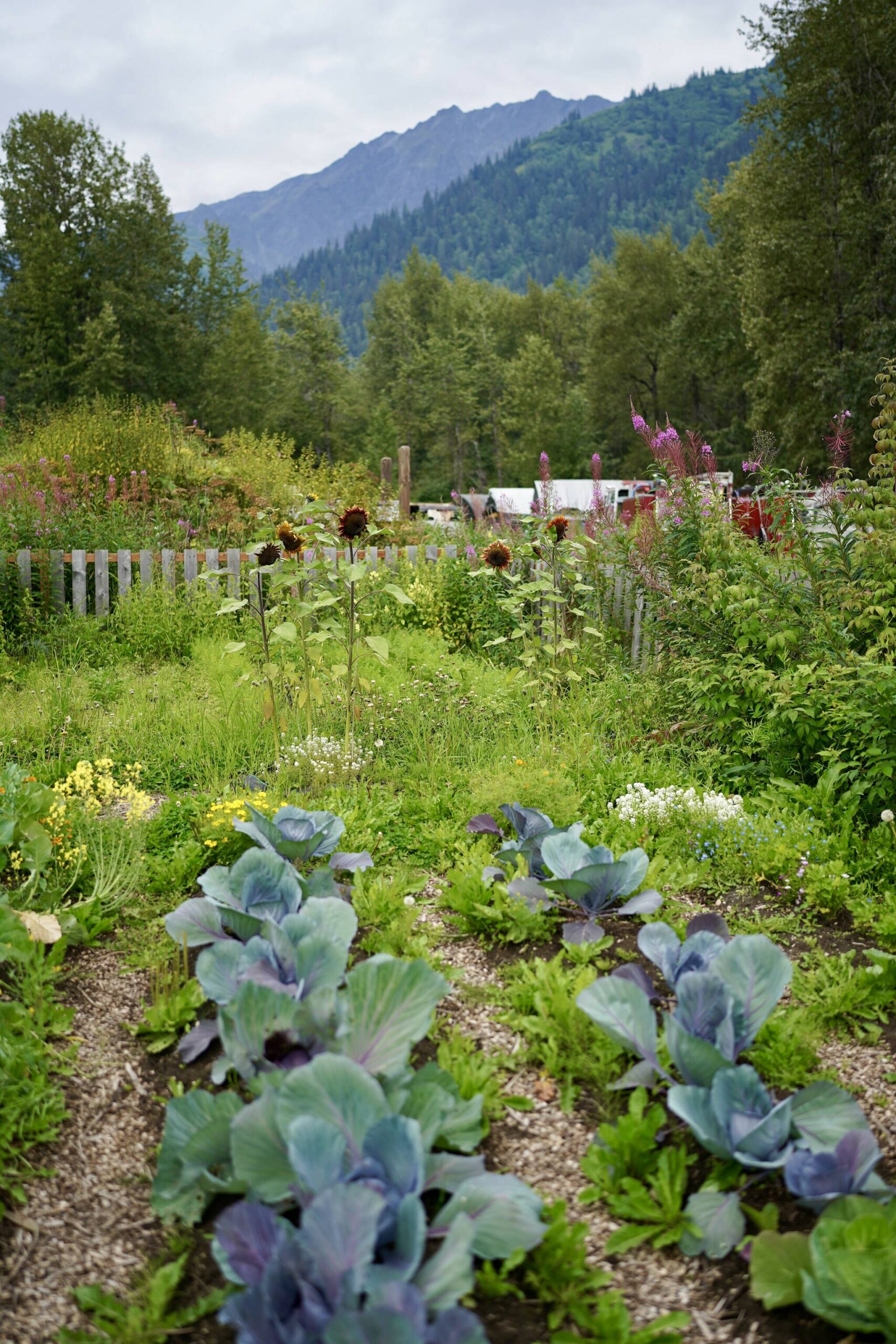
Katrina Hotch’s role looks different each day, whether she’s harvesting seaweed with the community, or tending to the community garden. Photo by Shaelene Grace Moler
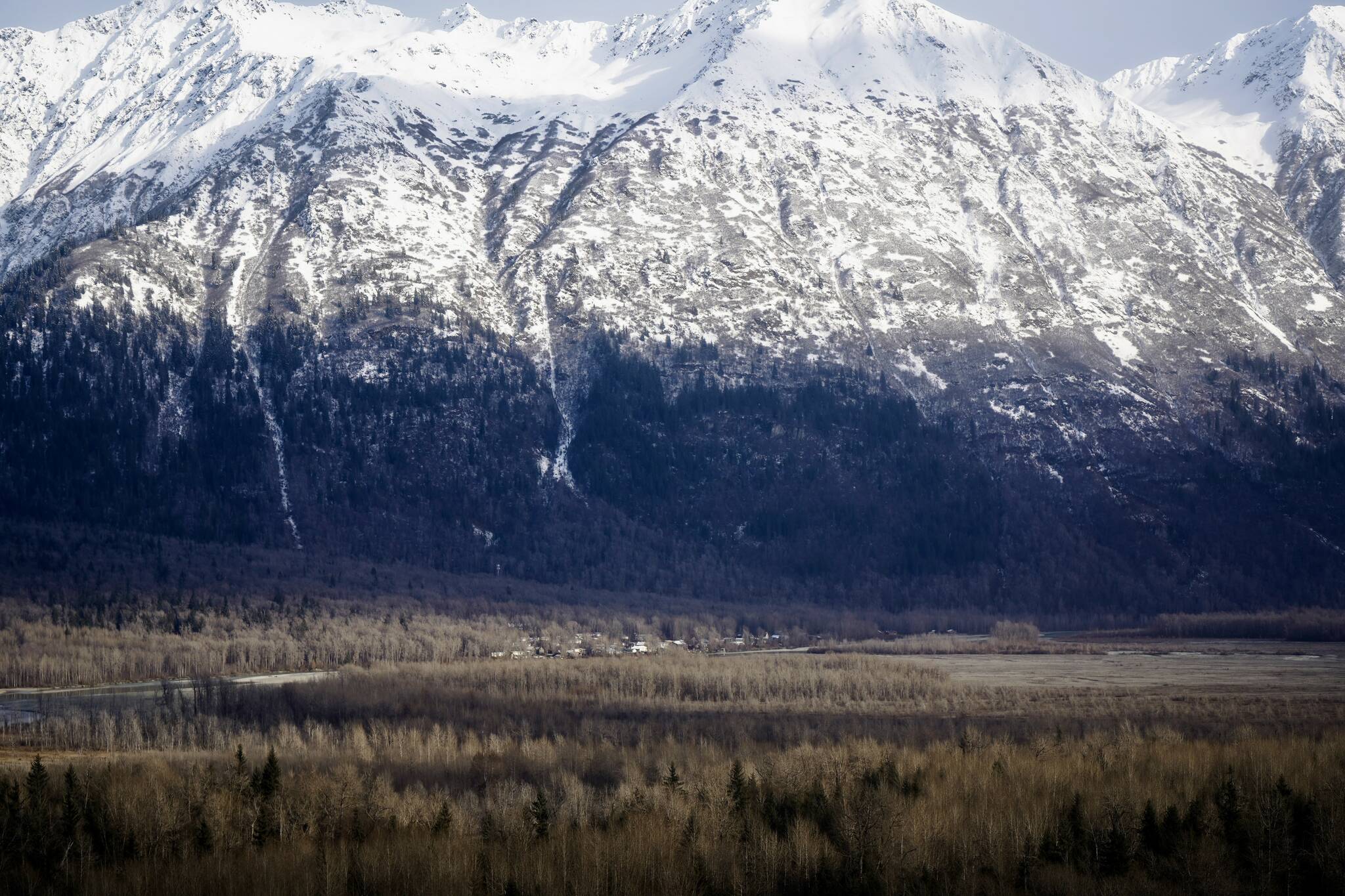
The community of Tlákw Aan (Klukwan) is embedded in the Chilkat Valley. (Photo by Shaelene Grace Moler)
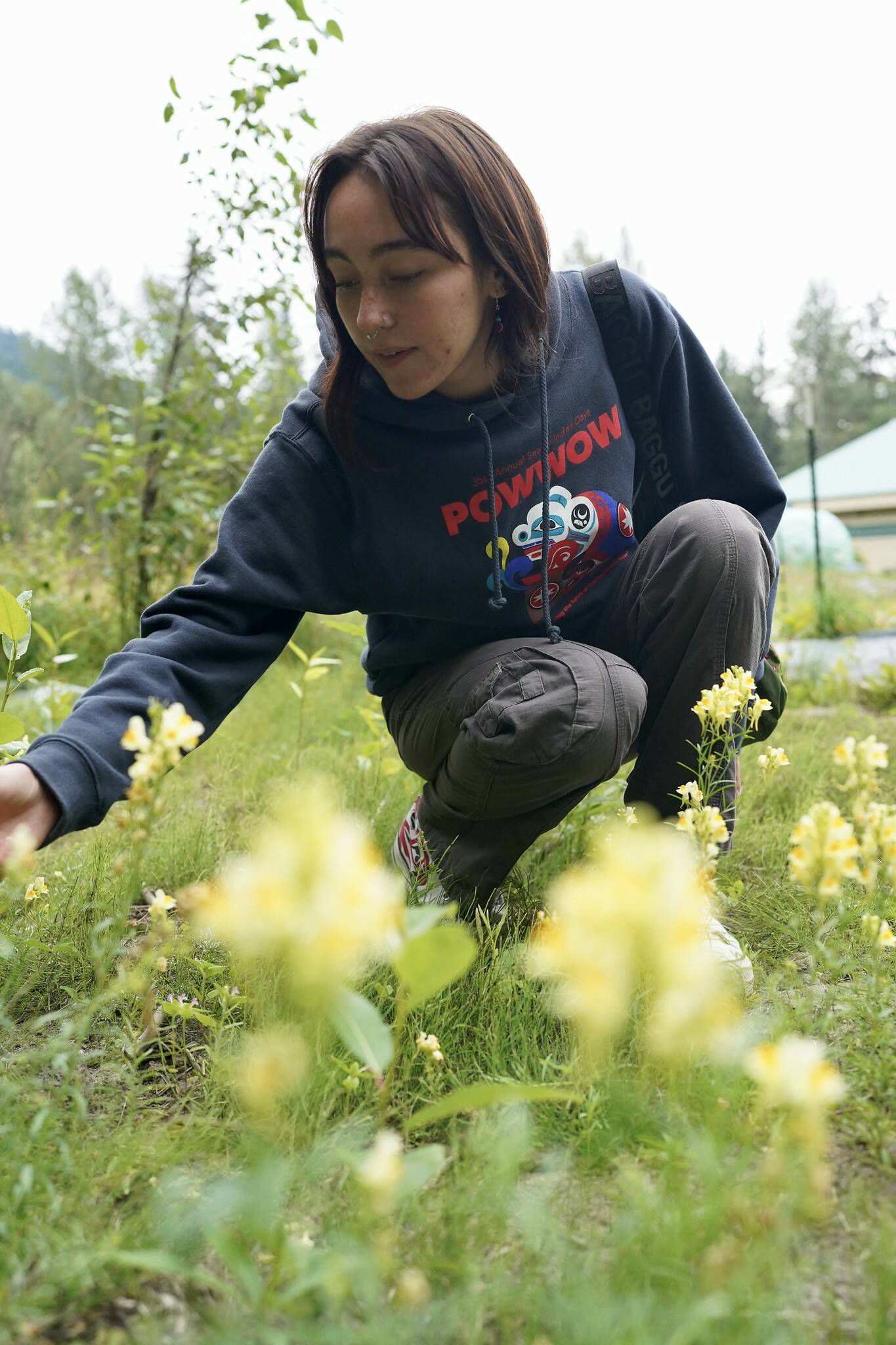
Clara Mooney, the author, explores the Klukwan community garden during her community visit with Hotch. (Photo by Shaelene Grace Moler)
