
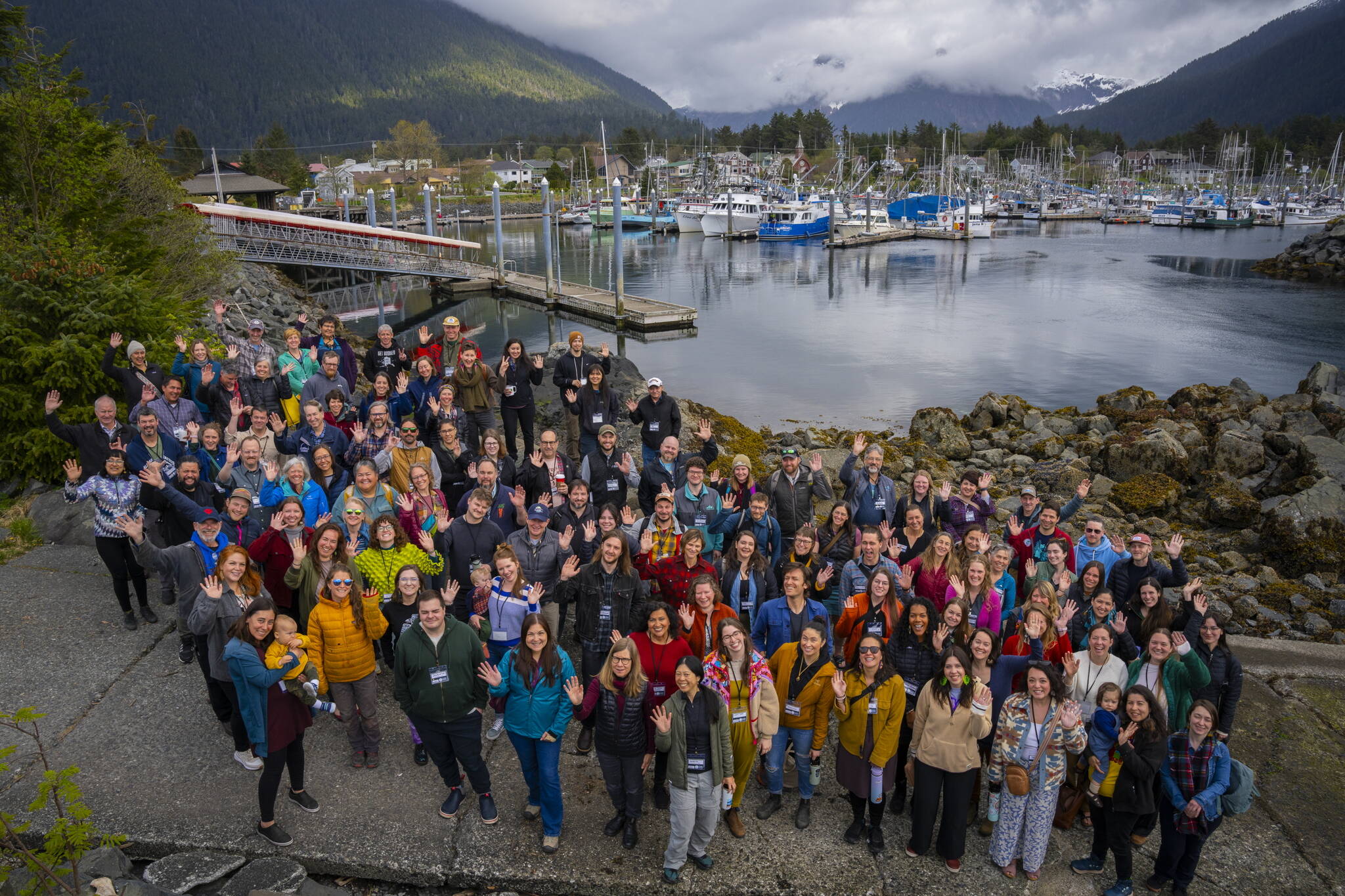
This week, the Sustainable Southeast Partnership is gathering in Sheet’ká (Sitka) for our 12th annual retreat. Over three days, more than 150 people representing a variety of organizations, communities, and backgrounds are convening to strengthen relationships, accelerate ideas, and energize the good work already happening across the region.
To celebrate we’re launching a three-part storytelling series that explores the values at the heart of our growing network —values that guide how we work together and why.
The Sustainable Southeast Partnership (SSP) is a dynamic collective of people and partners uniting diverse skills and perspectives to strengthen cultural, ecological, and economic resilience across Southeast Alaska. We envision self-determined and connected communities where Southeast Indigenous values continue to inspire society, shape our relationships, and ensure that each generation thrives on healthy lands and waters. We believe that when communities are self-determined and deeply connected to one another and to place, everyone thrives.
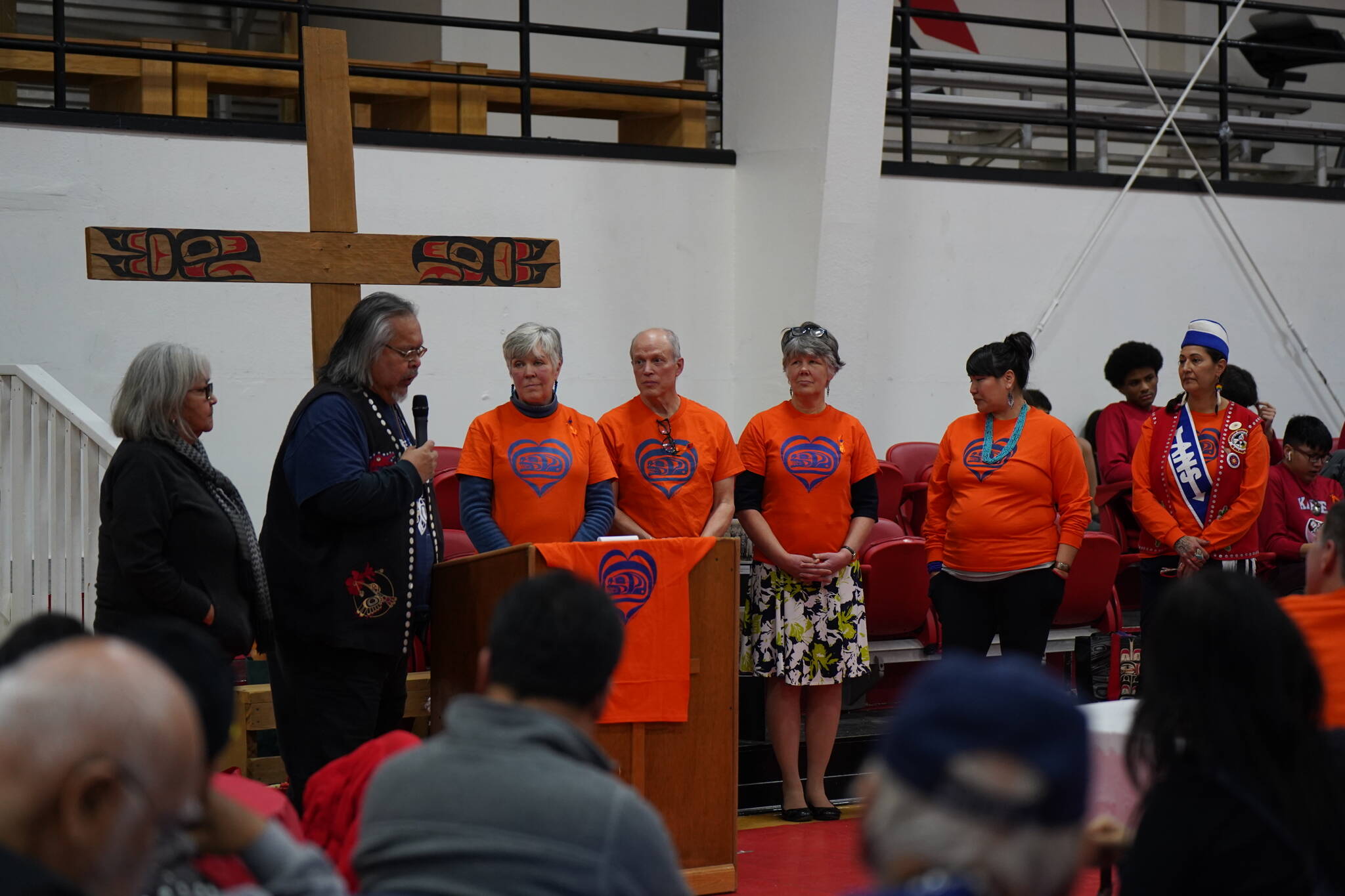
During her fellowship with Spruce Root, Shaelene took a trip home in January 2024 to document the apology from Friends Mission Church to the community of Kake for the schools the Quakers once had there. This was one of many historical apologies to take place in Kake, followed by an apology from the U.S. Navy for the 1867 bombardment of Kake September 2024. (Photo by Shaelene Grace Moler)
Our partners include tribal and municipal governments, Native corporations, small businesses, educators, community nonprofits, land managers, youth leaders, and more. We come from different communities, generations, and backgrounds, representing partners — some of which were historically at odds.
But with more than a decade of collaboration, we’ve learned that when we prioritize relationships and shared values, real transformation and wins for our communities become possible. This is evident in the Community Forest Partnerships catalyzed in Hoonah, Kake, and Prince of Wales, Tlingit and Haida’s Alaska Youth Stewards Program, and so much more.
In 2020, our partners co-created a set of collective values — principles that continue to ground our work and guide our path forward. These values include:
Relationships first; balance; tribal sovereignty and community determination; “kux̱adaahán ádáyoo.aánalgein” (stop, observe, examine, act); intentional collaboration; courage and follow-through; growth and collective learning; systems thinking; and justice and healing.
These values are not just words — they’re tools we use to make decisions, resolve challenges, and shape the way we show up for our communities. And while the values are shared, how they come to life can look different depending on who you ask.
To explore what it means to truly live these values, we’re sharing the voices of three partners over the year who embody them in their daily lives and work.

Shaelene Grace Moler is the Communications Catalyst with the Sustainable Southeast Partnership. (Photo by Bethany Goodrich)
In part one of our “Values in Action” series, we hear from Shaelene Grace Moler, the communications catalyst for SSP.
My story is a story of mentorship. It is a story of what it means to “grow and learn collectively” in this network — of how values in action can foster opportunity. My story demonstrates how personal growth intertwines with community development when guided by strong organizational values. The values that stand as the foundation for the collective work of the Sustainable Southeast Partnership (SSP), are the same values that raised me — inspired by the lands, waters and Indigenous peoples of Southeast Alaska. I grew up in the community of Ḵéex̱ʼ (Kake). I learned about the “balance” and interconnectedness across species and generations, and that true power was something you earn by giving, not by taking—showing up at an elder’s door or a community potluck with traditional foods.
The SSP committed to centering storytelling when I was first learning to tell stories in grade school. Through the deliberate practice of narrative-sharing, and over the years narrative-shifting, SSP demonstrates how choosing to highlight healthy and inspiring stories can move a community’s psyche away from scarcity toward pride and the belief that we have the power to change our communities and world. I witnessed this over the last decade in Kake. Watching the kids I grew up knowing, find meaningful careers at home — people finding security and inspiration working on our lands with our community. I knew that I wanted to be part of this movement. After interning and working as a fellow with Sitka Conservation Society and Spruce Root for two years, I became the communications catalyst in 2024. Now I see how those values that shaped this network and my upbringing, also shape our storytelling strategy.
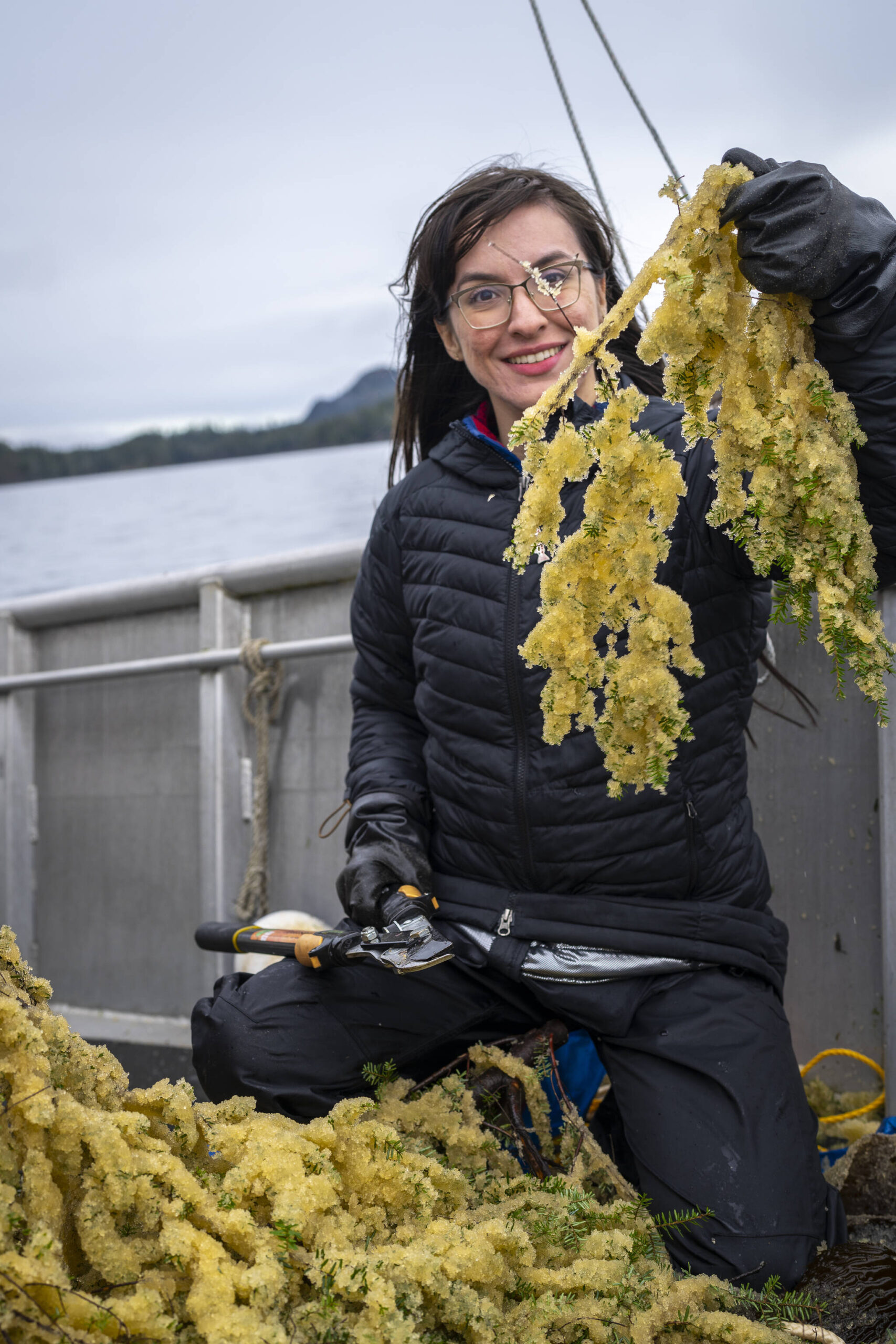
Shaelene Grace Moler gathers herring eggs in Sitka to send to a traditional food fair in her home community of Kake. (Photo by Bethany Goodrich)
The value of “kuxhadahaan adaayoo.analgein” (stop, observe, examine, act) is evident in our thoughtful approach to storytelling. From my mentors in the SSP, I learned when it is important not to be the storyteller, to step up and to step back, and how to be reciprocal when telling people’s stories. The root of our work is in “relationships first.” Over the years, I have come to understand storytelling as putting yourself in a position to be mentored and be a mentor. You have to stop (form a relationship), observe (listen), examine (write and follow-up), and act (share meaningfully, together).
Our commitment to “systems thinking” also appears in stories, addressing root causes rather than symptoms, exploring complex interconnections. Stories become tools for disrupting tired systems while supporting our communities — stories are part of “justice and healing,” and have always been. They help build a more just future by ensuring that many perspectives and experiences are heard, preserved and celebrated — creating opportunities for knowledge exchange across generations and communities.
Our values create not just better projects or programs, but stronger, more connected communities prepared to face the future while honoring their past together and the “balance” they must hold across sectors. Like SSP itself, my story isn’t just about professional advancement — it’s about building relationships, fostering understanding, and contributing heartfully to the broader tapestry of Southeast Alaska: home.
• “Woven Peoples and Place” is the monthly column of the Sustainable Southeast Partnership (SSP). SSP is a dynamic collective impact network uniting diverse skills and perspectives to strengthen cultural, ecological, and economic resilience across Southeast Alaska. Follow along at sustainablesoutheast.net; on Linkedin, Instagram and Facebook at @sustainablesoutheast; and on YouTube @SustainableSoutheastAK.
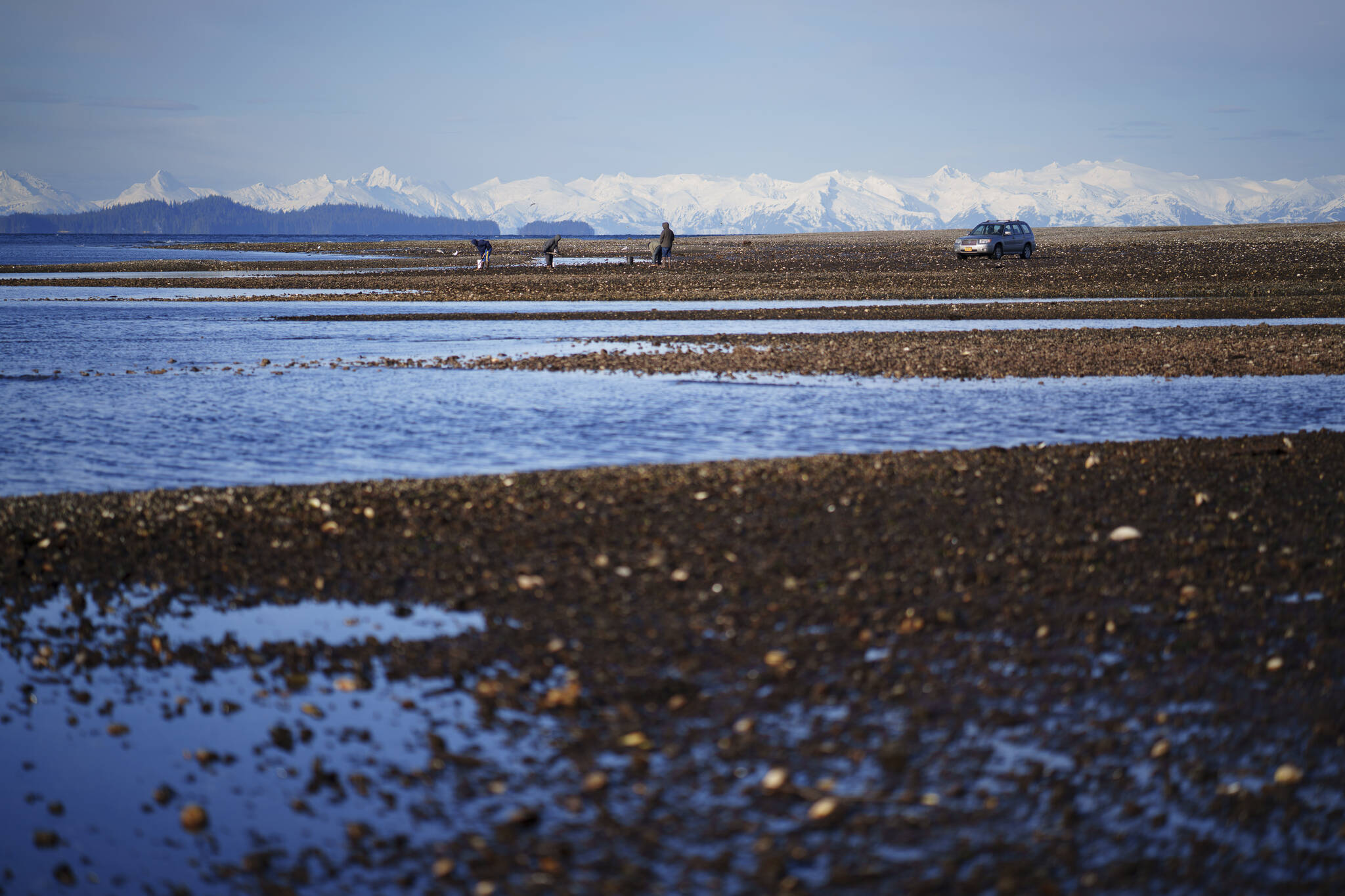
Shaelene Grace Moler documents a clam garden project in the Organized Village of Kake as a Sustainable Southeast Partnership storyteller. (Photo by Bethany Goodrich)

Shawn Merry shows youths during a Sustainable Southeast Partnership culture camp how to use a microscope. He has worked with many community driven programs catalyzed through SSP including the Alaska Youth Stewards Program, Keex’Kwaan Community Forest Partnership, and now is working full time with the Organized Village of Kake. (Photo by Bethany Goodrich)
