‘We’ve got to get our fiscal house in order’: Dunleavy opens up about budget proposal
Published 2:02 pm Tuesday, February 26, 2019
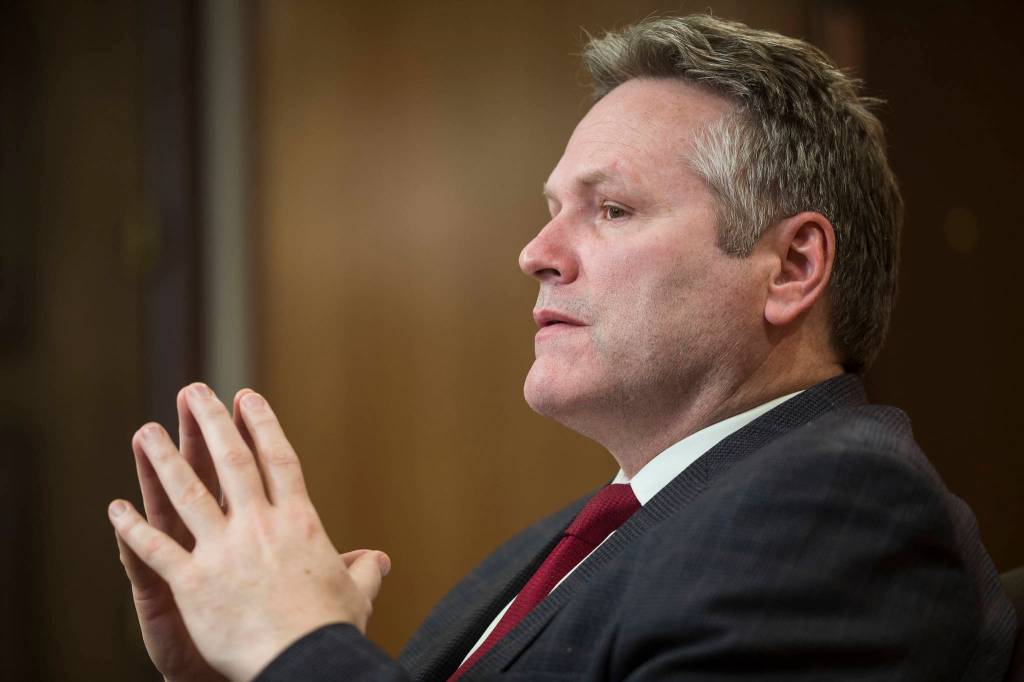
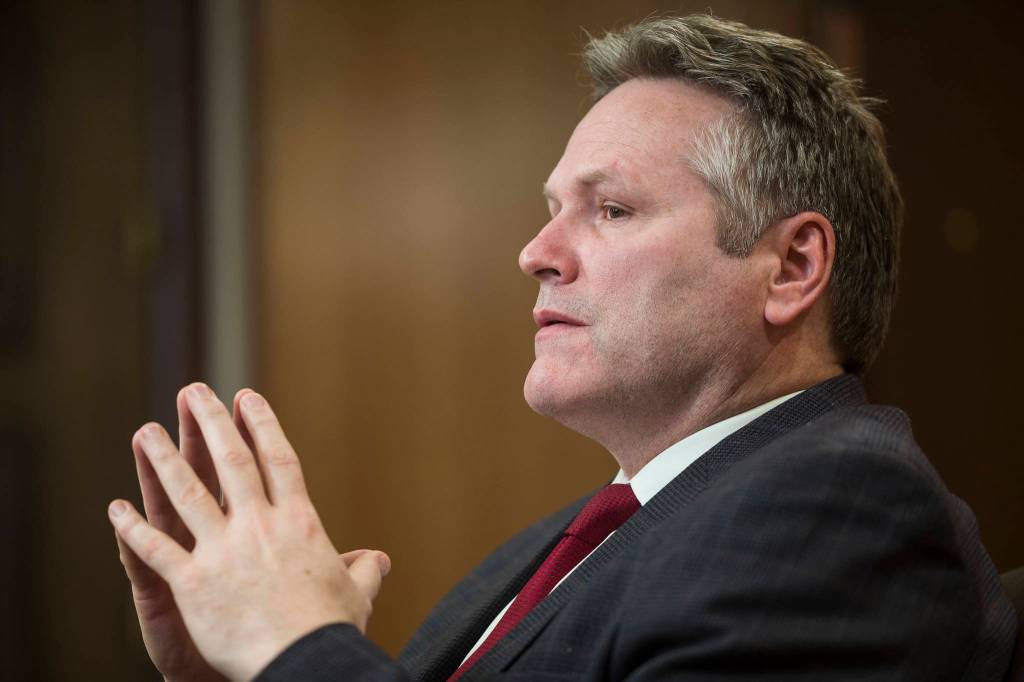

Low oil prices are driving budget decisions, Gov. Mike Dunleavy told the Empire in an interview about his proposed 2020 fiscal year budget.
[Read the full interview transcript here]
“During the campaign we were told we were looking at $75 a barrel oil,” Dunleavy said. “Obviously that wasn’t the case. We’re down at $64 barrel oil, and we’re hoping that stays in the neighborhood of $60-64 barrel oil. Even at that we have a $1.6 billion deficit.”
He said Alaska — facing a $1.6 billion deficit — needs to get its “fiscal house in order.”
“It’s a budget that’s going to impact all Alaskans,” he added. “There’s going to be no group that is not going to be touched by the fiscal deficit that we’re looking at.”
Dunleavy’s budget includes dramatic cuts to the University of Alaska system, $134 million or 41 percent of the university budget; would lower the student base allocation by more than $1,000, and it and $225 million Medicaid cut. The Department of Corrections is one of the few areas in which a funding increase is expected.
When asked if he budget proposal is as predictable and sustainable as he promised Alaskans, considering the budget remains dependent on oil revenue to sustain it rather than new taxes or other sources of revenue, he said: “If we close the $1.6 billion gap, and our expenditures and revenues meet, that’s a predictable budget. If we allow the people of Alaska to vote on the constitutional amendments that hem us in through an appropriation and savings limit as to the growth of that budget, that will help with predictability. If we allow the people of Alaska to decide if they want their PFD taken or any changes in the permanent fund, that will help with predictability. …You know the question is, what happens if oil goes to $5 a barrel, then that blows a hole through almost any program. And that’s a hypothetical, and we’d have to deal with that when that occurs. But I can tell you now, if we don’t reduce our spending, what is predictable is we’re going to spend down our CBR, Constitutional Budget Reserve, that has $2 billion dollars left in it.”
Dunleavy was asked if his budget was predictable in the sense that if oil prices go down, the plan would be to cut again.
“We’ll cross that bridge when we come to it. Again, we’re dealing with a hypothetical, we have to see what that is. We’d have to cross that bridge when we come to it,” Dunleavy said.
He was also asked if it was misleading to tell Alaskans there would be no tax hikes, when his proposals to redirect oil and gas property tax revenue to state coffers would likely result in property tax increases at the municipal level.
“No I don’t think it was misleading. Again, we have no intention of imposing taxes at the state level on Alaskans.” Dunleavy said. “Local municipalities are going to have to decide, as we are right now. They’re going to have to have the same conversation, what is important to them, what are the programs and services that they wish to fund and how do they wish to fund them? That’s their decision at the local level. So no, I don’t think it was misleading at all. We’re sticking with our campaign promises to deal with this fiscal issue.”
Dunleavy said he plans to roll out more budget-related bills too.
Contact reporter Kevin Baird at 523-2258 or kbaird@juneauempire.com. Follow him on Twitter at @alaska_kev.