
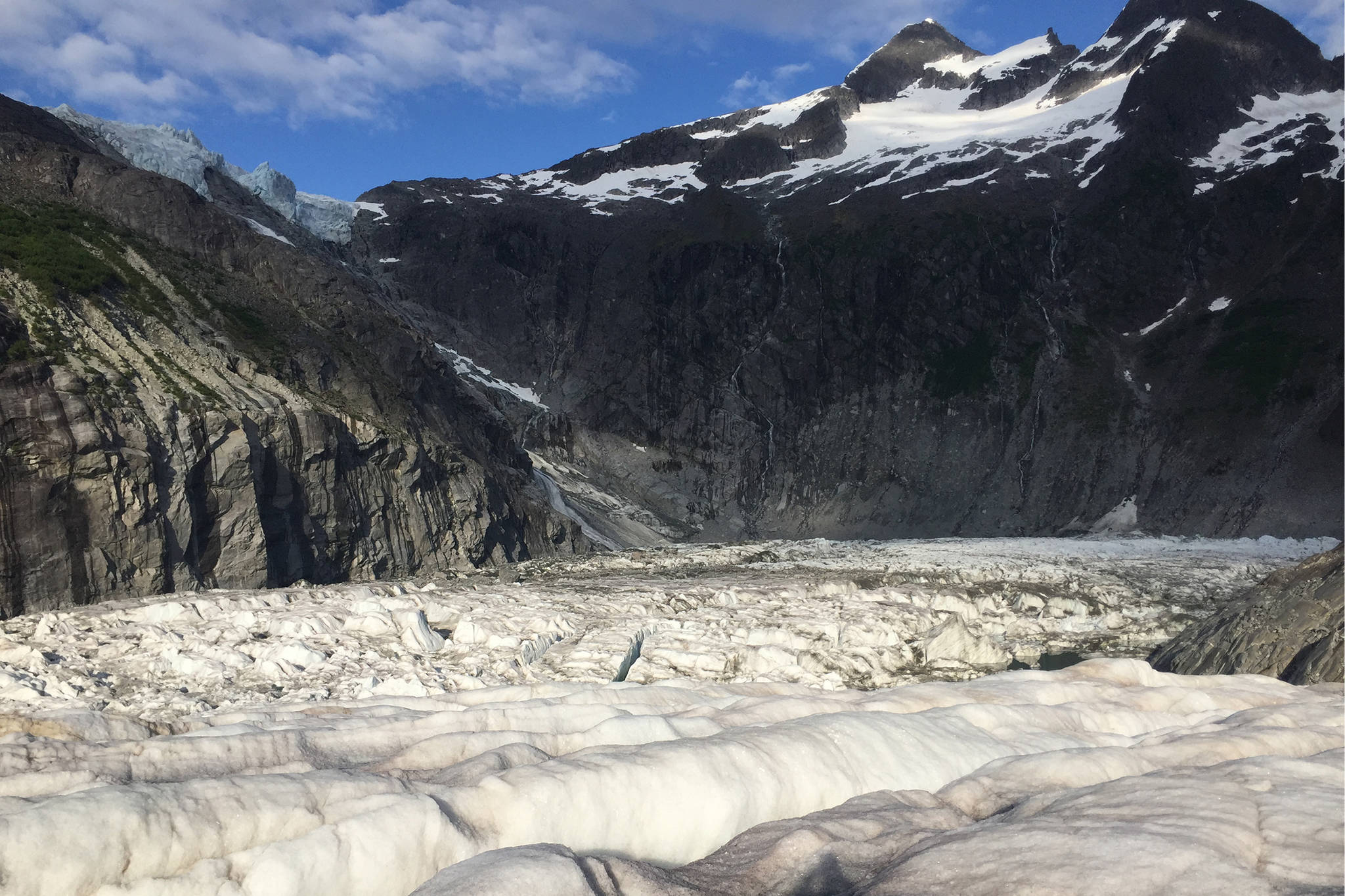
The Earth’s oceans are warming at an alarming rate and the speed at which is happening is only going to get worse, according to a recently released report from the Intergovernmental Panel on Climate Change.
Warming oceans means a loss of sea ice, receding glaciers and ocean acidification. Those things have been witnessed here in Alaska for years and according to the IPCC’s Special Report, depending on what actions are taken now, those changes could speed up dramatically.
“The polar regions will be profoundly different in future compared with today,” according to the report’s supplementary materials concerning polar regions. “The degree and nature of that difference will depend strongly on the rate and magnitude of global climatic change. This will challenge adaptation responses regionally and worldwide.”
Alaska’s glaciers have been receding and permafrost melting, and the report shows that what has been seen in Alaska is happening all over the world, according to Molly McCammon, director of the Alaska Ocean Observing System.
“What we see as changes in Alaska are reflected all over the world,” she said in a phone interview. “The changes we’ve seen in the Bering Sea we’ve called ‘unprecedented,’ year after year. When do we stop calling them unprecedented?”
Melting glaciers means more freshwater flowing into coastal waters which will impact ecosystems there, McCammon said. This should be a concern to people, “in a region that relies heavily on the resources that the ecosystem provides,” she said.
Furthermore, the report warns that a thawing Arctic region will accelerate the rate of climate change if nothing is done to reverse the changes.
“Arctic and boreal permafrost hold large amounts of organic carbon, almost twice the carbon in the atmosphere, and have the potential to significantly increase the concentration of greenhouse gases in the atmosphere if they thaw,” supplementary materials to the report says.
Permafrost thaw will also increase the risk of wildfires in tundra regions, according to the report. Alaska had 684 fires which burned more than 2.5 million acres in 2019, according to an August report from the Reuters news agency.
But Arctic warming might be good for the state, Gov. Mike Dunleavy said earlier this month at the International Forum of Sovereign Wealth Funds in Juneau.
“Our international airport hub is getting more and more investment. The Arctic is warming. Fifty years from now, if this trend continues, there will be seasonal, if not regular, travel through the Northwest Passage,” Dunleavy said at the forum.
[Gov says warming Arctic could be good for Alaska]
McCammon said that whenever you see change, there’s a possibility for winners and losers. She said that there could be more shipping through the Arctic but that would increase the risk of spills and air pollution to coastal communities.
Additional shipping would also mean ships from other countries which the U.S. has no control over coming through the region, McCammon said.
However there are some good things to take away from the report, said Mike LeVine, senior arctic fellow at the Ocean Conservancy.
“It could be easy to get lost in all the negative news but it’s important to recognize the ocean can also be part of the solution to climate change,” LeVine said. “There are a few good things to be taken away from this report, one of them is that is was created in the first place.”
The IPCC, which is part of the U.N., brought together over more than 100 authors from 36 countries, according to the Special Report, in an effort to provide crucial information for policy makers.
“In Alaska we largely have functioning ecosystems,” LeVine said. “We’re lucky to be able to catch fish from our waters. We still have that and there are changes coming and we owe to ourselves and to future generations to adapt to the changes and ensure that those resources are still available.”
• Contact reporter Peter Segall at 523-2228 or psegall@juneauempire.com.
