
This story has been updated with additional content.
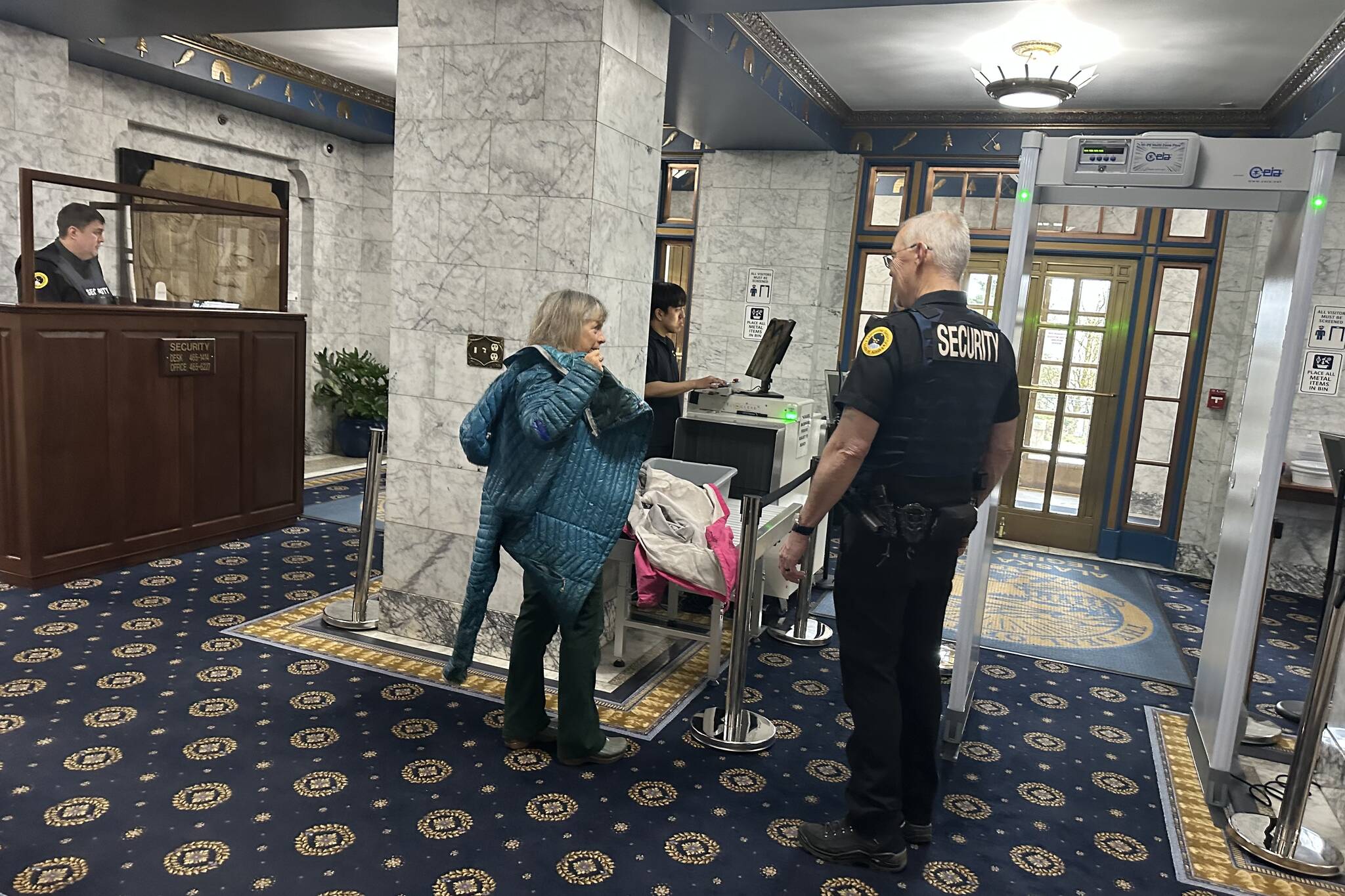
Airport-style security screenings began Monday at the Alaska State Capitol for most people other than legislators, their family and staff, with officials getting something of a “soft opening” to test the system since little official business is happening with many lawmakers still out of town after Easter weekend.
Legislators, staff and others with cards or key fobs (including credentialed media members) are able to enter one of the Capitol’s three front doors without going through the screening process. People entering the other two doors are required to go through the scan of themselves and their belongings.
The new screening didn’t bother Lee Hart, an occasional visitor to the Capitol as an advocate for the outdoor recreation industry.
“I’m all for it because there’s crazy people in the world and they’re preying on situations like this,” she said. “And I think (the screening is) perfectly fine. It doesn’t upset me.”
It caused a bit more of a delay for Todd Vierra, who has an access card since he does flooring work at the Capitol, but left it at home. So he had to pass through the scanner a few times — removing items he was carrying or wearing each time — before he made it without triggering the red warning lights.
“Are those steel-toed boots?” Rayme Vinson, the security officer doing the screening, asked Vierra when he set off the scanner again after emptying his pockets. Vierra affirmed they were and, despite being on a first-name basis with Vinson, had to remove them before he was allowed past the checkpoint.
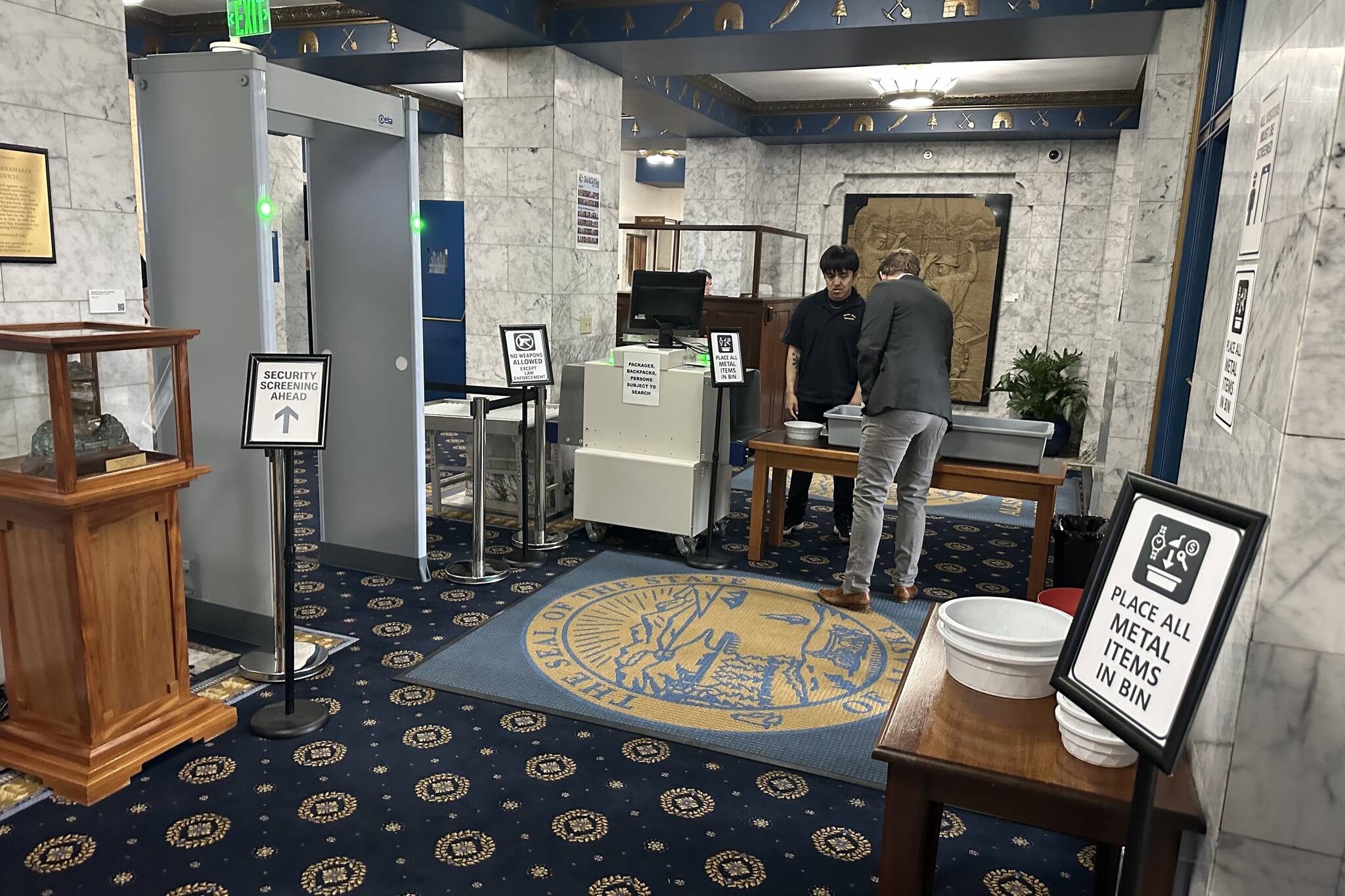
A visitor places items in a bin at the new security checkpoint at the Alaska State Capitol on Monday morning. (Mark Sabbatini / Juneau Empire)
A far stronger objection to the new security measures was expressed by Catherine Reardon, who worked intermittently as a legislative aide between 1986 and 2022 as well as a state agency division director, who refused to consent to the screening specifically so she could file a formal appeal of her denial of entry to the Legislative Affairs Agency. She said in an interview Monday she doesn’t expect to prevail in the challenge to her denial of entry — let alone overturn the policy — but wanted to make a statement to the officials involved in the new policy and the public.
“What offends me about it is the message that it sends to other people about who belongs and doesn’t belong in that building,” she said. “And I think that that is the message that to your average, less-confident, less upper-middle-class person, less professional-class government worker that it is a deterrent to feeling comfortable and welcome in that building.”
Reardon said that while metal detectors make sense in certain places such as the court building across the street, working at the Capitol doesn’t present the same level of risk.
“As these things keep ratcheting up I want to express it’s not OK with me,” she said. “I want to say my ‘no’ — and then I’m going to go in and out of the building, because I’m not going to give it my right to interact and petition my government, and interact with the Legislature, and I’m going to go through the metal detector.”
The new screening measures were approved by the Legislative Council on March 31, based on recommendations made last year to lawmakers and the Legislative Affairs Agency following a security assessment by the U.S. Department of Homeland Security. Legislators favoring the change said there also have been incidents recently where staff and legislators felt threatened by the behavior of some people entering the Capitol who weren’t there for legislative matters or as tourists, including some helping themselves to free lunches offered at noontime presentations and coffee available free in the hallways during business hours.
Among the legislators opposing the new measures is state Sen. Jesse Kiehl (D-Juneau), who said he’s concerned about making access more difficult for large groups such as students or seniors who regularly visit, and that security scans for weapons and other objects won’t keep out people with problematic attitudes.
Vinson said the screening can help deter problematic behavior simply due to the interaction with security officers when entering, and that people who are obviously intoxicated or under the influence of illegal drugs will be denied entry.
“First of all they could be disruptive,” he said. “But the other part is they could fall on these stairs. We have a certain responsibility to them not to let them hurt themselves.”
• Contact Mark Sabbatini at mark.sabbatini@juneauempire.com or (907) 957-2306.
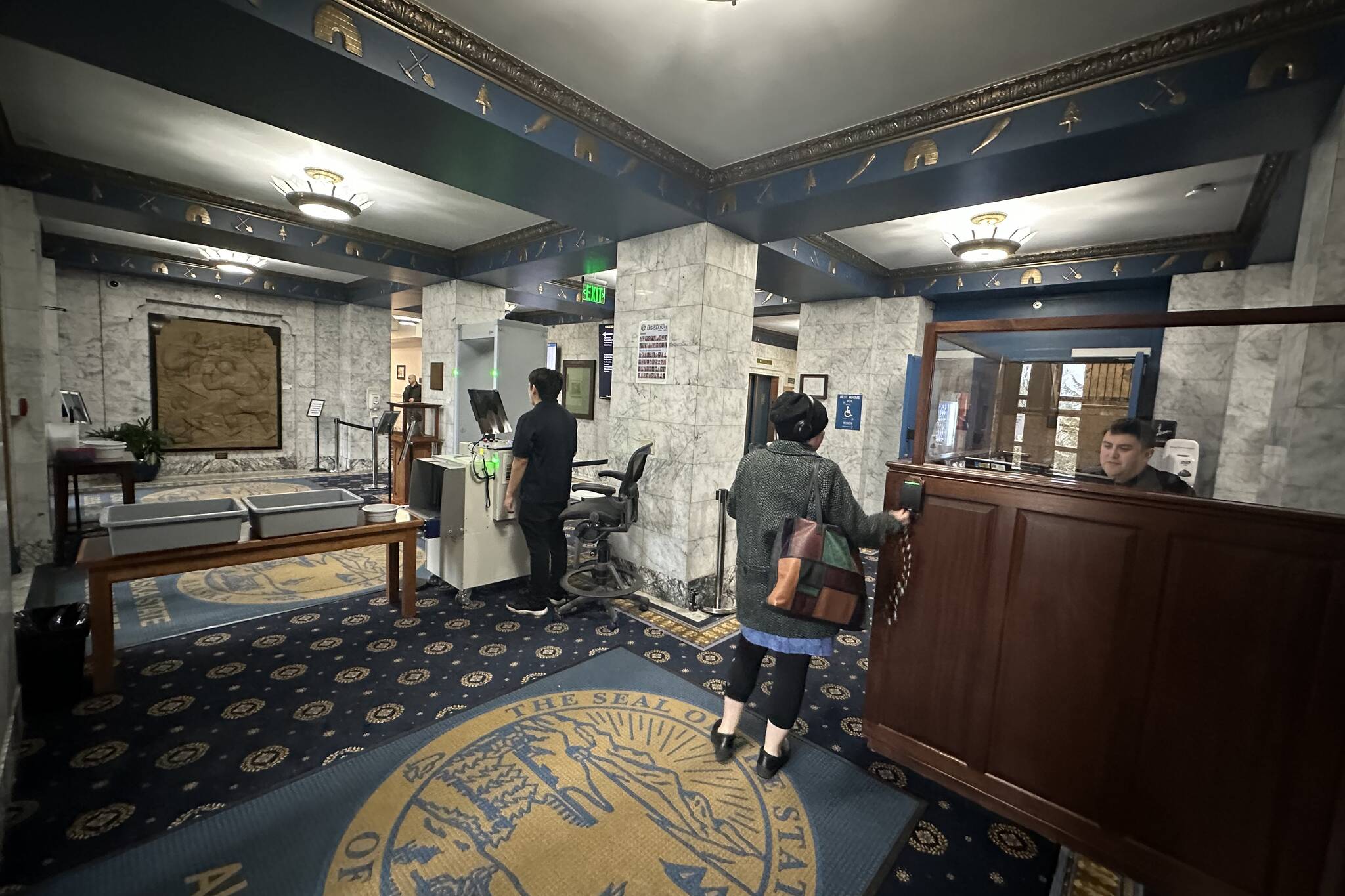
A worker at the Alaska State Capitol uses an access keychain fob to bypass the new security scanner at the Alaska State Capitol on Monday. (Mark Sabbatini / Juneau Empire)
